Balancing Fair Housing Compliance With Effective Screening Standards
Landlords face a critical challenge: how to thoroughly screen potential tenants while fully complying with fair housing laws. On one hand, careful tenant screening is essential to find reliable renters who pay on time and care for the property. On the other hand, landlords must avoid any policies or practices that could be discriminatory under […]
Landlords face a critical challenge: how to thoroughly screen potential tenants while fully complying with fair housing laws. On one hand, careful tenant screening is essential to find reliable renters who pay on time and care for the property. On the other hand, landlords must avoid any policies or practices that could be discriminatory under fair housing regulations. Striking the right balance is crucial for both successful property management and legal protection. This article explores how landlords can maintain rental application requirements that effectively vet applicants, without running afoul of fair housing rules.
Understanding Fair Housing Laws in Tenant Screening
The foundation of fair housing compliance is the federal Fair Housing Act, which prohibits housing discrimination based on specific protected characteristics. In the context of reviewing applications for rental property, this means landlords cannot reject or treat applicants differently due to traits like race, color, religion, sex, national origin, disability, or familial status. These protections apply to every stage of the rental process, including advertising, application screening, and tenant selection. Some state and local laws extend protections even further, so it’s important for landlords to be aware of all applicable regulations in their area.

Fair housing compliance requires that all screening policies and interactions with applicants are free from discrimination, whether intentional or inadvertent. This means landlords should never ask questions or include application fields that reveal protected information not relevant to tenancy. For example, a rental application should not inquire about an applicant’s race, religion, or whether they have children. Even indirect queries can be problematic. A seemingly innocuous question, like asking for an applicant’s place of birth, could be seen as trying to discern national origin. All applicant communications should remain focused on legitimate rental qualifications such as income, credit, and history, rather than personal characteristics. Landlords who are unsure about these rules would benefit from fair housing compliance training to ensure they and their staff understand the dos and don’ts of tenant screening.
The consequences for failing to comply with fair housing laws can be severe. Landlords found guilty of discrimination may face lawsuits, government investigations, fines, and damages. Beyond legal penalties, there’s reputational harm and the loss of trust among renters. Understanding and adhering to fair housing requirements isn’t just a moral duty. It’s a critical part of risk management for anyone renting out property. By laying this legal groundwork first, landlords can then craft screening procedures that are both effective and compliant.
Why Effective Tenant Screening Matters
While compliance is mandatory, landlords also have a strong business interest in screening tenants carefully. Accepting a tenant who is unable or unwilling to meet lease obligations can lead to costly problems like missed rent payments, property damage, or even eviction proceedings. A solid screening process helps ensure that an applicant has the requirements to rent an apartment successfully – for instance, sufficient income to afford rent and a track record of responsible behavior. Indeed, tenant screening has become a routine part of renting in competitive markets. 90% of landlords check key background factors such as prior evictions, income and employment history, rental references, credit scores, and criminal records for each applicant. This due diligence provides a clearer picture of the person who will be living in the unit and can significantly reduce the likelihood of future issues.
Effective screening benefits not only landlords but also other tenants and the community. By vetting applicants, property owners help ensure that neighbors will be safe and that the property will remain in good condition. For example, confirming an applicant’s income and employment reduces the chance of rent defaults that could disrupt the building’s operations. Checking rental history and references can reveal if someone has a past of frequent late payments or violating leases. Even a credit check can serve as a proxy for reliability, as a history of on-time debt payments may indicate that the applicant takes obligations seriously.
It’s crucial to remember that how you screen matters just as much as why you screen. The goal is to identify high-quality tenants using relevant information, without imposing arbitrary barriers that might unfairly shut out good renters. When done correctly, screening is a risk-reduction tool that aligns with fair housing principles: it focuses on each applicant’s qualifications and behavior, rather than personal characteristics.
Common Rental Application Requirements and Qualifications
Landlords typically establish a set of standard criteria. These are rental application requirements that every prospective tenant must meet. These criteria are designed to evaluate whether an applicant will be a responsible tenant. While specifics can vary by landlord or property type, most screening checklists include a similar core set of factors. Below are some of the most common rental qualifications and how they are used in the screening process:
- Income and Employment: Most landlords require proof of steady income to ensure the tenant can afford the rent. A common guideline is that an applicant’s gross monthly income should be around three times the monthly rent, though this can vary by market and property class. For example, if the rent is $1,500 per month, a landlord might look for at least $4,500 in monthly income. Income can be verified through pay stubs, tax returns, or offer letters, and includes salaries, self-employment earnings, benefits, or other legitimate sources. Along with income amount, landlords often consider employment stability as an indicator of future stability. It’s important to note that some jurisdictions prohibit discrimination based on source of income, so landlords should focus on the amount and reliability of income, not its source, when evaluating this criterion.
- Credit History: Credit reports and scores are another key screening tool. Landlords may set a minimum credit score or simply review the credit report for red flags. A credit report reveals an applicant’s history of managing debt, which can correlate with how they might handle rent obligations. The credit score itself summarizes this data, and many landlords consider a score of about 620-650 as a baseline for approval. However, it’s wise to look beyond just the number.
- Rental History: A prospective tenant’s prior rental history often provides one of the strongest clues to their future behavior. Landlords typically ask for references from past landlords or property managers and may check public records for any prior evictions. Positive indicators include a history of on-time rent payments, fulfilling lease terms, and leaving previous rentals in good condition. Red flags would be past evictions, frequent late payments, or conflicts with neighbors/management. Some landlords prefer applicants who have demonstrated stability over those who move very frequently. Keep in mind, though, that applications for rental property should accommodate first-time renters as well. In cases where an applicant has no rental history, alternative references such as personal or professional references can be considered. Just ensure that whatever standards you use are applied equally to all new renters.
- Criminal Background: Criminal background checks can be part of the screening process, but they must be handled with extreme care to stay within legal bounds. Landlords generally have the right to consider criminal convictions as they relate to the safety of the property and other tenants. A conviction for violent crimes or property damage could be a valid concern. Blanket bans on renting to anyone with any criminal record, however, are risky and could violate fair housing through disparate impact. Best practice is to focus on convictions that are recent enough and relevant enough to indicate a genuine risk. Minor offenses from long ago or issues that likely won’t recur should not automatically disqualify an applicant.
- Other Factors: Depending on the property, other requirements may be included. For instance, some landlords have rules about pets or about smoking in the unit. These should be clearly communicated to all applicants in advance. Occupancy limits should follow local health and safety codes and HUD guidelines to avoid discriminating against families. Also, if an apartment is in a community with special rules, those criteria must be consistently applied. Requirements for rental property occupancy should always tie back to legitimate concerns like safety, property upkeep, and financial reliability.
When establishing these requirements to rent an apartment, consistency and relevance are vital. Each criterion should be clearly tied to a business necessity. Landlords should put their criteria in writing and ideally share them with applicants. This transparency not only helps applicants self-screen, saving everyone time, but also demonstrates that your policies are not arbitrary.
Navigating Fair Housing Pitfalls in Tenant Screening
Even with strong qualifications in place, landlords must be vigilant to apply them in a non-discriminatory manner. Many fair housing complaints arise not from the criteria themselves, but from inconsistencies or biases in how they are enforced. One of the most common mistakes is to make exceptions or tighten standards unevenly based on an applicant’s profile. For example, a landlord might informally require a higher income or credit score from one applicant than another, or be more lenient on past evictions for someone they personally like. This kind of inconsistent application of criteria is exactly what fair housing laws forbid. The same screening standards should be applied to every single applicant, and the first applicant who meets all the criteria should be accepted to avoid even the appearance of favoritism. If you adjust a policy, that adjustment must be offered to all applicants equally, not just selectively.
Another pitfall is asking inappropriate questions or making offhand comments that relate to protected characteristics. Even if a landlord doesn’t intend to discriminate, certain remarks can be used as evidence of bias. Asking an applicant if they have kids or commenting that “the neighborhood isn’t really ideal for children” can violate fair housing rules regarding familial status. In the same vein, avoid remarks about an applicant’s accent or origin, appearance, or dress that could relate to religion, or any other personal attribute unrelated to the tenancy. It’s best to stick to the business at hand: discuss the lease terms, the applicant’s documented qualifications, and the rental conditions. Legal tenant screening means your conversations and written communications stay strictly professional and pertinent to the rental criteria.
Best Practices for Fair and Effective Screening
Designing a compliant screening process is about more than just avoiding mistakes. It’s about creating a framework that is thorough, transparent, and defensible. Here are several best practices that help achieve both fairness and effectiveness in tenant screening:
- Set Objective Criteria in Writing: Writing down your criteria forces you to choose metrics that are relevant and to exclude any inappropriate factors. It also provides a reference that you can show to applicants or inspectors if needed. Ensure each criterion is tied to a legitimate business reason. A policy that applicants must have a certain income or employment history is tied to the ability to pay rent, whereas a policy excluding anyone with a certain hairstyle would be arbitrary and discriminatory. Once written, use this as a checklist for every applicant. This practice protects you by showing that decisions are based on pre-established standards, not whims or biases.
- Apply Criteria Consistently: As emphasized earlier, uniform application of your standards is crucial. Treat the screening process like a blind test. Every applicant goes through the same steps, in the same order, and is measured against the same yardstick.
- Use Only Relevant and Accurate Information: Limit your screening to information that directly pertains to the applicant’s ability to be a good tenant. For instance, focus on financial stability, rental history, etc., and avoid irrelevant personal details. Make sure the information you rely on is accurate and up-to-date.
- Be Transparent with Applicants: Openness can prevent misunderstandings and build trust. Clearly inform applicants about your screening process and criteria from the start. For example, you might include a summary of your requirements for rental property applicants in the listing or application form. Let them know you will be checking credit, employment, etc., and if there are fees involved. When applicants know the rules of the game, it feels fairer, and those who know they won’t qualify might self-select out. After screening, communicate decisions promptly. If you have to deny an application, a polite notice stating the general reason is a professional touch. As mentioned, if a credit report influenced the decision, an adverse action notice is legally required. Transparency helps ensure that no one is left guessing about your process or suspecting hidden discrimination.
- Allow Room for Individual Assessment: While strict criteria are useful, an inflexible approach can sometimes screen out genuinely good tenants who hit a snag in your requirements. It’s wise to allow some mechanism for considering extenuating circumstances. For example, if an applicant has a past blemish, consider an individualized assessment where they can explain what happened and why it’s not likely to recur. You might discover that the eviction was due to a temporary hardship that’s resolved, or that the medical debt is unrelated to their ability to pay rent going forward. Being willing to listen and possibly make exceptions can both lead to better tenant selections and demonstrate your commitment to fairness. Just ensure that you offer this opportunity equally. Document any such accommodations or overrides of your standard policy, explaining the business justification.
- Provide Reasonable Accommodations: Fair housing laws require landlords to make reasonable accommodations in policies for tenants with disabilities. In screening, this might mean that if an applicant has a disability that affects some aspect of their record, you should accommodate that. If an otherwise qualified applicant fell short of an income requirement because they rely on Social Security Disability payments that arrive on a certain schedule, consider whether timing or alternative verification could bridge the gap. Or if a live-in caregiver will be staying, that should not count against occupancy limits since it’s a disability-related need.
- Document and Retain Records: Good record-keeping is a landlord’s best defense against claims of improper screening. Keep a file for each rental listing that includes all applications received, the screening reports, and notes on how each applicant measured up to the criteria. Note the dates of contact and decisions. If you reject someone, record the reason. Make sure these notes are factual and free of any subjective or biased language. Stick to the numbers and facts. Maintaining this paperwork shows that you truly did what you said you would do.
- Stay Informed and Educated: Laws and best practices can evolve, so it pays to stay up-to-date. Regularly refresh your knowledge through fair housing compliance training, landlord association seminars, or legal updates. This is especially true if you manage properties in different cities or states, as local laws could affect your screening. Being proactive about education shows good faith and can prevent problems before they start. Additionally, if you use third-party tenant screening services or tenant screening software, make sure you understand their processes and ensure they comply with fair housing standards as well.
By implementing these best practices, landlords create a screening system that is both effective in choosing quality tenants and resilient against legal scrutiny. You end up with a well-documented, consistent procedure that treats all applicants fairly.

Leveraging Technology for Compliance and Efficiency
In the digital age, landlords have access to a variety of tools that can streamline the rental process and help maintain compliance. Using modern software isn’t required to follow fair housing laws, but it can certainly make the job easier. For example, many landlords now use online property management software to handle applications, screenings, and even rent payments in one place. These platforms often provide standardized property management applications that ensure you collect the same information from every applicant. This uniformity inherently supports fair screening practices. Every applicant fills out identical forms and is subject to the same checks, reducing the chance of accidental bias or skipped steps.
Dedicated tenant screening software or screening services can quickly pull credit reports, criminal background checks, and eviction records, providing a comprehensive background on applicants within minutes. Quality platforms also integrate property management accounting software features so you can track application fees, security deposits, and rent payments consistently. Some property management software platforms even include built-in compliance tools, such as prompts to send the required disclosures or adverse action notices, and fields that intentionally omit questions you shouldn’t ask. By automating parts of the process, software can help eliminate human error. Digital systems automatically time-stamp and log actions, creating an audit trail that can be useful if your practices are ever questioned.
However, technology is not a cure-all, and landlords must use it wisely. It’s important to remember that any property management system software or screening service is only as good as its design and the data it uses. The best approach is to use these digital platforms as aids, not as autopilots. Stay involved in screening decisions and ensure the tool’s outputs align with your written criteria and the law.
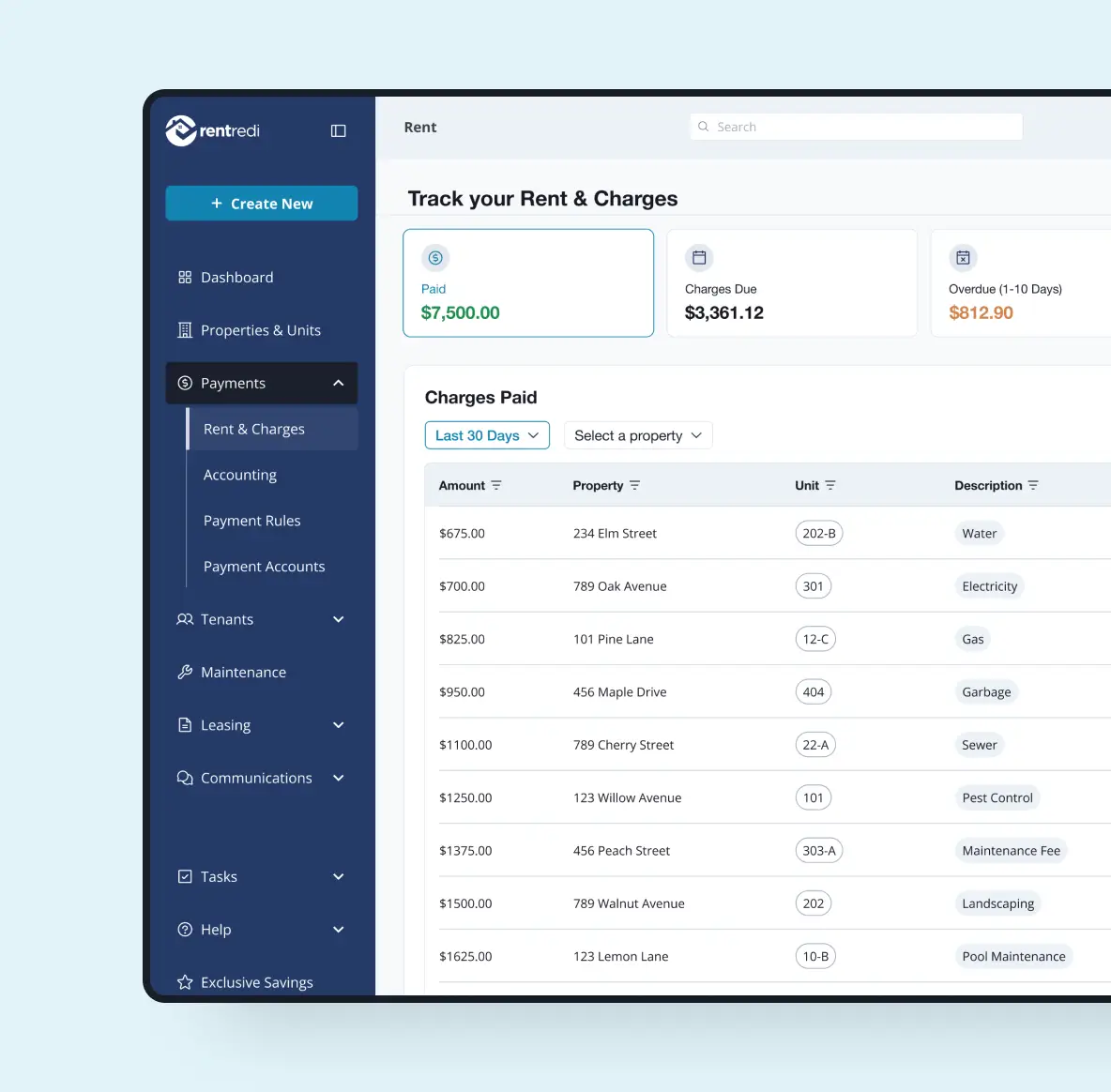
One great advantage of using a property management app is improved record-keeping. Platforms like RentRedi allow you to collect applications, run screenings, and store all documents in one secure place. Having all applicant data and screening results organized can be a lifesaver if you need to retrieve a record or demonstrate your compliance process. Plus, many online property management software services offer dashboards or reports that let you review your applicant pool and decisions at a glance. This can help you self-audit for any patterns that might be concerning.
Technology can also keep you updated. Some rental compliance software for landlords includes alerts about changes in housing laws or provides templates updated with the latest legal language. There are even services that specialize in fair housing compliance monitoring, which can be helpful for larger operations. For small landlords, using a well-rounded property management and accounting software platform can simplify staying on top of everything from applicant screening to monthly finances, ensuring nothing slips through the cracks. When properly leveraged, property management tools can significantly enhance both the efficiency and fairness of tenant screening.

A landlord’s success depends on both finding quality tenants and avoiding legal pitfalls. Fair housing laws set the framework to treat everyone equitably, and within that framework, landlords can still be diligent in protecting their investments. The key is always to tie your requirements to legitimate business needs, apply them evenly, and remain transparent and open in your dealings with applicants. Embrace tools and resources that help you stay informed and organized. In doing so, you create a win-win situation. By achieving this balance, you uphold the principles of equal housing opportunity while securing the peace of mind that comes with thoroughly vetted, qualified tenants in your property.
Sources
- Housing Opportunities Made Equal of Cincinnati – “Fair Housing Focus: Tenant Screening” (July 2024). (Summary of HUD guidance on conducting nondiscriminatory tenant screening) homecincy.org
- Urban Institute (Housing Matters) – Boshart, Abby. “How Tenant Screening Services Disproportionately Exclude Renters of Color from Housing” (Dec 21, 2022). housingmatters.urban.org
- California Apartment Association – “Application and Screening” (CAA Guidance on consistent screening practices). caanet.org