Accounting Fees Explained: What’s Tax Deductible for Landlords
Landlords face unique tax responsibilities, but many property-related expenses can reduce taxable income. You can deduct expenses of renting property from your rental income. This means typical rental costs are often deductible when properly documented. Understanding which fees qualify is key. Professional services like accounting fees used exclusively for rental bookkeeping or tax preparation are […]
Landlords face unique tax responsibilities, but many property-related expenses can reduce taxable income. You can deduct expenses of renting property from your rental income. This means typical rental costs are often deductible when properly documented. Understanding which fees qualify is key. Professional services like accounting fees used exclusively for rental bookkeeping or tax preparation are considered ordinary and necessary business expenses. Proper recordkeeping and awareness of these rules allow landlords to maximize deductions on Schedule E.

Common Deductible Expenses for Landlords
Owning rental property comes with ongoing costs, many of which can be deducted to reduce taxable rental income. Understanding how these deductions work helps landlords plan expenses strategically and maintain cleaner financial records. Below are five major categories of deductible expenses, each covering a distinct area of rental operations. Knowing how these deductions apply can make a meaningful difference at tax time and support more informed financial decision-making throughout the year.
- Financing and Ownership Costs: Mortgage interest is often one of the largest deductible expenses for landlords and can significantly reduce taxable income, especially in the early years of a loan. Property taxes assessed by local governments are also fully deductible. These ownership-related costs reflect the baseline expense of holding rental property rather than operating it. Keeping annual loan statements and tax assessments organized ensures these deductions are accurately reported and substantiated if questioned during a review or audit process.
- Insurance and Utility Expenses: Insurance premiums for rental properties are deductible and typically include landlord policies, liability coverage, and sometimes additional riders. Utilities paid by the landlord, such as water, electricity, gas, or trash service, are also eligible deductions when not billed directly to tenants. These expenses are considered necessary to keep the property operational and habitable. Consistent tracking throughout the year helps avoid overlooking recurring charges that can add up across multiple billing cycles.
- Repairs, Maintenance, and Depreciation: Routine repairs and maintenance that keep a property in good working condition are fully deductible in the year they occur. This includes tasks like fixing leaks, repainting, or replacing broken fixtures. Larger capital improvements, such as roof replacements or major renovations, are not deducted immediately but depreciated over time. Understanding the difference prevents misclassification and ensures deductions are taken correctly while still capturing the long-term value of substantial property upgrades.
- Tenant Acquisition and Management Costs: Expenses related to finding and managing tenants are commonly deductible and often overlooked. Advertising vacancies, paying tenant screening fees, and using property management services all qualify. Bookkeeping and accounting services tied to rental operations are also deductible. These costs directly support income generation and operational efficiency. Maintaining invoices and service agreements makes it easier to document these deductions and demonstrate their connection to rental activity if needed.
- Travel and Administrative Expenses: Landlords may deduct travel expenses incurred for property-related purposes, such as inspections, repairs, or meetings with contractors. Mileage, lodging, and certain meals can qualify when trips are primarily business-related. Administrative expenses like office supplies, software subscriptions, and communication tools used for managing rentals are also deductible. Separating personal and rental-related use is essential to ensure only legitimate expenses are claimed and properly documented.
Tracking deductible expenses consistently allows landlords to capture the full financial picture of their rental operations. By understanding how different costs are categorized and deducted, landlords can reduce taxable income while staying compliant. Clear records and informed planning turn routine expenses into meaningful tax advantages, making rental property ownership more financially efficient over the long term.
Accounting and Professional Fees
Landlords often hire accountants, bookkeepers, or lawyers to manage their property finances. When these professional services relate directly to the rental activity, their cost is deductible. Fees for independent contractors are explicitly listed as deductible operating expenses for rental real estate. If you pay an accountant to prepare rental income records or a CPA to file Schedule E, that portion of the fee is deductible against rental income. Conversely, any portion of an accountant’s fee that relates solely to personal tax issues is not deductible. It’s important to separate the rental property bookkeeping fees from any mixed-use fees, so only the accounting fees tax portion goes onto the Schedule E expense line.
Tax Preparation Fees for Rental Properties
Landlords can also deduct the cost of tax preparation services, but only for the rental portion. In other words, tax preparation fees are deductible only to the extent they relate to rental activities. If you paid one fee for both your personal and rental taxes, you must allocate the rental share. You can deduct tax preparation fees related to preparing income and expenses for properties under Schedule E. For example, if $200 of a $1,000 tax bill was for rental income and Schedule E forms, only that $200 is deductible. Remembering that only deductible tax preparation fees count as write-offs is essential when filing.
Reporting and Recordkeeping (Claiming Deductions)
All rental income and associated deductions are reported on IRS Form 1040 Schedule E. Landlords generally use Schedule E to report their real-estate rental income and expenses. To claim deductions, you must keep accurate records: maintain receipts, invoices, and bank statements that clearly tie each expense to the rental property. Good documentation makes it easy to justify landlord income tax deductions if audited. This means logging all utility bills, repair invoices, property management statements, and professional fees under the rental property account. When it’s time to file, totals from these records flow into Schedule E. IRS instructions and publications provide additional tax help for landlords, explaining how to carry each expense to the proper line on Schedule E. Seeking guidance from a tax professional or using tax software can also ensure all eligible landlord tax deductions are claimed accurately.
Property Management Bookkeeping Software and Apps to Manage Landlord Finances
Modern property management software for landlords often includes built-in accounting features to handle rentals of any size. These platforms serve as a full property management system, centralizing tenant information, lease terms, maintenance tickets, and financials. Many apps on the market claim to be the best property management software or best landlord app, catering to different portfolio sizes.
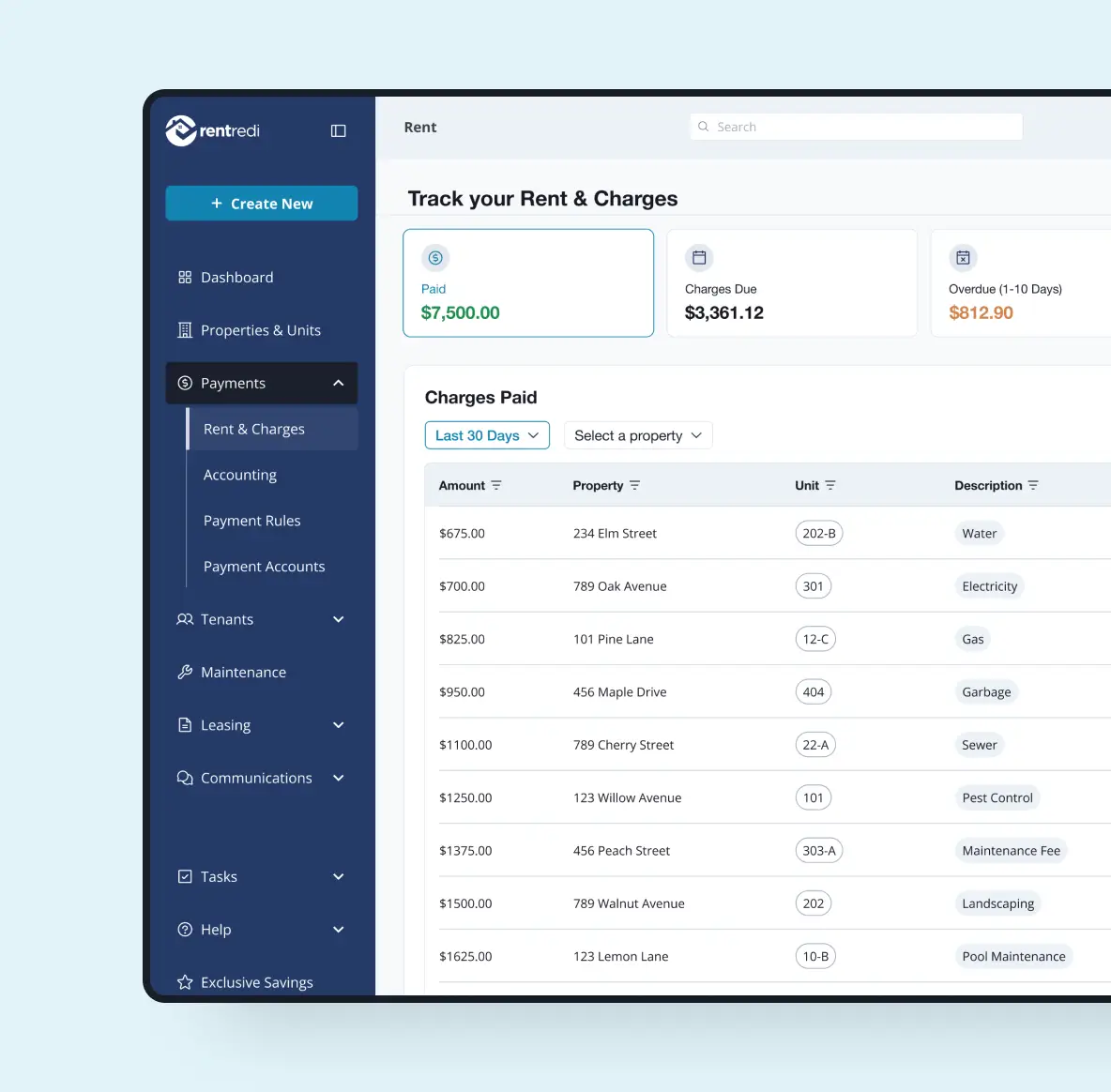
For small landlords, even a simple app can automate rent collection tracking and record expenses. Whether using cloud-based landlord software or a landlord management software suite, the key advantage is integration. Some systems let you photograph receipts and upload them to the property’s expense journal in real-time. One such tool is Rent Redi, which combines tenant screening, lease management, and accounting. By using technology, landlords can easily categorize costs as they occur. This makes it much simpler to generate year-end reports and ensure every qualifying expense is included in tax calculations. Investing in a solid rental property software helps streamline bookkeeping so that owners can focus on maximizing their deductible expenses for landlords.

Additional Rental Property Tax Tips
Smart tax planning for rental properties goes beyond simply knowing which expenses are deductible. The way you organize records, structure finances, and approach day-to-day operations can materially affect how much you keep at tax time. The following tips focus on practical habits and overlooked strategies that help landlords protect deductions, reduce audit risk, and capture every legitimate tax benefit available:
- Document Every Expense With Purpose: Keeping receipts alone is not enough to protect rental deductions. Each expense should be clearly tied to a specific rental activity and property. Add brief notes explaining why the purchase was necessary, who it benefited, and when it was used. This extra context strengthens your records during tax preparation and provides defensible proof if deductions are questioned. Organized documentation also reduces guesswork months later when details fade, making year-end reporting faster, cleaner, and far less stressful.
- Separate Personal and Rental Finances: Mixing personal and rental transactions is one of the fastest ways to create accounting errors. Dedicated bank accounts and credit cards for each property make income and expenses easy to trace. This separation prevents accidental misclassification, simplifies reconciliation, and provides a clear audit trail.
- Maximize the Home Office Opportunity: Landlords who manage properties from home often overlook the home office deduction. If a specific room is used exclusively and regularly for rental management, a portion of home expenses may qualify. It can include utilities, insurance, mortgage interest, or rent. Accurate square-footage calculations and consistent usage are critical. When applied correctly, this deduction offsets indirect operating costs that many landlords already incur but fail to capture.
- Track Small Purchases That Add Up: Minor expenses feel insignificant in isolation but often represent substantial annual totals. Items such as tools, light fixtures, smoke detectors, hoses, or replacement hardware are commonly forgotten. These purchases directly support rental operations and should be recorded immediately. Consistently logging small costs ensures they are not lost or misremembered later. Over a full tax year, these overlooked items can meaningfully increase total deductions without increasing audit risk.
- Don’t Miss Landlord-Paid Utilities: Utilities paid on behalf of tenants are fully deductible but frequently underreported. This includes electricity, gas, water, trash service, and internet when provided as part of the lease. Maintaining clear records of which utilities apply to each property avoids confusion. Accurate tracking also helps confirm that lease terms align with actual expenses.
- Capture Vehicle Mileage Correctly: Driving related to rental activity qualifies for a mileage deduction when properly documented. This includes trips for inspections, repairs, tenant meetings, and supply purchases. A mileage log noting dates, destinations, and purpose is essential. Relying on estimates weakens deductions. When tracked consistently, mileage deductions can offset fuel, maintenance, and depreciation costs tied to property management activities that landlords frequently underestimate.
- Include Insurance Premiums Without Exception: Insurance costs are a foundational rental expense, but can be fragmented across policies. Landlord insurance, liability coverage, umbrella policies, and even certain legal protections tied to rentals are deductible. Ensure premiums are recorded in full and attributed to the correct property. Missing partial payments or renewal charges reduces accuracy.
- Differentiate Repairs From Improvements: Correctly classifying repairs versus improvements affects both deductions and depreciation timelines. Repairs that maintain existing functionality are typically deductible in the year incurred, while improvements must be capitalized. Understanding this distinction prevents misreporting. Clear descriptions of work performed help support classifications. Getting this right preserves cash flow in high-maintenance years while maintaining compliance with tax rules governing long-term property upgrades.
- Review Mortgage Interest and Tax Statements Carefully: Mortgage interest and property taxes represent major deductions, but often include overlooked components. Review lender statements for prepaid interest, escrow adjustments, or supplemental tax bills. These amounts can change annually and may not align neatly with calendar year expectations. A careful review ensures no eligible costs are skipped. Given their size, even small omissions in this category can materially affect total taxable income.
- Reconcile Monthly Instead of Annually: Waiting until year-end to organize rental finances increases the risk of errors and missed deductions. Monthly reconciliation keeps records accurate while details are still fresh. This habit identifies inconsistencies early, supports better cash flow decisions, and shortens tax preparation time. Regular reviews also reveal spending patterns that may warrant adjustment. Consistency throughout the year is one of the simplest ways to protect long-term tax efficiency.
Effective rental tax management is built on disciplined habits rather than last-minute fixes. Accurate documentation, intentional financial separation, and consistent tracking turn everyday landlord activities into defensible deductions. By applying these practices throughout the year, property owners reduce errors, improve financial clarity, and ensure they fully benefit from the tax advantages associated with rental real estate ownership.

For any uncertainties, do not hesitate to seek tax help for landlords. A CPA or tax specialist with rental experience can advise on complex issues and ensure you claim every eligible deduction. By staying organized and following these rental property tax tips, landlords can confidently maximize their landlord income tax deductions and keep more of their rental revenue.
- IRS, Topic No. 414 – Rental Income and Expenses (Jan. 21, 2026)
- TurboTax, Rental Property Deductions You Can Take at Tax Time (2025)
- TurboTax, Tax Tips for Landlords (2025)
- Stewardingram, “Are Tax Preparation Fees Deductible for Personal or Business” (2023)
- TechRadar, “Best Property Management Software of 2025” by Nicholas Fearn (Oct. 8, 2025)