Choosing Property Management Software: What Features Really Matter
Finding the right property management software can feel overwhelming. There are countless platforms marketed as the best software for landlords, each loaded with a long list of features. But not all of those bells and whistles will be crucial for your business. A property management system is a digital platform that helps landlords and managers […]
Finding the right property management software can feel overwhelming. There are countless platforms marketed as the best software for landlords, each loaded with a long list of features. But not all of those bells and whistles will be crucial for your business. A property management system is a digital platform that helps landlords and managers centralize key tasks in one place. The challenge is identifying which property management software features truly make a difference in day-to-day operations. Focusing on these core capabilities will help you cut through the noise and choose a solution that streamlines your work rather than complicating it. Many property managers have found that adopting technology significantly reduces their workload and costs, about 60% say that using software lowers operational costs for their business. With so many rental property tools available, the key is to zero in on the features that matter most for efficiency, profitability, and tenant satisfaction.

User-Friendly Interface and Ease of Use
One of the first things to consider is how easy the software is to use. A powerful platform won’t do much good if you can’t navigate it. The best property management computer software prioritizes a user-friendly interface. This means:
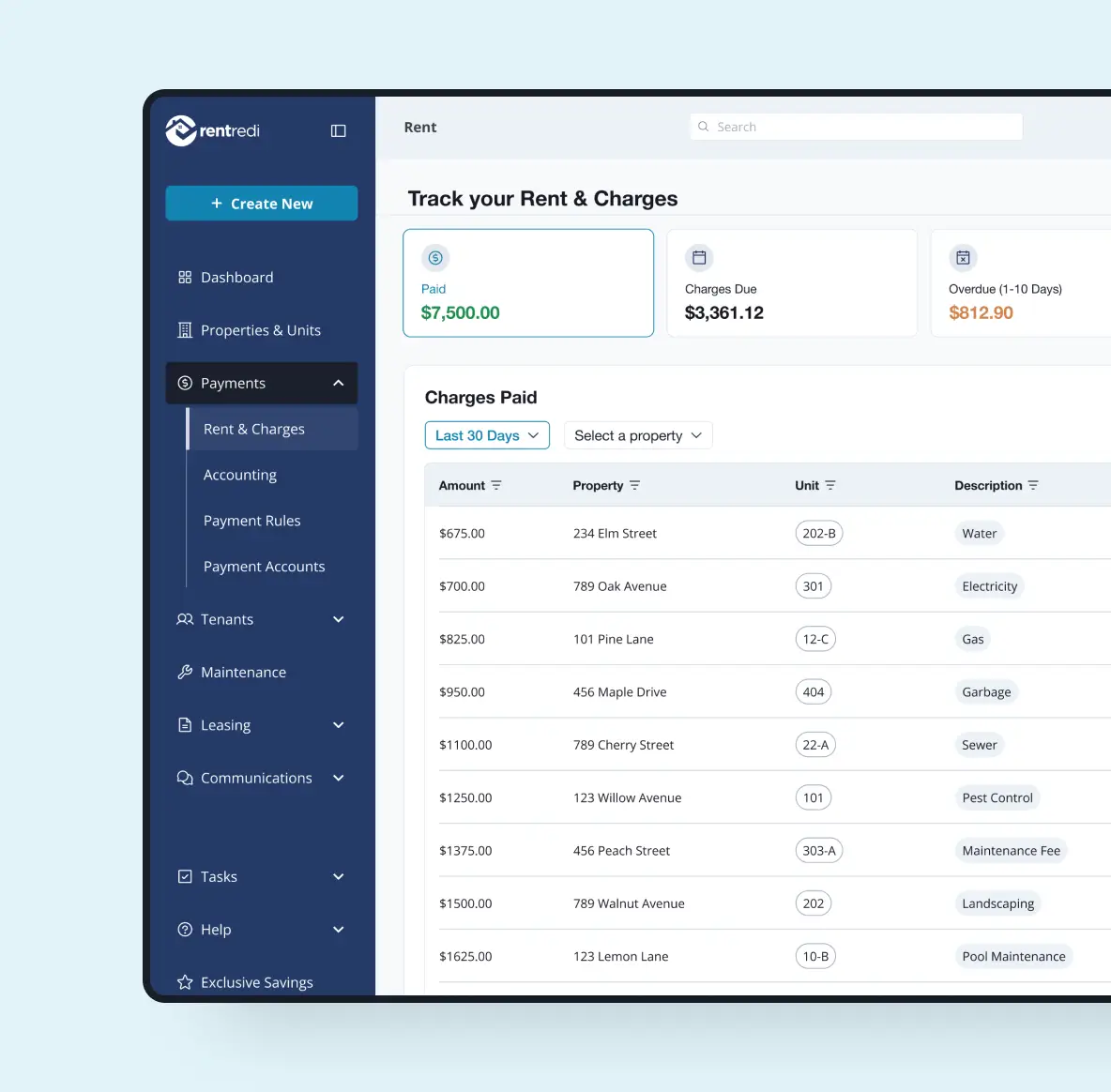
- Clean and Uncluttered Layout: A clean layout reduces cognitive overload and helps users immediately understand where to find essential functions. Effective software avoids overcrowded screens, unnecessary graphics, or layered menus that slow down decision-making. Instead, it organizes information logically, spacing elements to guide the eye naturally. This approach improves accuracy when entering data, reviewing reports, or managing tasks. A well-structured layout supports efficiency by making routine workflows feel predictable and easy to repeat.
- Clear and Intuitive Menu Navigation: Clear menus ensure that users can move through the platform without relying on tutorials or support documentation. Strong navigation groups relate tools together and use familiar language rather than technical jargon. Dropdowns, icons, and labels work together to signal function and hierarchy. This clarity shortens onboarding time and lowers the risk of mistakes during common actions. Consistent navigation across sections also builds confidence, allowing users to move quickly between tasks without second-guessing their choices.
- Dashboards That Surface Key Information Instantly: Effective dashboards present critical data at a glance, eliminating the need to dig through multiple screens. Well-designed dashboards highlight metrics such as rent status, maintenance requests, and upcoming deadlines in a clear visual hierarchy. Charts, alerts, and summaries are used purposefully, not decoratively. This structure helps users identify issues early and prioritize work efficiently. Actionable dashboards support better decision-making by keeping essential information visible and easy to interpret.
Remember, the goal is to take control of your operations, not to fight a complicated system. A well-designed interface makes everyone’s life easier, improving productivity across the board.
Online Rent Collection and Payment Processing
Collecting rent is the single most important task for most landlords. A top priority feature is a robust online rent payment system. Relying on paper checks or in-person collection not only eats up time but can also delay your cash flow. Modern rental software for landlords typically allows tenants to pay rent electronically via ACH bank transfers, credit/debit cards, or other online payment methods. This capability lets you manage rental properties online without chasing down tenants each month. Tenants benefit from convenience, and landlords benefit from getting funds faster with an automatic record of every transaction. A platform with reliable online rent collection makes life easier for everyone. Tenants can enroll in automatic payments, landlords receive funds more quickly, and every payment is tracked automatically in the system. Be sure to choose software that supports multiple payment options and sends confirmation receipts.
Maintenance and Work Order Management
Property upkeep is a major part of landlording, and good software will help you stay on top of maintenance tasks. Maintenance and work order management features allow tenants to submit repair requests online and let you or your property manager assign those work orders to maintenance staff or vendors. This centralized tracking means no more lost sticky notes or forgotten voicemail messages about a leaky faucet.
Instead, every request is logged in the system, and you can monitor its status from start to finish. Timely maintenance not only protects your property value but also keeps tenants happy. When repairs are handled promptly and efficiently, tenant satisfaction increases, which can ultimately shorten vacancy times and boost your rental income. Look for software that offers a tenant portal for maintenance requests, scheduling tools, and the ability to track past repairs. Some systems even include vendor management, so you can coordinate with plumbers, electricians, or other service providers through the platform. This feature ensures you never miss a maintenance issue and can help prevent small problems from turning into expensive emergencies.
Communication and Tenant Interaction Tools
Smooth communication with tenants is critical for a successful rental operation. A good property management platform will include built-in communication tools that make it easy to send updates and respond to tenants. Think of features like in-app messaging or integrated email/SMS capabilities that allow you to broadcast announcements and handle individual tenant inquiries in one place. When all communication is centralized, it reduces confusion. You can quickly reference prior conversations or confirm that a tenant received a certain notice.
Prompt and clear communication also builds trust with your tenants. If a resident can message you through the app and get a timely response, they’ll feel more secure and heard. Many platforms also enable automated communications, such as scheduling rent-due reminders or maintenance appointment notifications to go out automatically. This ensures tenants are always kept in the loop. Responsive communication tools within the software can dramatically improve the landlord-tenant relationship. Property management software that offers messaging, reminders, and notifications helps managers stay connected in real time and improve the overall tenant experience.
When evaluating software, consider how it handles tenant interaction: Does it have a tenant portal or app for conversations? Can you send group messages to all tenants or filter by property? Prioritize a system that streamlines and logs your communications, because misunderstandings can be costly. A strong communication feature set will make your life easier and your tenants happier.
Tenant Screening and Applicant Management
Placing the right tenants in your units is arguably as important as collecting rent on time. That’s why tenant screening tools are a must-have feature for serious landlords. An integrated screening module lets you run background checks, credit reports, and eviction history searches directly through the software. By thoroughly vetting applicants, you can avoid signing a lease with someone who may cause problems down the line.

Screening helps you find reliable renters who will respect your property and pay on schedule, ultimately saving you money and headaches. In fact, thorough tenant screening is key to finding renters who reduce your stress. Good tenants tend to care for the property and fulfill their obligations, whereas a bad tenant can cause property damage or delinquent payments. The software should allow prospective tenants to fill out online rental applications, which you can then evaluate. Look for features such as the ability to set custom screening criteria, view reports within the platform, and automatically decline applicants who don’t meet certain benchmarks.
Some property management platforms also facilitate listing your vacant units on popular rental websites and collecting applications from there, merging marketing with tenant screening. These rental management tools work together to ensure you get high-quality tenants in place quickly and confidently. When your software can handle the application pipeline from interest to approval, you’ll fill vacancies faster with better tenants. That means fewer evictions, fewer property damages, and a more stable rental income for you.
Accounting and Financial Reporting
Keeping accurate financial records is at the heart of property management. Any software you choose should include strong property management and accounting software capabilities, a full ledger for your rental business. This means tracking all rent payments, security deposits, and expenses in an organized way. Look for features such as automated income and expense tracking, the ability to upload receipts or invoices, and bank reconciliation tools that match transactions with your bank statements.
A great platform lets you generate financial reports with ease, giving you insight into your profitability and cash flow with a single click. For example, you should be able to run an income statement or rent roll report for a given month or year, or see balances for each tenant’s ledger. These reports are vital for budgeting and tax time. No more scrambling through spreadsheets or shoeboxes of receipts. From monthly cash flow statements to year-end tax preparation, having solid financial reporting tools in your software can make all the difference. Many property management systems can also integrate with popular accounting packages or even serve as standalone landlord accounting software, so you don’t need a separate program.
Additionally, consider whether the software handles property management bookkeeping software tasks like calculating management fees, late fees, or CAM (common area maintenance) charges if applicable. Automation here is key. The system should post rent charges, late fees, and so on automatically each period. Not only does this reduce human error, but it also ensures your financial records are always up to date. Make sure the platform can function as a reliable bookkeeping and accounting hub for your rentals. It should save you time and improve accuracy when managing your finances, which directly affects your bottom line.
Mobile Accessibility and Remote Management
In today’s world, being able to work from anywhere is a necessity. A property management solution isn’t truly complete unless it offers strong mobile access, typically in the form of a dedicated property management app or a responsive mobile web portal. Mobile accessibility means you can handle urgent tasks on the go without needing a computer.
With a good mobile app, you can receive a push notification and respond immediately, authorize a repair, or check the tenant’s payment history right from your smartphone. This level of flexibility is especially useful if you manage multiple properties or have a day job outside of property management. A responsive mobile experience ensures that being away from your desk doesn’t grind operations to a halt. RentRedi is one example of a platform that offers a fully featured mobile app for landlords, enabling you to approve rental applications, send messages, and even trigger an ACH rent withdrawal with just a few taps. The best solutions provide a seamless transition from desktop to mobile. You should be able to review reports, communicate with tenants, and handle payments without opening a laptop. Modern managers expect to run their businesses from their phones when needed, and top providers deliver on that expectation.
Integration and All-in-One Capabilities
Another feature that really matters is integration. The ideal property management and accounting software will serve as an all-in-one solution for most of your needs, or at least play nicely with other tools you already use. Integration can take many forms. For an all-in-one platform, it means the software has broad functionality built in: accounting, maintenance requests, tenant screening, document management, owner statements, etc., all under one roof.Using such a comprehensive system ensures all your data is centralized and consistent. For instance, many landlord platforms with accounting and maintenance features allow you to handle both finances and repairs in the same application, rather than using separate programs for each. Some rental property software goes beyond finances, allowing landlords to also manage vendor contacts, create work orders, and communicate with their team. This kind of all-in-one approach can drastically simplify your workflow, since you don’t have to enter the same data multiple times in different systems or juggle separate apps for different tasks.

With so many landlord software platforms on the market, doing a bit of homework upfront will pay off greatly. Once you implement a well-chosen system, you’ll likely wonder how you ever managed without it. The day-to-day tasks of rent collection, fixing leaky sinks, balancing the books, and keeping tenants informed become much more manageable when powered by software designed for the job. In turn, you can focus on higher-level strategies like growing your portfolio or improving tenant satisfaction, rather than being bogged down by administrative details. Manage rental properties online with an eye toward the features that matter: the goal is a smoother, more profitable operation and happier tenants.
Sources:
- Balanced Asset Solutions – “7 Key Features of Property Management and Accounting Software”
- AZ Big Media – “Top features to look for in property management software”
- ND Consulting LLC – “7 Must Have Features to Look for in Property Management Software”
- American Apartment Owners Association – “Property Management Accounting Software Features To Consider”
- Reedy & Company – “The Importance of Tenant Screening Services for Landlords”
- Investopedia – “Best Rental Property Management Software for 2026”