From One Rental to Many: Rental Property Portfolio Management Guide
Learn how to scale from one rental to a portfolio with systems, tools, and strategies to manage tenants, maintenance, and finances efficiently.
Property owners who move from managing one rental property to managing multiple units often discover that the job changes in ways they didn’t expect. What once felt manageable with spreadsheets, text messages, and memory quickly becomes a small business operation.
Owning a single rental is often hands-on and personal. Scaling to several units demands systems, delegation, and long-term strategy.
What Changes When You Scale
- More tenants = more communication channels
- More units = more maintenance coordination
- More transactions = more financial tracking
- Higher stakes = more strategic decision-making
The move from one property to multiple units isn’t just about collecting more rent. It’s about stepping into the role of portfolio manager rather than part-time landlord.
The New Challenges of a Growing Portfolio
1. Coordinating Maintenance Across Properties
With one rental, maintenance is reactive and relatively simple. A leaky faucet or broken appliance can be handled case by case.
With multiple units, maintenance becomes a logistical puzzle:
- Tracking open repair requests
- Scheduling vendors across locations
- Budgeting for recurring upkeep
- Planning capital improvements
Without structure, small issues turn into costly emergencies.
2. Managing Tenant Communication at Scale
When you have one tenant, communication is direct and informal. With several tenants, messages overlap:
- Lease renewals
- Late payment reminders
- Repair updates
- Policy clarifications
Missed messages can damage relationships or create legal exposure. Clear communication and documentation becomes essential.
3. Financial Oversight Gets Complex
A single property’s finances are straightforward: rent in, expenses out.
A multi-unit portfolio introduces:
- Separate income streams
- Security deposit tracking
- Tax categorization
- Cash flow forecasting
- ROI comparisons between properties
At this stage, landlords must think like investors, not just owners.
Quick Comparison: One Property vs. Multiple Units
| Area | Single Rental | Multiple Units |
| Maintenance | Reactive, informal | Systemized, scheduled, vendor-managed |
| Tenant Communication | Direct texts or calls | Centralized messaging & documentation |
| Rent Collection | Manual or bank transfer | Automated, multi-property tracking |
| Financial Reporting | Basic spreadsheet | Categorized accounting & forecasting |
| Strategy | Short-term focus | Long-term portfolio growth |
Why Stronger Management Tools Become Essential
As rental portfolios grow, landlords often realize that manual systems no longer scale. Spreadsheets, notebooks, and scattered emails create inefficiencies.
Property management software can help centralize:
- Rent collection
- Tenant communication
- Maintenance requests
- Financial reporting across properties
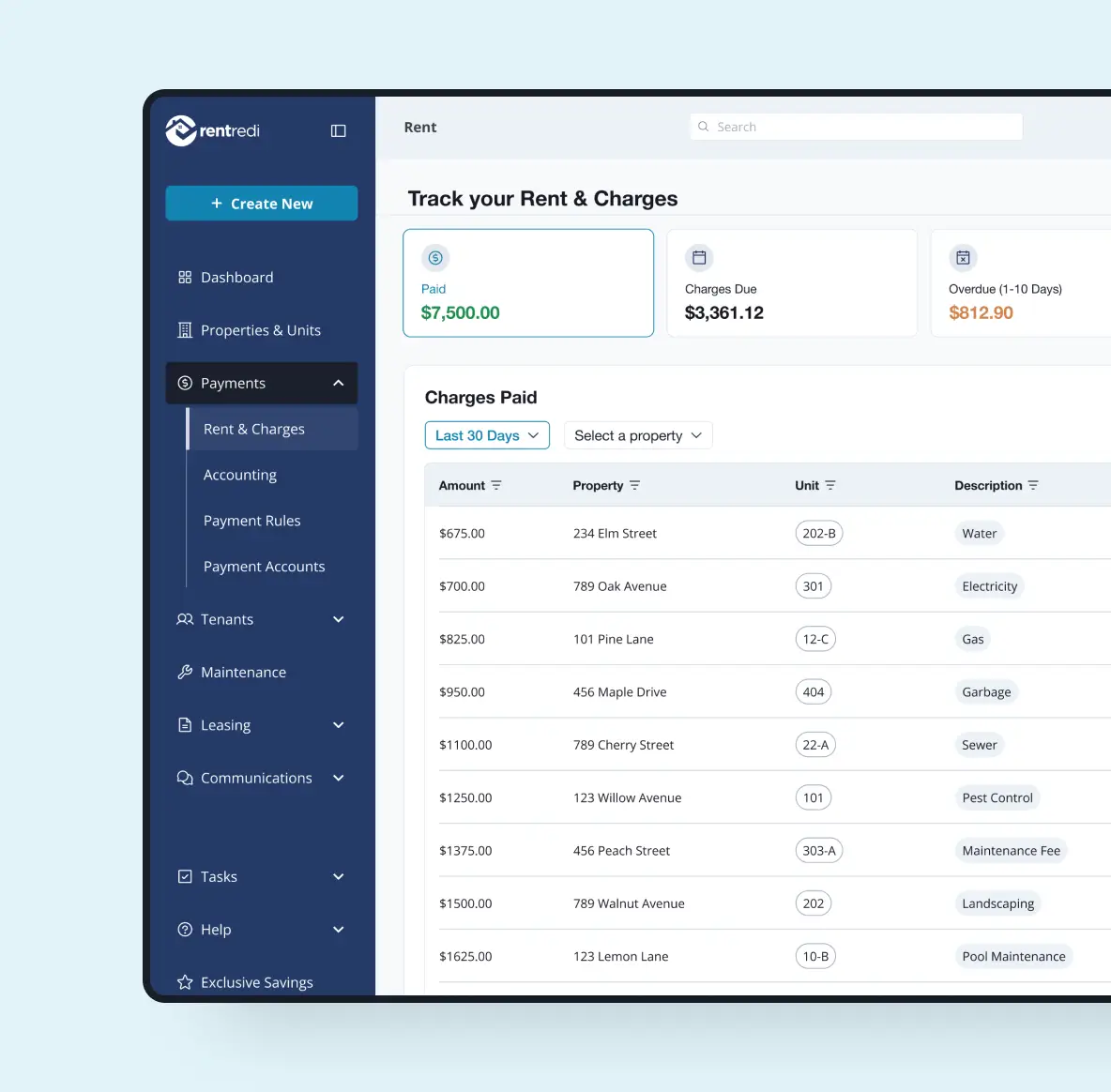
Platforms such as RentRedi offer centralized systems designed to simplify these responsibilities and keep operations organized as portfolios expand. Landlords exploring options can review plan structures and feature details on their pricing page. Understanding pricing tiers and included tools helps property owners choose solutions that align with both current needs and long-term investment plans.
When the workload increases, organization becomes your most valuable asset.
A Practical Checklist for Scaling from One Property to Many
If you’re preparing to expand your rental holdings, consider the following:
- Standardize lease agreements across all properties.
- Create a vendor list for plumbers, electricians, and contractors.
- Implement a centralized rent collection system.
- Track expenses by property, not just collectively.
- Set aside capital reserves for unexpected repairs.
- Review insurance coverage to ensure portfolio-level protection.
- Establish documented communication protocols.
Scaling without structure creates stress. Scaling with systems creates sustainability.
FAQ: Expanding a Rental Portfolio
How many units require property management software?
There’s no strict number, but many landlords find that once they manage more than one or two properties, software dramatically reduces administrative time and errors.
Should I hire a property manager instead of using software?
It depends on your availability and goals. Some landlords prefer hands-on management supported by software. Others outsource entirely. The right choice depends on time, location, and complexity.
How do I decide when to buy another property?
Look at cash flow stability, debt-to-income ratios, market conditions, and whether your current systems can support another unit without chaos.
Strengthening Your Leadership as You Scale
As rental portfolios expand, landlords often benefit from strengthening their management and leadership skills. Knowledge in financial planning, operations management, and organizational strategy can make the difference between a scattered portfolio and a streamlined one.
Some property owners explore formal education pathways, including pursuing a business management bachelor’s degree online, to learn more about building these competencies while continuing to grow their rental business. A deeper understanding of management principles can support smarter investment decisions and more efficient operations.
Market Data Matters
Understanding broader housing and rental trends can help landlords make smarter acquisition and pricing decisions. Resources like the U.S. Census Bureau’s Housing Data provide updated information on vacancies, rental rates, and regional trends.
Access to credible data supports informed long-term planning.
The Strategic Shift: From Landlord to Portfolio Manager
The biggest change when scaling isn’t operational — it’s mental.
Single-property owners focus on:
- Paying the mortgage
- Keeping one tenant happy
- Handling repairs as they come
Multi-property owners must:
- Evaluate asset performance
- Compare ROI between properties
- Plan acquisitions strategically
- Protect long-term portfolio value
This transition requires organization, financial discipline, and better systems.
Conclusion
Transitioning from a single rental to a growing portfolio requires more than just hard work—it requires the right infrastructure. As your responsibilities shift toward strategic portfolio management, RentRedi provides the all-in-one expertise needed to streamline the journey.