What Is Prorated Rent & How to Calculate It?

It can seem like an inconvenience to figure out prorated rent. However, calculating prorated rent is relatively simple, as we’ll show you in this article.

8 min read

When it comes to preparing a unit for occupancy (or, if you’re a tenant, if you’re getting ready to move), you might encounter the term “prorated rent.” Among the other paperwork or landlord inspections you might be preparing for, it can seem like an unexpected inconvenience to calculate prorated rent. However, determining how much to charge is super easy. For tenants, it is a great opportunity to save money. It means you only have to pay rent for the number of days you are living in a rental property, which means you don’t have to pay a full month’s rent.

Prorated Rent

Prorated rent is a partial payment charged only for the period a unit is occupied. For example, if a renter were to move into an apartment on the 15th of the month, the landlord might offer “prorated rent” for that month. Instead of having the tenant pay for a full month while only living in the unit for half a month, they would pay half the monthly payment. It might seem like a complicated process, but it’s easy to understand once you break it down into a simple formula.

Prorated rent generally serves as a negotiated discount between landlords and tenants when a tenant will not occupy the residence for the entire month. Depending on which state you manage rentals in, it can be calculated in a few different ways, so it’s important to be sure you’re up-to-date on the landlord-tenant laws in your state. In some states, you must calculate a flat 30-day rent, while in others, you must calculate prorated rent based on the exact number of days in the designated month.

Calculating Prorated Rent

As mentioned above, how you calculate your prorated rent will depend on your state’s guidelines. If you’re a landlord, double-check your state requirements. If you’re a tenant, you can also check your state’s landlord-tenant laws or ask the landlord to determine how they calculate the payment.

Step-by-Step Calculation Process

Below, we’ve provided a few examples of how to calculate prorated rent, depending on whether you charge for the exact number of days in the month or a flat 30-day month.

  1. Confirm the Monthly Rent Amount: Begin by verifying the total monthly rent specified in the lease agreement. This figure forms the foundation for all subsequent calculations and should be agreed upon by both landlord and tenant before proceeding with the proration process.
  2. Identify the Proration Period: Determine the exact dates the tenant will occupy the unit during the partial month. This could be due to a mid-month move-in, move-out, or a lease change that doesn’t align with the start or end of the calendar month.
  3. Determine the Total Days in the Month: Check how many days are in the month when proration occurs. This number may vary. Some months have 28, 29 (leap year), 30, or 31 days, so accuracy here is crucial for a fair calculation.
  4. Choose the Calculation Method: Decide whether to use the actual number of days in the month, a standard 30-day month, or another method specified in the lease or required by local laws. This choice will affect the daily rent rate and the total prorated amount.
  5. Calculate the Daily Rent Rate: Divide the monthly rent by the total number of days in the chosen calculation method. For example, if using the actual days in a 30-day month and the monthly rent is $1,500, the daily rate would be $50.
  6. Count the Days of Occupancy: Calculate the number of days the tenant will occupy the unit within the proration period. Include both the move-in and move-out dates if the tenant is present for those days, ensuring the count matches the agreed occupancy.
  7. Multiply Daily Rate by Days Occupied: Multiply the daily rent rate by the number of days the tenant will be living in the unit. This calculation gives the total prorated rent due for the partial month of occupancy.
  8. Review and Communicate the Calculation: Double-check the math and share a written breakdown of the calculation with all parties involved. Transparency ensures understanding and agreement, reducing the risk of disputes over the prorated rent amount.

For EXACT number of days in the month:

  1. Take your monthly rent and divide it by the number of days in the month to determine your daily rent.
  2. Then, take the daily rent and multiply it by the number of months the tenant will occupy the unit.

$ Monthly Rent / # of Days in Month = $ Daily Rent
$ Daily Rent * # of Days Occupied by the Tenant = $ Total Prorated Rent

Prorated rent formula and calculator: $ Monthly Rent / # of Days in Month = $ Daily Rent

$ Daily Rent * # of Days Occupied by the Tenant = $ Total Prorated Rent

For FLAT 30-day:

  1. Take your monthly rent and divide it by 30 to determine your daily rent.
  2. Then, take the daily rent and multiply it by the number of months the tenant will occupy the unit.

$ Monthly Rent / 30  = $ Daily Rent
$ Daily Rent * # of Days Occupied by the Tenant = $ Total Prorated Rent

Best Practices and Dispute Prevention

Clear communication and thorough documentation are essential when it comes to prorated rent, ensuring both landlords and tenants are protected and misunderstandings are minimized. By following these best practices, both parties can confidently navigate partial-month payments and avoid unnecessary disputes:

  • Clearly Outline Prorated Rent Terms in the Lease: Ensure that the lease agreement explicitly details how prorated rent will be calculated, including the method used (actual days in the month or flat 30-day calculation), the specific period covered, and the agreed-upon amount.
  • Provide Written Notice of Calculations: After determining the prorated rent, landlords should provide tenants with a written breakdown of the calculation. This notice should reference the formula used, the monthly rent, the number of days in the calculation, and the occupancy period. Such transparency not only builds trust but also gives tenants a clear record to reference, minimizing the potential for disputes about payment amounts.
  • Encourage Questions and Open Dialogue Before Signing: Both landlords and tenants should feel comfortable discussing prorated rent before finalizing the lease. Landlords should proactively invite questions and be prepared to demonstrate the calculation process. Tenants, in turn, should seek clarification on any points they find unclear. This collaborative approach ensures everyone is on the same page and prevents misunderstandings during the move-in or move-out process.
  • Promptly Address and Document Any Discrepancies: If a dispute or confusion arises regarding prorated rent, address it promptly and professionally. Refer back to the lease agreement and any written communications to clarify the situation. Keeping all discussions and resolutions documented protects both parties and helps maintain a positive landlord-tenant relationship.
  • Document the Property’s Condition at Move-In and Move-Out: Conduct a thorough walkthrough of the property together at both move-in and move-out, noting the condition of appliances, fixtures, and general wear. Take photos and have both parties sign off on the findings. This documentation is invaluable if questions arise about charges, including prorated rent, and helps establish a fair and transparent record for both landlord and tenant.

Landlords and tenants can prevent most disputes around prorated rent. These best practices foster trust and ensure a smoother rental experience for everyone involved.

Legal and Contractual Considerations of Prorated Rent

Understanding the legal framework and contractual obligations is crucial for both landlords and tenants. Legally, there is no overarching federal law in the United States that mandates landlords must offer prorated rent. In most states, landlords are not required by law to prorate rent when a tenant moves in or out mid-month. Instead, the decision to prorate rent typically falls within the landlord’s discretion, unless state or local regulations specify otherwise. Some jurisdictions may have specific guidelines regarding how rent should be calculated in these scenarios, so it’s always wise to consult local landlord-tenant statutes for clarity. For example, certain rent control laws or state-specific tenant protections might outline when and how prorated rent must be applied, especially in cases involving regulated housing or unique lease circumstances. However, in the absence of such laws, prorating rent remains a widely accepted practice because it promotes fairness and transparency in the rental process.

The contractual obligations regarding prorated rent are primarily defined within the lease agreement. A well-drafted lease will clearly specify if and how prorated rent will be handled. This includes detailing the calculation method, such as whether the daily rent rate is based on the actual number of days in the month, a flat 30-day month, or an annual calculation divided by 365 days, and outlining the circumstances under which prorated rent applies, such as mid-month move-ins or move-outs. Both parties should thoroughly review the lease before signing to ensure they understand these terms. If the lease is silent on prorated rent, it is advisable for tenants to request clarification and, if possible, obtain written confirmation from the landlord regarding how partial-month rent will be handled. This proactive approach helps prevent misunderstandings and disputes down the line.

It’s also important to note that lease agreements may explicitly state that the landlord does not offer prorated rent. In such cases, tenants could be responsible for the full month’s rent regardless of their move-in or move-out date, and failing to pay could constitute a breach of contract. On the other hand, many professional property management companies include prorated rent clauses in their standard lease templates to foster positive landlord-tenant relationships and ensure transparency. The enforceability of prorated rent terms depends on the lease language and compliance with applicable local laws. Both landlords and tenants should keep a copy of the signed lease and any written communications about prorated rent for their records.

Prorated Rent with Rental Property Management Software

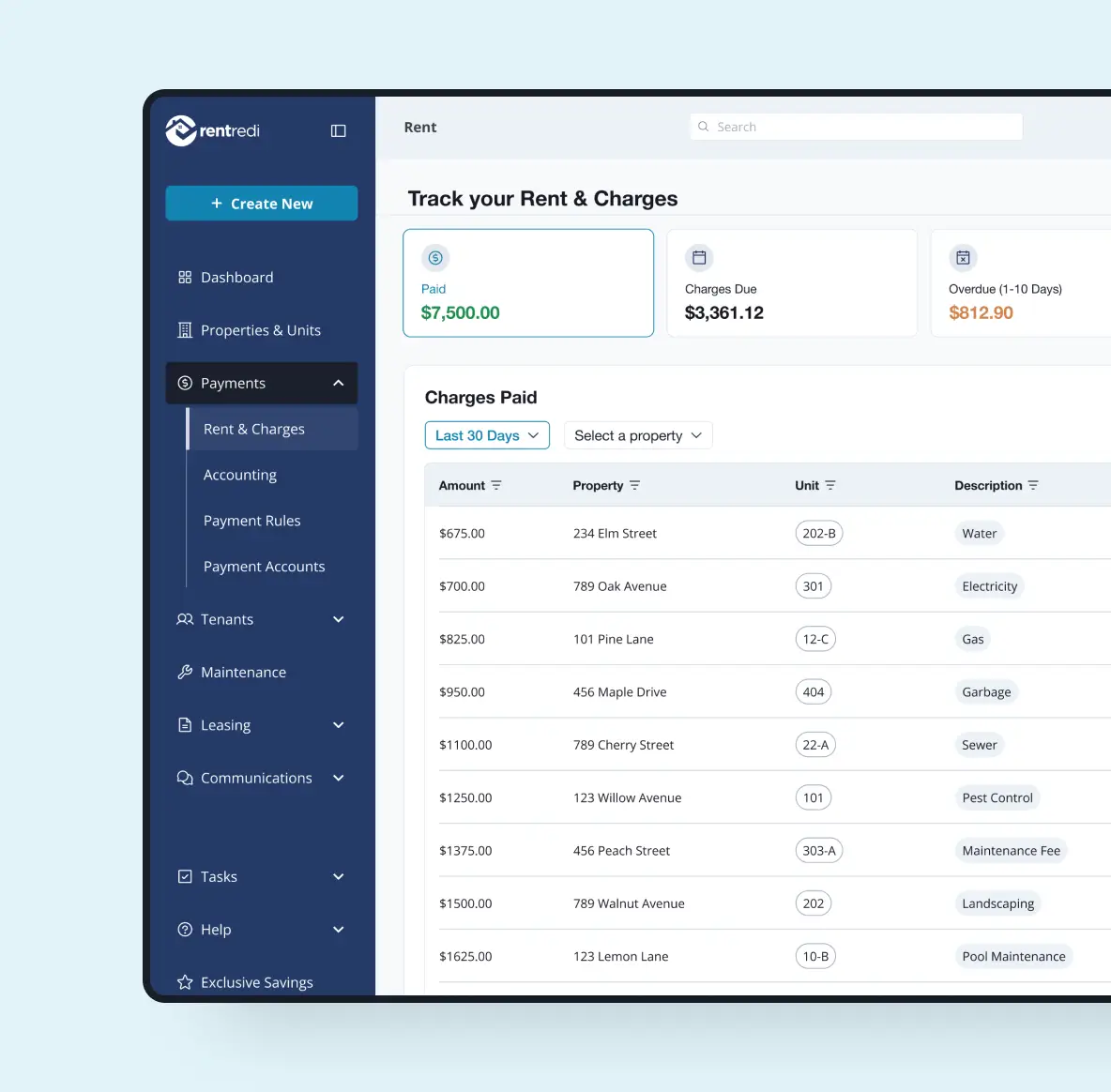
Yes, you can! RentRedi makes it easy to account for prorated rent in your charges. If you send out a prorated rent charge from your RentRedi dashboard, your tenant can submit partial payments! Your tenant can also set up auto-pay for rent to make paying even easier throughout their entire lease.

Frequently Asked Questions

If you’re new to prorated rent, you may have some questions about how it works, who pays it, and what happens in special situations. Here are answers to the most common concerns:

What is prorated rent?
Prorated rent is a partial rent payment calculated based on the number of days a tenant occupies a rental unit during a month, rather than charging for the entire month.

Why do landlords and tenants use prorated rent?
Prorated rent ensures fairness when a lease starts or ends mid-month, so tenants pay only for the days they actually occupy the property and landlords receive accurate compensation.

Who pays prorated rent?
The tenant usually pays prorated rent when moving in or out mid-month. The landlord adjusts the rent so that the tenant pays only for the days they actually occupy the rental unit.

How do you calculate prorated rent for a leap year?
For leap years, calculate the daily rent by dividing the monthly rent by 29 days in February. Multiply the daily rate by the number of days the tenant occupies the unit.

Can landlords refuse to prorate rent?
Landlords are generally not required by law to offer prorated rent unless the lease states otherwise. Some may refuse, so always clarify terms before signing your rental agreement.

Does prorated rent affect the security deposit?
No, prorated rent only applies to rent payments. Security deposits are typically a fixed amount and do not change based on move-in or move-out dates.

Is prorated rent required by law?
Most states do not require landlords to prorate rent, but it is a common practice. Always check your local laws and review your lease for specific terms.

If you have questions not covered here, ask your landlord or property manager for clarification to ensure a smooth rental experience.

Additionally, you can use RentRedi for much more than its rent collection properties. Did you know that you can also screen tenants, sign leases, list properties, and manage maintenance, all from one dashboard? Yes, that’s right! Sign up here to get started!