
7 Legal Pitfalls in Rental Management (and How Software Helps Landlords Avoid Them)
Learn 7 legal pitfalls in rentals and how property management software helps landlords stay compliant and avoid costly mistakes.

Managing rentals sounds straightforward until you’re knee-deep in laws, leases, maintenance, and tenant disputes you didn’t see coming. Most landlords don’t realize how many regulations apply to their properties until something goes wrong. And when it does, the costs add up fast.
Property management software can help. The better tools catch mistakes before they happen. They keep your records organized and prompt you when deadlines are coming up. They won’t replace good judgment, but they will make sure you’re following the process correctly.
This page tackles the seven legal issues in rental property management. Read on to learn how smart software can help you avoid these pitfalls altogether.
Common Legal Issues Faced by Landlords in Rental Management
If you own or manage rental property, these seven areas will keep you busy:
Fair housing and anti-discrimination: The federal Fair Housing Act prohibits discrimination based on protected classes. Violations trigger investigations and penalties from HUD and the Department of Justice. Check the DOJ’s Fair Housing Act page if you’re unsure what counts as discriminatory advertising or screening.

Security deposits: State laws are strict about how much you can collect, where you store it, what you can deduct, and when you must return it, with an itemized list. Getting this wrong is probably the fastest way to end up in small claims court.
Lease agreements: Boilerplate leases are tempting but dangerous. Your lease needs to reflect local ordinances, required disclosures, late fee caps, notice periods, and termination rules. Miss something, and parts of your agreement might not hold up.
Tenant screening and the FCRA: When you use consumer reports, the Fair Credit Reporting Act (FCRA) applies. That means getting consent and handling information correctly. It also entails sending adverse action notices when you deny or condition tenancy. See the FTC’s guide for your reference.
Eviction process: Eviction Lab’s data shows landlords file 3.6 million eviction cases each year. Even when you have cause, you must follow the exact notice and filing rules. Self-help evictions, such as locking out tenants or shutting off utilities, are illegal in most places. Eviction filings are also public and can hurt your reputation.

Habitability and maintenance: Most jurisdictions require safe, sanitary, comfortable, and livable conditions. Think heat, water, structural soundness, and prompt attention to essential repairs, among others. The Legal Information Institute explains the implied warranty of habitability.
Record keeping and audits: Clean records protect you in disputes and at tax time. The IRS expects accurate documentation of income and expenses, and depreciation. See IRS Publication 527 for further details to guide you.
Adrian Iorga, Founder and President of Stairhopper Movers, recommends staying on top of rental management. Having worked with both homeowners and renters who have moved in, he sees some of the common legal pitfalls they’ve encountered. He suggests keeping up with rental market trends and investing in technology.
Iorga says, “Every rental market has its own regulations, and they change all the time. Landlords who use old lease templates or just wing it end up in court way more often than they should. The ones who do well treat compliance like any other business expense…something you invest in upfront to avoid bigger problems later.”
The impact of legal non-compliance
The fallout from non-compliance ranges from fines and court orders to damage that lingers for years. Partners and lenders notice when your operation looks risky.
Cases in point:
A single fair housing complaint can mean months of investigation and expensive settlements, plus mandated training and monitoring. The DOJ and HUD pursue these cases hard, and repeat offenses carry steeper penalties.
Mishandled security deposits often result in statutory damages and attorney’s fees that far exceed the deposit amount. It’s one of the most common landlord losses, but one of the easiest to avoid.
Sloppy documentation will sink you in court. Without a reliable paper trail for notices, payments, inspections, and repairs, even a strong case falls apart. So, be wary of not putting everything into writing!
Learn from Andrew Bates, COO at Bates Electric. After witnessing several tenant disputes while providing electrical services, he sees the need to overhaul record-keeping. He believes that digital tools can help safeguard this information.
Bates explains, “Documentation can save your rental business. When you have clear records of every communication, maintenance request, rental payments, and all others, you’re protected. Systems that timestamp and organize these details automatically give you peace of mind and credibility when disputes come up.”
How Smart Rental Management Software Mitigates Legal Risks
Leveraging technology is one of the rental market trends in 2026. That’s why both landlords and property managers are investing in rental property management software. In fact, its global market is projected to reach $3.61 billion by 2033, with a 6.4% compound annual growth rate (CAGR).
That said, here’s how a smart rental management platform can help mitigate your legal risks:
1. It offers automated lease management
Software that generates and customizes leases from jurisdiction-specific templates saves you from copy-paste errors.
For one, good systems prompt you to make required disclosures and comply with notice rules based on your property’s location. Likewise, they store signed copies in one place instead of scattered across email threads.
When renewal season arrives, automated reminders and version control help you update agreements without missing anything.
2. It provides efficient tenant screening
Consistent tenant screening protects you and keeps things fair.
Software makes it easier to apply the same criteria to every applicant as well as pull credit and background reports through compliant partners. It can issue proper adverse action notices when needed.
A standardized, documented process also reduces the risk of violating fair housing rules. When everything runs through one workflow, you can prove your decisions were based on objective criteria.
3. It streamlines rent collection and record-keeping
Online rent collection cuts down on misapplied payments and lost checks. Automatic receipts and ledger reports reduce disputes before they start.
If you’ve ever tried to reconstruct a year of payments from texts and bank screenshots, you know how fragile informal systems are. That’s why it’s better to use a rental management software like Rentredi that lets you collect and track as well as book and account for proper payments.
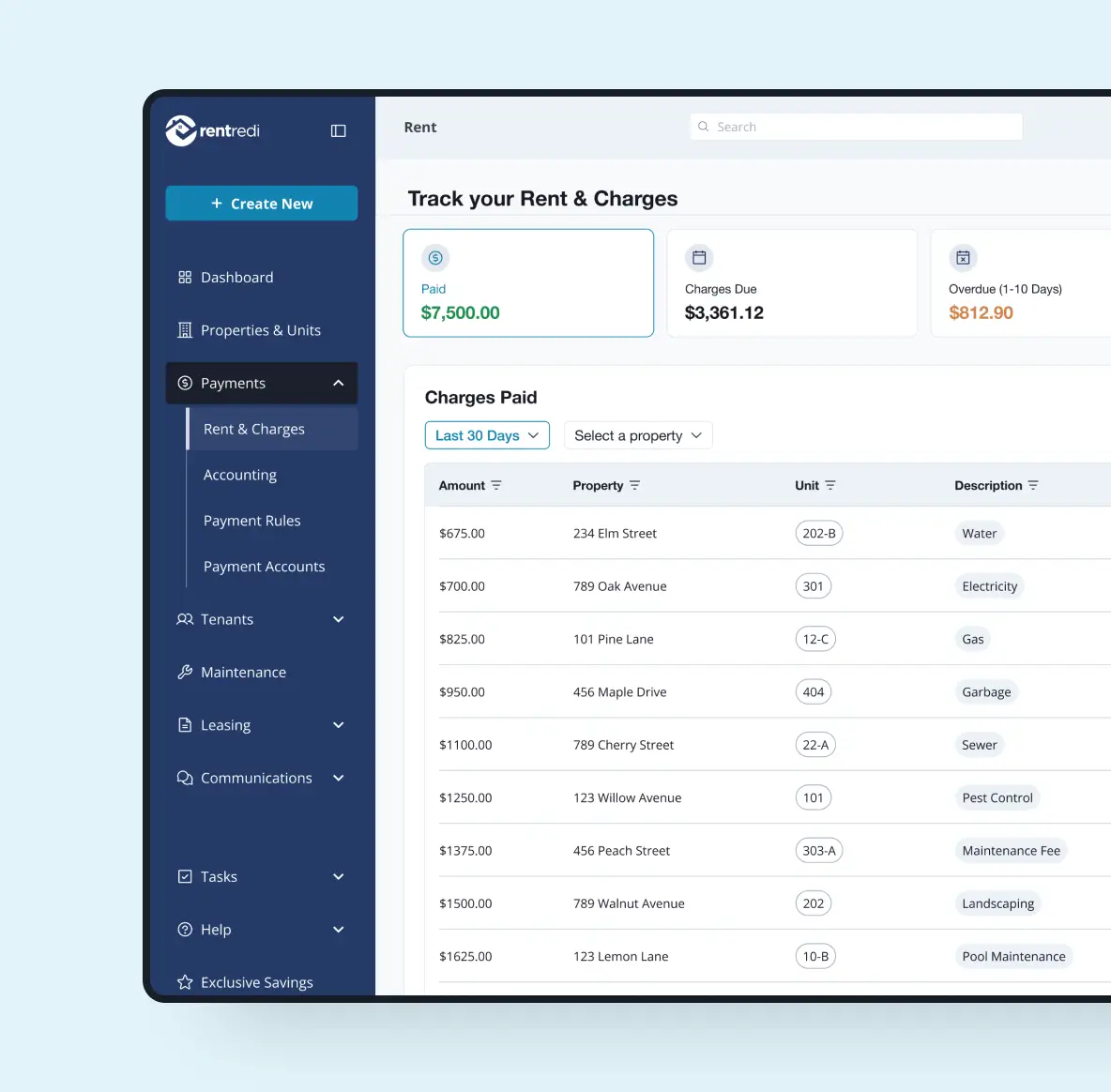
Clean records also pay off during audits and tax time, since you can export income and expense reports that match what the IRS expects in Publication 527.
4. It ensures proper maintenance and property management
Effective maintenance management isn’t just about keeping tenants happy. It’s about staying compliant with habitability standards.
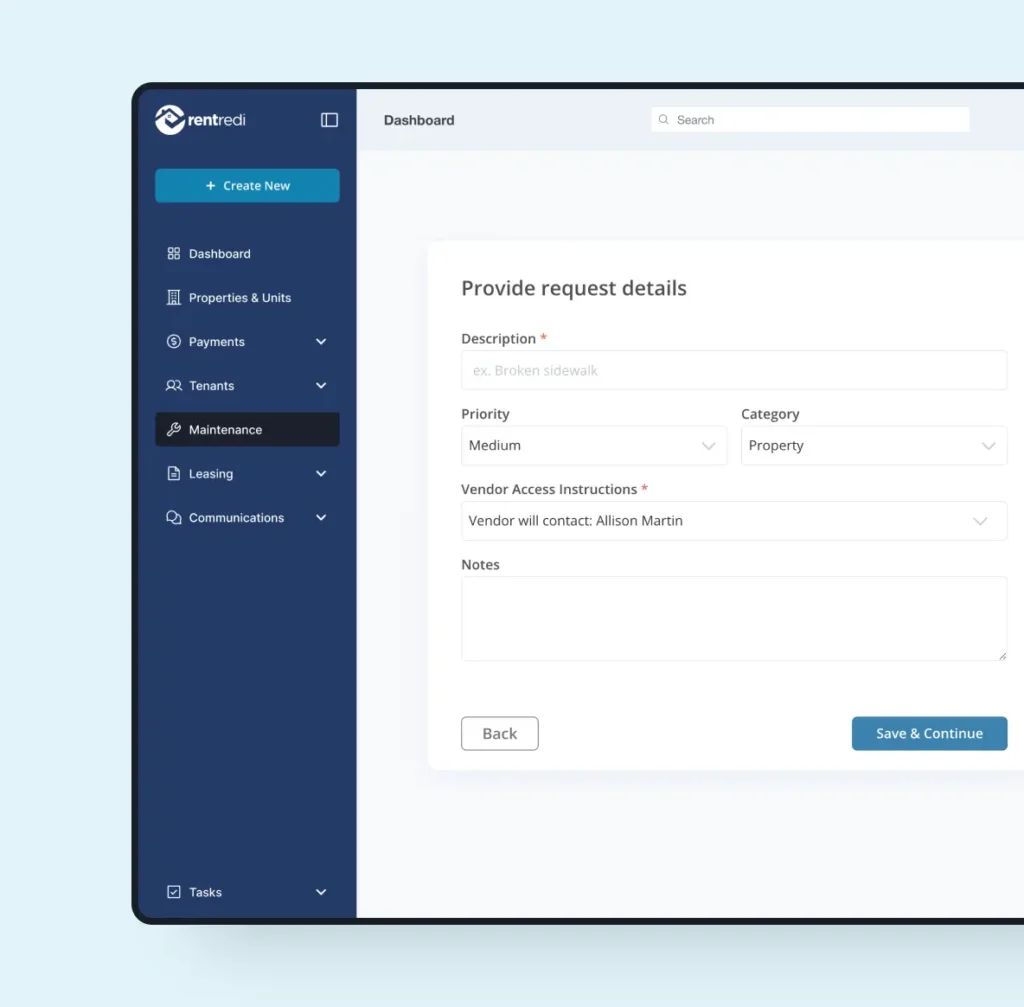
Software that centralizes work orders and tracks completion dates creates the audit trail you need. Scheduled inspections help you catch small issues before they become legal ones. In an emergency, a clear log of communications and actions shows you acted promptly.
Take it from Ryan Beattie, Director of Business Development at UK SARMs. He has researched how software addresses common blind spots:
Beattie shares, “Rental management platforms do more than digitize paperwork. They build compliance checks into daily workflows. They also flag potential issues before they escalate and create audit trails that satisfy legal requirements. That changes how landlords manage risk.”
Key Factors in Choosing the Right Rental Management Software
Picking software is a long-term decision. You want something that fits how you work now and scales with you later. How do you choose the right one?
To pick the best rental property management software for your business, here’s what to factor in:
Legal fit: Look for jurisdiction-specific lease templates and compliance prompts for disclosures. Go for built-in logs for notices and inspections.
Ease of use: If your team and/or tenants won’t use it, it won’t help. Demos and free trials are worth the time.
Integrations and data portability: Accounting, background checks, e-signatures, and banking connections keep your workflow tight. Make sure you can export your data cleanly.
Safety and security: Ask about encryption, user permissions, access control, and audit logs. If you’re processing payments and handling sensitive information, you need strong safeguards and clear documentation.
Reputation and support: Read reviews and check response times. Likewise, ask about training resources. Ultimately, regular updates to compliance features are a good sign.
Take RentRedi’s smart rental management software, for instance. It ticks all the boxes of key factors mentioned above, from legal fit to reputation and support.
More importantly, this platform enables you to handle all property management functions in one place, from property listings and application screenings to tenant communications and maintenance requests, down to rental collections.
Ryan Walton, Program Ambassador of The Anonymous Project, has his fair share of evaluating software options across industries. This includes rental management platforms in the real estate market.
Rodriguez shares, “The right software grows with your portfolio. Look for platforms that update their compliance features regularly and offer jurisdiction-specific templates. Opt for those that provide clear documentation of their security standards. Your software should help you maintain legal compliance, not just store files.”
Wrapping up
You don’t need to memorize every statute to run a compliant rental business, but you do need systems that help you follow the rules. Fair housing, deposits, leases, screening, evictions, habitability, and record keeping all have legal requirements.
Software turns those requirements into helpful reminders, steady checklists, reliable records, and easy transactions. Sure, it won’t solve every problem; However, it will make your processes cleaner and your risks smaller.
Ready to tighten up your compliance and simplify your day-to-day? Explore rental management software options and see what fits your portfolio. For a landlord-friendly platform with tools for leases, screening, payments, and maintenance, check out RentRedi.
