
Smart Maintenance Alerts: How Predictive Maintenance Prevents Costly Repairs
Learn how predictive maintenance and smart alerts help property managers prevent expensive repairs and run smoother, more reliable properties.

Smart maintenance alerts are pretty straightforward. Your building’s systems have sensors that monitor for problems, and when something looks off, you get a heads-up. That’s it; No magic involved, just sensors doing their job and software connecting the dots.
These days, residents expect things to work. When the AC dies in August or a pipe bursts at 2 AM, nobody’s happy. Smart alerts help you catch these problems while they’re still small and manageable.
The benefits? You spend less on emergency repairs. Your team isn’t constantly putting out fires. And tenants don’t have to deal with as many breakdowns. When maintenance runs smoothly, everyone wins.
This page covers what you need to know about predictive maintenance. As a property manager, read on to discover how it can save you from costly repairs. More importantly, learn how to set smart maintenance alerts in place.
How Predictive Maintenance Works in Property Management
Traditional maintenance has two flavors: Wait until something breaks or service everything on a schedule, whether it needs it or not. Predictive maintenance takes a different approach. You fix things based on how they’re actually performing.
Here’s what happens: Sensors track things like temperature, vibration, even power usage. When a pump starts pulling more electricity than normal, or humidity creeps up where it shouldn’t, the system notices. Your team gets an alert with specific details about what’s wrong and where.
Suppose you’re a property manager handling several units in Missouri, and your building’s monitoring system flags unusual heat spikes in one of the units.
The data shows the electrical wiring is starting to deteriorate, something you’d never catch through routine checks alone. Instead of waiting for it to fail, you bring in an electrical contractor in St Louis, MO, to repair the issue before it turns into a costly outage or, worse, a fire hazard.
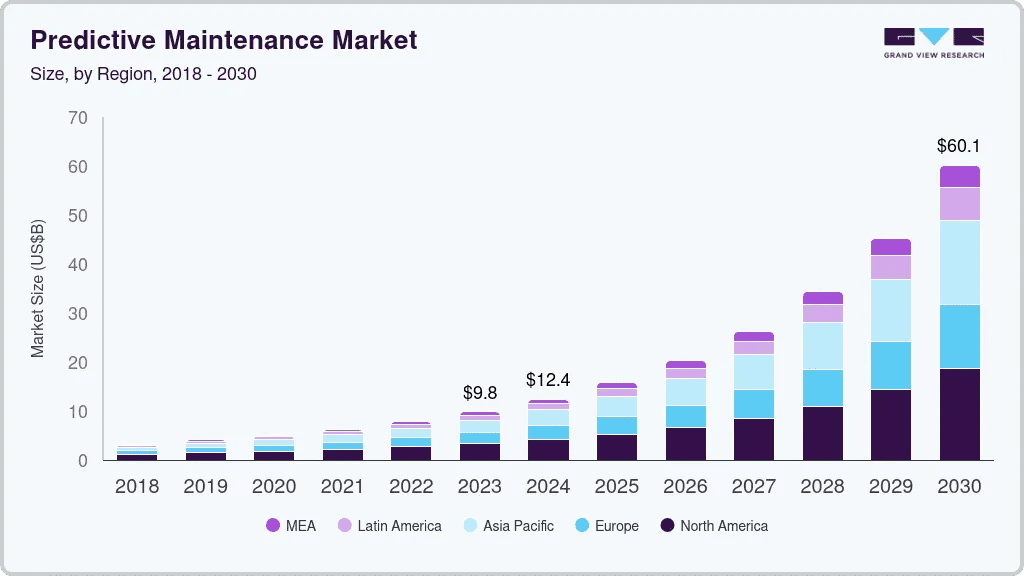
Companies and organizations across different industries are now investing in predictive maintenance. In fact, its worldwide market is projected to grow from $7.85 billion in 2022 to $60.13 billion by 2030 at a 29.5% compound annual growth rate (CAGR). With Internet of Things (IoT) and data analytics in place, AI-powered predictive maintenance helps you achieve the following benefits:
Prevent failures
Reduce downtime
Cut costs
Extend asset lifespan
Why Property Managers Are Switching to Predictive Maintenance
Property management goes beyond fixing things. It’s about staying ahead of the problems that drain money, time, even tenant trust.
If you’re enrolled in a debt relief program, for instance, you look for every opportunity to save and avoid unnecessary expenses. And predictive maintenance works the same way for maintaining your properties while saving money in the long run.
Smart maintenance alerts give you control and predictability with fewer expensive headaches in managing properties. That said, here’s why property managers are making the switch:
Money saved is money earned. A water leak sensor costs maybe $50. The water damage it prevents? That can easily hit $5,000 or more. But it’s not just about water. Catching a failing HVAC component in May means you can schedule the repair at your convenience. Wait until it dies completely in July, and you’re paying overtime rates while tenants sweat it out.

Equipment actually lasts longer. Take care of your equipment, and it takes care of you. Something as basic as changing HVAC filters on time can cut energy use by 5-15% and help the system last longer, according to the Department of Energy’s Energy Saver guidance. Do this across multiple properties, and the savings add up fast.
Happy tenants stick around. Residents care about maintenance more than almost anything else. Regular maintenance quality drives tenant satisfaction and retention. When you fix things before they even know there’s a problem, it completely changes the relationship. They see you’re taking care of their home, not just collecting rent.
How to Set Up Smart Maintenance Alerts for Your Properties
It’s best to employ smart property management using AI and automation, especially when it comes to maintenance.
Smart alerts take the guesswork out of what needs attention by turning real-time data into clear, actionable insights. Instead of reacting to surprise breakdowns, you can stay ahead of them with a system that tells you exactly when and where to act.
As a property manager, here’s how to leverage predictive maintenance for your units:
1. Identify Your Highest-Impact Maintenance Risks
Start by pulling your maintenance records from the last year or two. Look at your work orders, emergency calls, and repair bills. You’ll see patterns fast:
Maybe it’s the same HVAC units struggling every summer or water heaters failing during winter. This time, you need to prepare your property’s HVAC system for summer or water heaters for the winter.
As a property manager, what’s your course of action? Don’t guess. Look at your actual data. Find out where you’re spending the most time and money on repairs. That tells you exactly where smart alerts will help most.
Once you know your problem areas, set specific goals: Cut water damage incidents by 50% or reduce summer HVAC failures by 75%. Whatever makes sense for your properties!
2. Choose the Right Predictive Maintenance Tools
The next step is to match your technology to your actual problems. If water damage is killing your budget, start with leak sensors and automatic shutoff valves. For HVAC issues, focus on current sensors and temperature monitoring.
A few practical questions to ask:
Will this work with our current maintenance system?
Can we customize alerts for our needs?
How long do the batteries last?
Is the interface something my team will actually use?
How secure is the data?
But what better way to choose the right tool than to have a centralized property management dashboard in place?
RentRedi is a robust property management platform that lets you manage all aspects of your rental properties, all in one place. But on the flip side, it allows your tenants to get smart alerts and submit maintenance requests via the RentRedi Tenant app.
3. Set Up the Technology for Smart Maintenance
To begin, you need three basic components:
Sensors to collect data: Sensors track water flow, humidity, temperature, vibration, and power usage.
Software to make sense of it: The software watches for problems and sends alerts when something’s off.
A network to connect everything: Your network (WiFi, cellular, or specialized systems like LoRaWAN) keeps everything connected.
The technology isn’t complicated at all. What matters is making sure the pieces work together. Good sensors, smart software, and alerts that actually reach the right person at the right time. Get those three things right, and you’re golden!
Think about the power system in your building, for example. If your dry type transformers start running hotter than usual, sensors can detect the temperature spike long before it becomes a safety issue. The system alerts your team immediately, allowing you to schedule a quick inspection instead of dealing with a full transformer failure and an unexpected outage.
4. Get Your Maintenance Team Aligned
Technology is only as good as the people using it. Include your maintenance staff from day one. Ask what would make their jobs easier. Run a pilot program in one or two buildings before rolling out everywhere.
As a property manager, the hardest part isn’t installing sensors. It’s helping maintenance teams see this as a tool that makes their job easier, not a threat to their expertise. Show them how it helps them be better at what they do, and they’ll embrace it.
5. Turn Maintenance Data Into Action
Once your sensors are up and running, they create a constant stream of information. A spike in water flow might mean a leak. Rising vibration could signal a motor bearing going bad. The system compares what’s happening now to what’s normal, and when something looks wrong, it sends an alert. In short, maintenance data gives you greater control of your portfolio or properties.
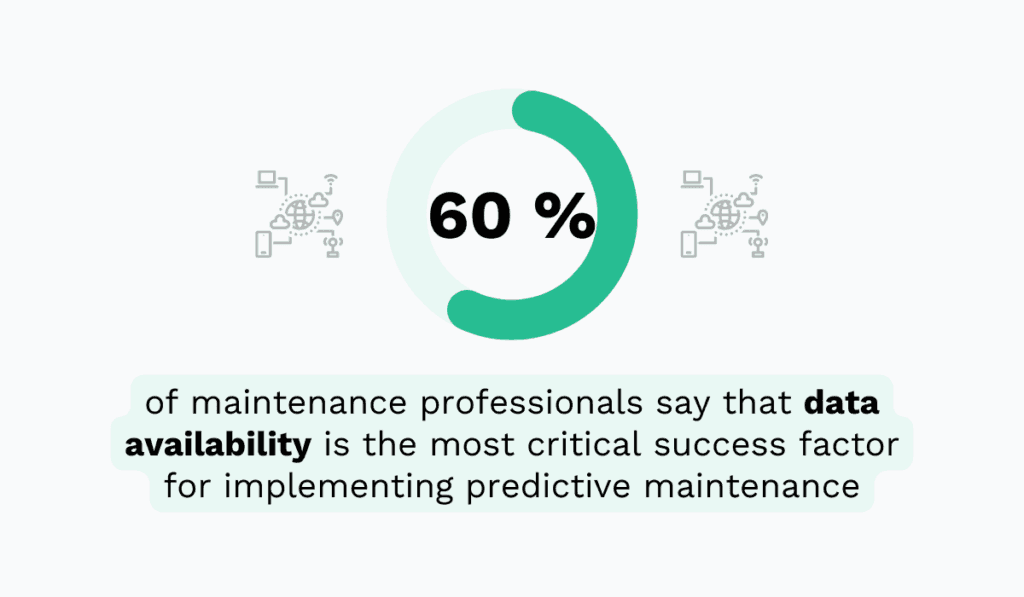
About 60% of professionals claim that data availability is the most crucial factor in predictive maintenance. These insights tell you exactly if there’s a problem and that you need to act on it.
The best part? These systems get smarter over time. They learn what’s normal for your buildings and reduce false alarms while catching real problems earlier.
The Real-World Challenges of Predictive Maintenance (and How to Handle Them)
Smart maintenance can help emergency-proof your rental properties, but it isn’t without its real-world challenges. Even the best systems come with gradual learning curves and the occasional technical hiccup.
Before you dive in, understand what challenges you might face and how to handle them without derailing your maintenance workflow. Let’s be honest about these obstacles:
The upfront cost can sting, especially for large portfolios. Start small with your most problematic buildings and use the savings to expand. You’ll also hit technical snags. Networks go down, batteries die, and you’ll need to adjust alert settings. Build in time for device checks and create simple troubleshooting guides.
Alert overload is a real problem. If your phone buzzes every five minutes with minor issues, you’ll start ignoring everything. Focus on what matters. Set smart thresholds, batch non-urgent notifications, and only escalate true emergencies.
Privacy concerns come up, too. Be upfront with residents about what you’re monitoring (equipment performance, not personal activities). Skip the cameras in units unless legally required and clearly disclosed.
And remember, sensors don’t fix things. They just tell you when to fix them. You still need solid maintenance practices and regular preventive care.
The Future of Property Maintenance: Smarter, More Predictable Operations
Predictive maintenance is already changing how properties run. As a property owner or manager, you can plan your work and prevent problems rather than racing to emergencies. This saves money, keeps the equipment running longer, and makes the residents or tenants happier.
The technology keeps improving. We’re starting to see AI that can prioritize repairs across entire portfolios, virtual models that predict equipment lifespan, and insurance companies offering discounts for buildings with leak detection systems.
Ready to try it? Start with one problem that’s driving you crazy. Maybe it’s water damage, maybe it’s HVAC failures. Pick your battle, install a few sensors, track the results for three months. The improvement will convince you to expand from there.
Smart alerts won’t solve every maintenance headache, but they’ll prevent the worst ones. And in property management, that’s worth its weight in gold! If you need to stay on top of your property maintenance with smart alerts in place, RentRedi can help with its smart property management software—learn more.
