Quick Answer: Build-to-Rent (BTR) communities are purpose-built neighborhoods of rental homes managed under a single professional operator. Demand is rising because high home prices, elevated mortgage rates, remote work trends, and shifting lifestyle preferences have made single-family renting more attractive than homeownership for many households.
Build-to-Rent (BTR) communities are neighborhoods of single-family homes or townhomes designed and built for rental. Not sold.
Picture a quiet subdivision. Garages, backyards, tree-lined streets, but with professional on-site management and a leasing office. And all the amenities you’d expect in a well-run apartment community.
The U.K. has been ahead of the curve on BTR for years. However, U.S. momentum really picked up after the Great Recession as institutional interest in single-family rentals grew. Now, with home prices and mortgage rates high, the purpose-built rental model has moved from niche to mainstream.
CBRE researchers describe a rapidly expanding pipeline of BTR projects and a growing investor appetite across the Sun Belt and beyond. The sector has evolved into a scalable asset class in the U.S. The proof is in the numbers:

This page covers what you need to know about the BTR model as one of the rental market trends. As a real estate investor, read on to understand why it’s gaining traction in the United States to make informed decisions.
What Is A Build-to-Rent (BTR) Model?
The BTR model creates purpose-built neighborhoods where every home is for rent, and the entire community is operated as a unified, long-term rental.
When investing in real estate, developers plan the homes and streets (even amenities) together, then a professional management team runs the community day to day.
How it differs from other options:
| Model | How it works | Key experience |
| BTR models | Entire neighborhoods are purpose-built for renting and managed under one professional operator | Consistent service, unified management, modern amenities, and single-family living without ownership responsibilities |
| Traditional rentals | Individual homes are owned by different landlords and scattered across locations | Inconsistent management, varying maintenance quality, and less standardized renter experience |
| Homeownership | You buy and own the home outright, including land and structure | Full control and long-term equity, but also full responsibility for maintenance, repairs, and property costs |
Let’s expound on the other two:
- Traditional rentals: Many single-family rentals are scattered across a city with a patchwork of owners. BTR communities centralize everything (leasing, maintenance, amenities). That way, residents get consistency and quick service.
- Homeownership: You still get a driveway…maybe a backyard and a grill. However, you’re not on the hook for a new roof, a surprise water heater, or yard work.
Common BTR features include:
- Single-story/two-story detached homes/townhomes – with garages, private outdoor space, etc.
- Property essentials – think on-site staff, speedy maintenance, smart-home features, etc.
- Community amenities – consider pools, dog parks, co-working lounges, trails, package lockers, etc.
- Contract clauses – with flexible lease terms, pet-friendly policies, community events and activities, etc.
The National Association of Home Builders (NAHB) Eye on Housing has tracked a rising share of new single-family homes built specifically for rent over the last few years (have a glimpse of the facts and figures below). BTR isn’t a short-term experiment but a structural addition to the U.S. housing supply.
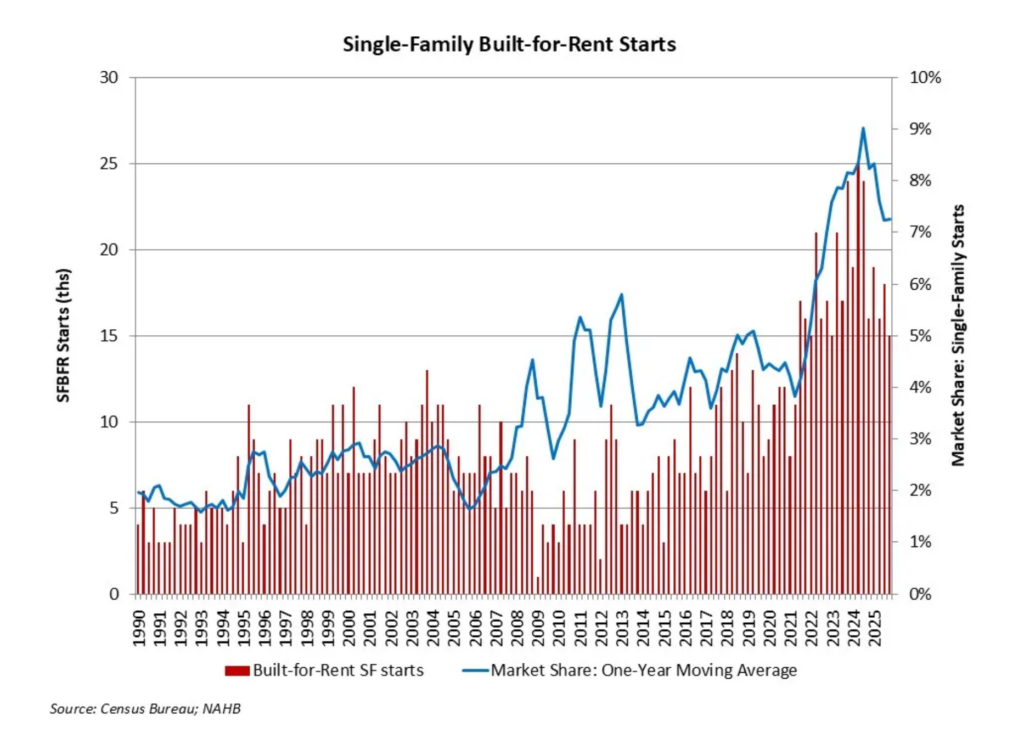
Why Build-to-Rent Communities Are Growing in 2026
Several trends are driving the growth of BTR communities in 2026. From affordability challenges to changing lifestyle preferences. More and more renters are looking for alternatives that offer the space of a home without the commitment of ownership.
Here’s why this model is growing this year:
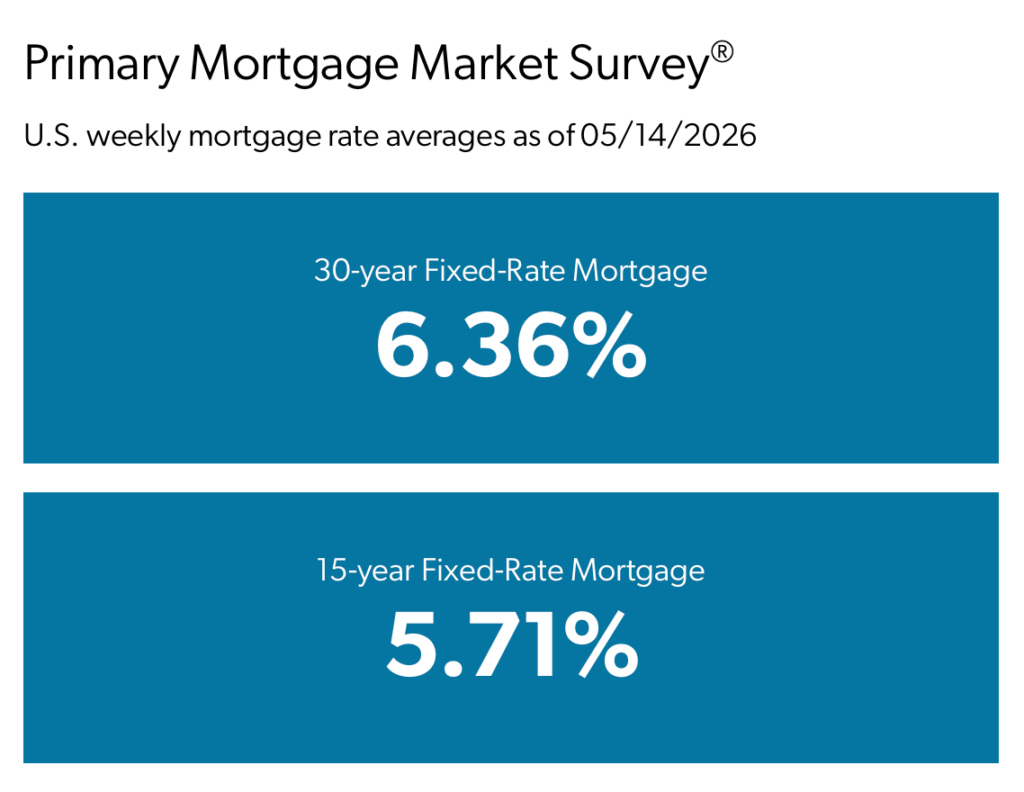
- Mortgage rate environment: Mortgage rates remain a hurdle for many prospective buyers. A 30-year mortgage rates have stayed around 6% in 2026, making monthly mortgage payments significantly more expensive than they were just a few years ago. For many households, renting a single-family home has become a more practical option than buying.
- Housing affordability challenges: High home prices continue to put homeownership out of reach for many Americans. Even as some markets cool, affordability remains a challenge, especially for first-time buyers. As a result, more people are staying in the rental market longer while still looking for the space and neighborhood feel traditionally associated with owning a home.
- Institutional investment trends: Investor interest in BTR continues to grow. As CBRE notes, the sector has developed into a scalable asset class with an expanding pipeline of projects across the U.S. Investors/developers are attracted to the model’s long-term demand and potential for stable rental income.
- Remote work: Remote and hybrid work have changed what renters want from a home. Many now prioritize extra space for home offices and private outdoor areas. Even access to suburban neighborhoods. BTR communities are designed to meet those needs while maintaining the flexibility of renting.
- Demographic shifts: Demographics are also fueling demand. Many Millennials are starting families and want more room to live, but buying a home isn’t always financially feasible. At the same time, Gen Z values the flexibility to move for career and lifestyle opportunities. The Urban Institute has found that younger adults are taking longer to reach homeownership than previous generations, increasing demand for high-quality rental housing.
Jin Hongzhou, CEO of eSign.AI, believes demographic trends are becoming one of the strongest drivers behind BTR demand.
“Many younger households are delaying homeownership longer than previous generations, whether due to affordability concerns or lifestyle preferences. Build-to-Rent communities provide a middle ground by offering the space of a traditional home without requiring a long-term ownership commitment.”
Build-to-Rent Market Statistics
The BTR sector continues to scale quickly. With a growing development pipeline and expanding institutional footprint across the U.S. While figures vary by market, most major research points to sustained growth in both completed and planned communities.
Key market indicators:
- BTR development pipeline: More than 64,250 homes are currently under construction, with over 139,000 units in planning stages across the U.S. See CBRE Build-to-Rent Overview.
- Operational scale: Roughly 120,000 BTR homes are already completed and operating nationwide, reflecting rapid institutional adoption. Review GlobeSt. report.
- Mortgage environment: Housing demand remains influenced by elevated borrowing costs, with 30-year mortgage rates hovering around ~6% in 2026 according to Freddie Mac. Check the Freddie Mac Mortgage Market Survey.
- Top growth markets: Phoenix, Dallas, and Atlanta continue to rank among the most active metros for BTR development, supported by strong population growth and land availability. Read the CRE Daily article.
Together, these trends highlight how BTR has moved from a niche strategy into a large-scale, institutional housing segment shaped by affordability constraints, demographic demand, and long-term capital inflows.
Jason Ledbetter, Operator at Jason Ledbetter, highlights the growth of BTR communities. For him, it reflects a broader shift in how renters evaluate housing decisions.
Ledbetter says, “Today’s renters are making more pragmatic choices about where and how they live. Many still want the privacy and comfort of a single-family home, but without the financial strain and long-term commitment of ownership.”
He emphasizes, “BTR communities meet that need by combining professional management and lifestyle-driven amenities in a way that aligns with how people live and work today.”
Together, these trends are making BTR communities a practical option for renters who want more space (not to mention flexibility and convenience) without the commitment of buying a home.
Benefits of Build-to-Rent for Real Estate Investors
For investors
- Operational consistency at scale. Because the entire neighborhood functions as one cohesive asset, teams can standardize layouts, finishes, maintenance processes, and vendor relationships. This creates efficiencies that are harder to achieve across scattered-site rentals.
- Higher retention through community investment. Operators can invest in community programming and shared amenities. That strengthens tenant satisfaction and improves lease renewals over time.
- Growing institutional demand. Institutional interest in BTR continues to expand as the model matures within the broader housing sector. Investors involved in broader international investing strategies are increasingly drawn to the operational control and long-term demand fundamentals these communities offer.
- Portfolio diversification opportunities. From an investment standpoint, BTR allows firms to diversify across regions, housing formats, and renter demographics. While creating more stable income streams across multiple markets.
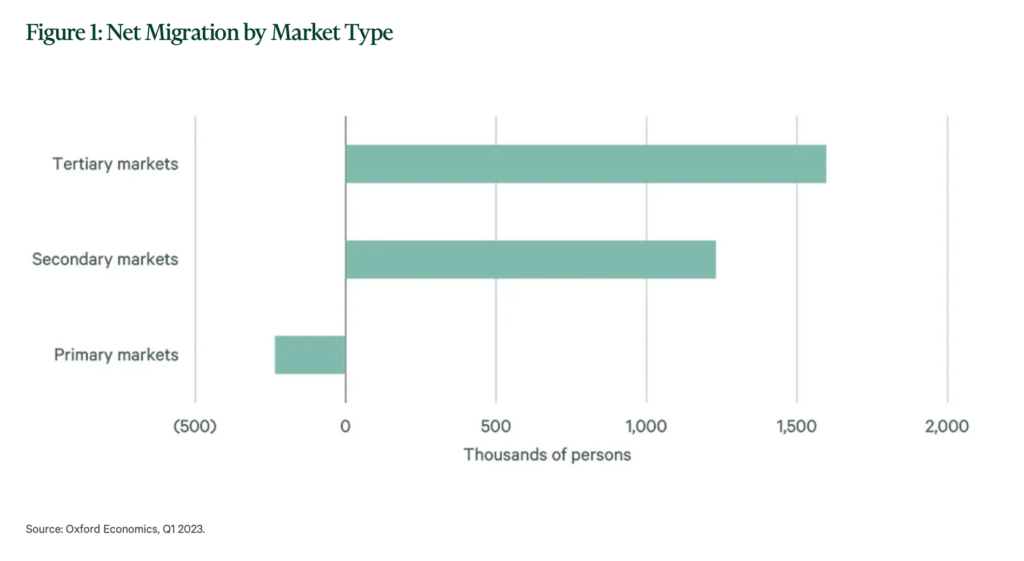
- Expansion potential in emerging markets. CBRE points to growth potential in secondary and tertiary markets. Where land availability remains favorable, and job growth continues to attract renters.
Take it from Gregor Emmian, Deputy Chief Digital Growth Officer at Rise. He believes one of the biggest advantages of the BTR model is the ability to operate an entire community as a single asset rather than a collection of individual properties.
Emmian explains, “BTR communities allow operators to standardize maintenance, resident services, and property management across an entire neighborhood. That consistency can improve efficiency while creating a more predictable experience for residents.”
He adds, “From an investment perspective, BTR benefits from long-term housing demand and recurring rental income. When communities are thoughtfully designed and professionally managed, operators are often better positioned to maintain occupancy and support resident retention over time.”
Overall, these advantages help explain why BTR is increasingly viewed as a scalable investment model that aligns with long-term housing demand trends.
Challenges and Criticisms of Build-to-Rent Communities
BTR faces its own set of headwinds:
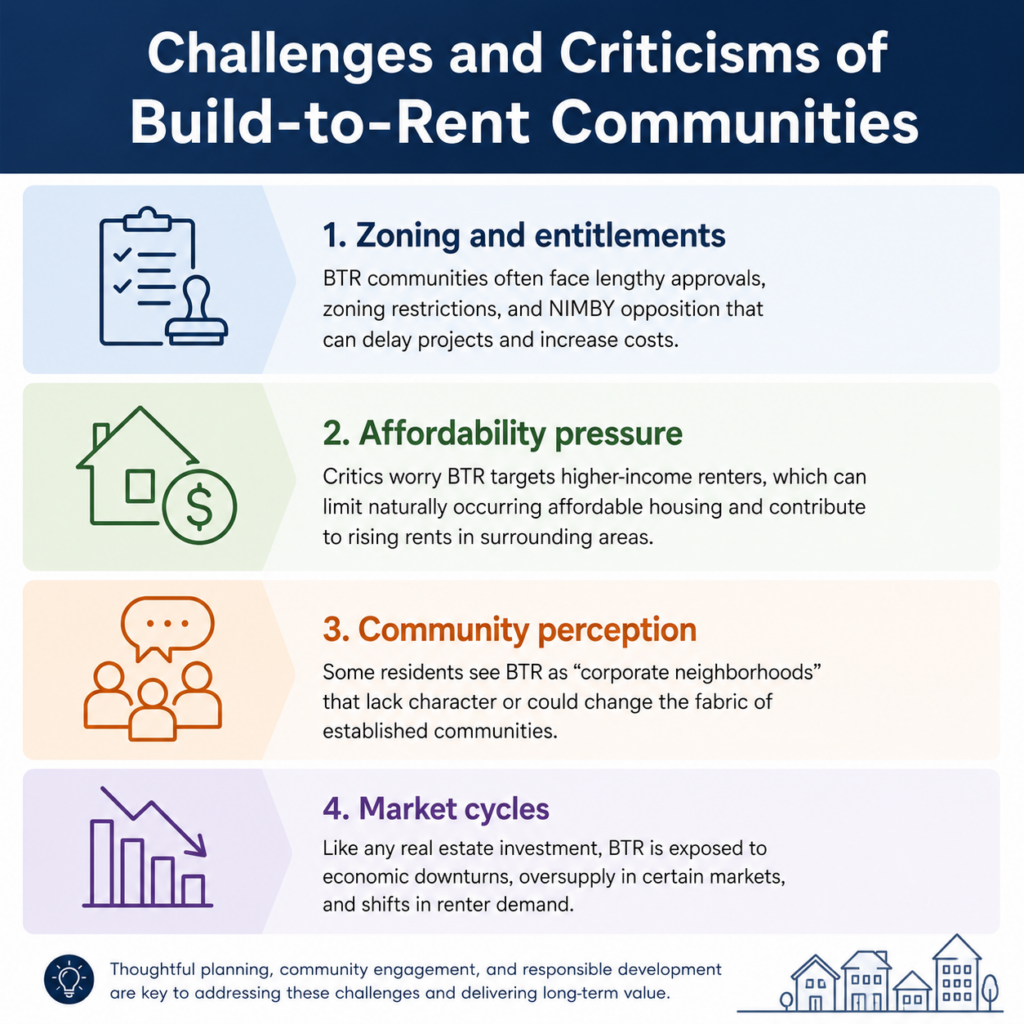
Image source: Generated by the author via ChatGPT
- Zoning and entitlements: Zoning codes weren’t written with BTR in mind. That’s why developers often face an educational process with local governments. There’s a need for planning departments and clear communication about how BTR benefits the broader ecosystem.
- Affordability pressure: Critics worry that professionally managed BTR might target higher-income renters, leaving lower-income households behind. Policymakers and developers will need to pair BTR with broader supply strategies. And, in some cases, affordability set-asides.
- Community perception: Some neighborhoods push back on rentals. Over time, consistent operations and good design tend to ease concerns. However, early engagement matters.
- Market cycles: Just like any asset class, oversupply in a micro-market or a sharp economic downturn can dent performance. Thoughtful phasing and right-sizing amenities help manage risk.
Christopher Skoropada, CEO of Appsvio, views many of the BTR challenges through the lens of operational systems and digital infrastructure. From his perspective, the complexity of zoning, resident management, and long-term asset performance is often compounded when workflows are fragmented or poorly coordinated across teams.
Skoropada Shares, “BTR communities succeed at scale when operations are structured and connected. Challenges like zoning approvals and market-cycle pressures become harder to manage when processes are manual or siloed.
He adds, “When developers and operators have streamlined systems for communication and resident service workflows, they’re better equipped to stay compliant. They’ll respond to local concerns and maintain consistent performance even as market conditions shift.”
Taken together, these challenges highlight that while BTR is growing quickly, its long-term success depends on thoughtful planning and strong operations. Not to mention collaboration with local communities.
Case Studies of Successful Build-to-Rent Communities
Early movers show BTR working at scale:
- American Homes (AMH) 4 Rent grew from scattered single-family rentals into building and operating entire new rental home communities nationwide. AMH standardizes floor plans and operations to deliver consistent resident experiences.
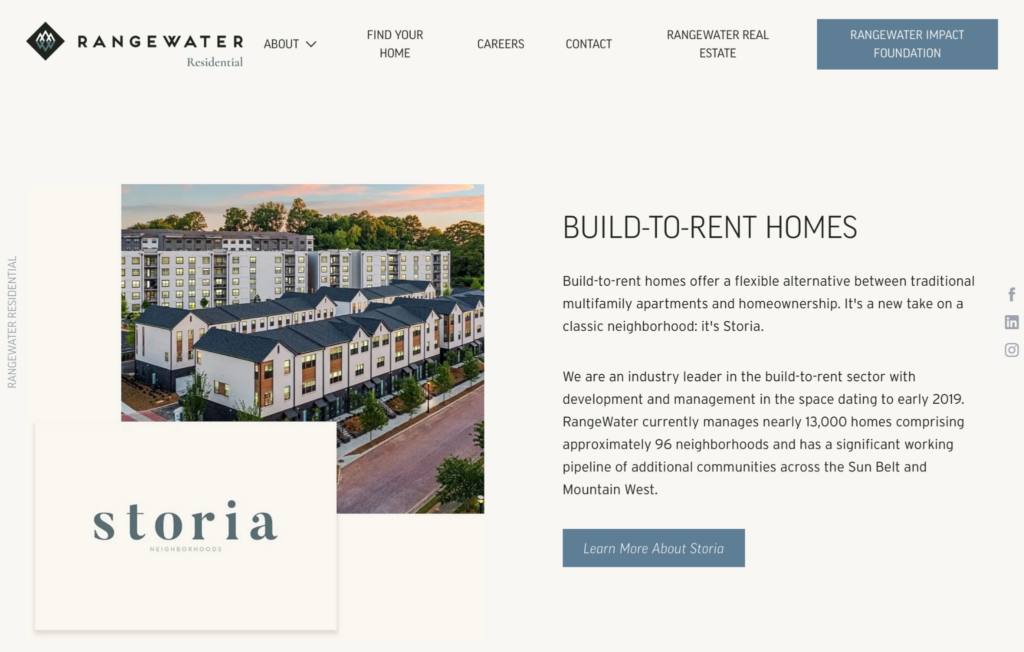
- RangeWater Storia brand focuses on low-density BTR communities across the Southeast. It blends neighborhood feel with professional management and community programming.
What makes these examples successful?
- Locations near job centers, good schools, transportation
- Private outdoor space plus useful shared amenities
- On-site service that actually solves problems fast
- Simple, transparent leasing and pet policies
- Thoughtful streetscapes that feel like a neighborhood
Final Note: BTR Gaining Momentum
Build-to-Rent communities solve a real, current problem. They offer space and privacy without a 30-year mortgage. They provide professional management without the hassle. And they create neighborhoods that feel like home.
For renters, that means more options at life’s in-between stages. For developers and investors, it means steady income and a product that fits today’s demographics and economics. And for the broader housing market, BTR adds flexible, well-run supply when we need it most.
Whether you’re an investor or developer, consider leveraging RentRedi’s smart platform to manage various aspects of rental units, from property listings and tenant screening to maintenance and rent collection. Sign up today!
How We Researched This Article
This article draws on housing market research and industry data from:
- CBRE
- NAHB Eye on Housing
- Freddie Mac Mortgage Market Survey
- Urban Institute Housing Finance Policy Center.
It also incorporates insights from professionals having invested in the BTR sector.
To provide a balanced view, we reviewed data on:
- Mortgage rates (including trends tracked by Freddie Mac)
- Housing affordability pressures
- Single-family rental construction trends (tracked by NAHB)
- Demographic shifts
- Institutional investment activity (covered in CBRE Research)
- Broader housing affordability and generational homeownership trends informed by research from the Urban Institute.
These sources were combined with expert commentary to explain why BTR communities are gaining momentum across the United States.
Frequently Asked Questions (FAQs)
What is a Build-to-Rent community?
A Build-to-Rent (BTR) community is a neighborhood of single-family homes or townhomes that are built specifically for rental, rather than for sale. The entire community is professionally managed as a single rental asset.
Are Build-to-Rent communities cheaper than buying a home?
In most cases, monthly rent in a BTR community is lower than the cost of owning a comparable home when factoring in mortgage payments, property taxes, insurance, and maintenance. However, costs vary significantly by market.
Who owns Build-to-Rent communities?
BTR communities are typically owned by institutional investors, real estate investment trusts (REITs), or large-scale developers who operate them as long-term rental assets.
Are Build-to-Rent homes a good investment?
They can be attractive to investors due to stable rental demand, operational efficiency, and predictable cash flow. However, performance depends on location, occupancy rates, interest rates, and market cycles.
What are the disadvantages of Build-to-Rent communities?
Potential drawbacks include higher rents compared to traditional single-family rentals, limited homeownership opportunities in some markets, and sensitivity to interest rate changes and local zoning restrictions.
Where are Build-to-Rent communities growing fastest?
BTR development is expanding most rapidly in Sun Belt states and fast-growing suburban markets where land is more available and population growth continues to drive housing demand.