How Auto-Late Fees Can Optimize Your Landlord Process

Make sure that your landlord process is as efficient and easy as possible by setting up auto-late fees that automatically track fees for late rent payments.

9 min read

Why is it important to set up auto-late fees? Having a methodical, repeatable process for collecting rent and late fees is critical to consistently adhering to your best business practices. Deviating from your policies for one tenant can disrupt your whole system, leave you vulnerable to Fair Housing Act violations, and cause a slew of other problems, depending on the tenant.

However, sometimes, it can be difficult to enforce your own policies. Especially when tenants have a reasonable story or ask for just one more day. That’s where auto-late fees come in handy. 

Property management services, like RentRedi, provide a straightforward platform through which you can charge auto-late fees with an impartial buffer between you and your tenant. You can also still prioritize and facilitate communication between the two parties. (I.e., you can set up auto-late fees on RentRedi’s platform while also utilizing our in-app notifications to send a reminder to tenants by unit or property that rent is due by the 6th or there will be late fees.)

How Can I Get Auto-late Fees?

For late fees in particular, it can be a headache to create an efficient process for handling them or to easily manage who owes you what after so many days. With RentRedi, we want to ensure your “landlord process” is as efficient and easy as possible. Similar to our auto-tenant screening feature, our auto-late fees feature helps you optimize your time and money. Automating late fee processes can streamline rent collection, improve cash flow, reduce manual tracking, and minimize administrative burden for landlords. The significance of applying late fees consistently and in accordance with legal requirements is to ensure both compliance and fairness in the landlord-tenant relationship.

auto-late fees image: screenshot of RentRedi's auto-late fees calculator
Our auto-late fees feature lets you set a grace period, a first-time late fee, a recurring late fee, and a max late fee, either by dollar amount or by percentage.

Grace Period

Set the grace period and indicate whether it is “Day” or “Week”. The grace period is the number of days or weeks to wait before the first late fee is applied. Typically, the grace period is “Day”, but we allow you to set it to “Week” if your grace period is longer.

First Fee for First Late Rent Payment

Set the first fee and indicate whether it is a dollar amount (“$”) or a percentage (“%”). This is the first late fee charged to the tenant after the grace period ends.

Recurring Late Fee

Set recurring late fee. Every day or week after the first day, the recurring late fee will be added. If you do not have a recurring late fee, you can leave this blank. You can also set a recurring late fee frequency. Typically, recurring fees are for each day, but you can set it to “Week” if that is how your lease reads.

Max Late Fee

Some leases, states, or municipalities set a maximum allowed late fee. Use this box to set a maximum, if applicable. It can be in dollars ($) or by percentage (%).

Handling Delinquency and Payment Plans

When tenants fall behind on rent, it’s essential for landlords to have a clear, step-by-step approach to address delinquency while maintaining professionalism and compliance. The following strategies help landlords manage overdue payments, offer fair solutions, and escalate collection efforts when necessary, all while preserving positive tenant relationships and protecting cash flow:

  • Promptly Identify and Document Delinquency: As soon as a rent payment is missed, promptly flag the account as delinquent and document the outstanding balance. Maintain clear records of payment history, communication attempts, and any tenant responses to ensure transparency and to support any future actions if escalation becomes necessary. Reach out to the tenant quickly after a missed payment with a polite, factual reminder. Express understanding, inquire about any underlying issues, and encourage the tenant to communicate openly about their situation. Early outreach can often resolve payment issues before they escalate.
  • Offer Structured Payment Plans When Appropriate: For tenants experiencing temporary financial hardship, consider proposing a written payment plan. Clearly outline the total amount owed, installment amounts, due dates, and consequences for missed payments. Structured plans help tenants catch up while providing landlords with predictable cash flow.
  • Escalate Collection Efforts According to Policy: If payment plans are declined or not honored, escalate in accordance with your established policies. This may include sending formal notices, applying additional late fees as permitted, or initiating legal proceedings such as pay-or-quit notices. Always follow local laws and document each step.
  • Review and Adjust Processes for Future Prevention: After resolving a delinquency, review the situation to identify opportunities for process improvement. Analyze communication effectiveness, payment plan outcomes, and escalation timelines to refine your approach. Continual improvement helps reduce future delinquencies and strengthens your overall management strategy.

By following these steps, landlords can address late payments efficiently and fairly, balancing empathy with firmness. A structured approach not only increases the likelihood of recovering overdue rent but also supports long-term tenant relationships and operational stability.

Effective Strategies for Communicating Late Fee Policies and Payment Reminders to Tenants

Proactive communication is fundamental to a successful landlord-tenant relationship, especially regarding late-fee policies and payment reminders. The goal is to ensure tenants fully understand their obligations, feel respected, and receive timely, actionable information that encourages on-time payments while minimizing misunderstandings or disputes. The first step is to introduce and explain the late fee policy at lease signing and tenant onboarding. Provide tenants with a written copy of the lease or addendum outlining the late fee structure, including the grace period, the amount or percentage of the late fee, any recurring charges, and the maximum allowed fee. It’s essential to use plain, accessible language and invite questions to confirm understanding. During onboarding, reinforce these points verbally and in writing, and offer examples of how late fees are calculated to remove ambiguity.

Beyond initial communication, ongoing reminders are key to preventing late payments and reducing the need for enforcement. Automated notifications have become an industry standard and are highly effective. By leveraging property management platforms that support scheduled email, text, or app-based alerts, landlords can send friendly reminders a few days before rent is due, on the due date, and immediately after a missed payment. These reminders should be concise, factual, and courteous, clearly stating the due date, amount owed, and the consequences of late payment, including when and how late fees will be applied. For example, a message might read: “This is a friendly reminder that your rent of $1,200 is due on the 1st. Please ensure payment is received by the 5th to avoid a $50 late fee.” Automated reminders not only reduce the likelihood that tenants will forget to pay but also remove the emotional burden from landlords, making the process feel neutral and professional.

Documentation plays a vital role in this communication strategy. Every notice, reminder, and payment confirmation should be logged, ideally within a property management system that timestamps messages and receipts. This creates a transparent record that can be referenced if disputes arise or if formal action becomes necessary. In addition to digital logs, landlords should keep copies of all written communications, including onboarding materials and any policy updates, in the tenant’s file. Consistently documenting communications protects both parties and demonstrates compliance with fair housing and local regulations. Maintaining open channels for tenant feedback and questions fosters a positive relationship and can help address issues before they escalate. Encourage tenants to reach out if they anticipate payment difficulties, and respond promptly and empathetically.

Utilizing Rent Collection Software

In today’s property management landscape, specialized rent collection software has become an indispensable tool for landlords seeking efficiency, transparency, and reliability in their rental operations. These platforms are designed to automate the entire rent collection process, replacing manual methods like paper checks, spreadsheets, and ad hoc reminders with a streamlined, centralized digital workflow. At the heart of this transformation is the ability to automatically schedule, collect, and reconcile rent payments, reducing the administrative burden on landlords and minimizing opportunities for human error.

One of the core features of specialized software is automated rent collection. Platforms such as RentRedi enable tenants to pay rent online via ACH transfers, debit or credit cards, and often offer recurring autopay options. This automation ensures that payments are collected on time every month, without landlords having to chase down tenants or process physical checks. Automated reminders further reduce late payments by prompting tenants ahead of due dates and immediately after missed payments.

Beyond collection, these platforms excel at tracking payments in real-time. Each transaction is automatically recorded, categorized, and reconciled within the system, generating a detailed, time-stamped ledger for every tenant. This robust record-keeping simplifies accounting, aids in tax preparation, and provides clear documentation in the event of disputes or legal proceedings. Landlords can quickly see who has paid, who is late, and the exact amounts owed without sifting through paper records or multiple banking platforms.

Specialized software also integrates late fee enforcement directly into the broader property management workflow. Landlords can configure late fee policies within the platform, setting grace periods, initial late fees, recurring charges, and maximum allowable amounts in accordance with lease terms and local regulations. Once set, the system automatically applies these fees to delinquent accounts, generates itemized notices, and updates tenant ledgers without manual intervention. This ensures consistency, fairness, and legal compliance while eliminating the discomfort of personal enforcement. Some platforms further extend their capabilities by integrating rent collection and late-fee enforcement with other property management functions, such as maintenance tracking, lease management, and financial reporting. Holistic integration enables landlords to manage all aspects of their rental business from a single dashboard, enhancing operational visibility and control.

Frequently Asked Questions

Automating late fee processes offers landlords a powerful way to simplify rent collection and improve overall property management. Below, we answer common questions about how automation can enhance efficiency, cash flow, and administrative ease for landlords.

How does automating late fees streamline rent collection?
Automated late fees ensure rent rules are enforced consistently and immediately, reducing the need for manual follow-up and making the entire rent collection process more predictable and efficient.

How can automation improve cash flow for landlords?
By automatically applying late fees and reminders, automation encourages on-time payments, leading to more consistent monthly income and better financial planning for landlords.

In what ways does automation reduce manual tracking?
Automated systems track payments, late fees, and balances in real time, eliminating the need for landlords to manually update records or chase down outstanding rent.

How does automation minimize the administrative burden for landlords?
Automation handles repetitive tasks such as fee calculations, reminders, and record-keeping, freeing up landlords’ time to focus on higher-value activities or to grow their rental business.

Is automated late fee enforcement fairer for tenants?
Yes, automation applies late fees according to pre-set rules, removing personal bias and ensuring every tenant is treated equally and in accordance with the lease agreement.

Why is it important to include clear late fee language in the lease?
Clear late fee language sets expectations for both parties, reduces confusion, and ensures that penalties for late payments are enforceable and legally compliant.

What should a late fee clause specify about grace periods?
The clause should define the exact number of days tenants have after the due date before late fees are applied, ensuring transparency and avoiding disputes.

How should fee amounts be outlined in the lease?
Specify the exact dollar amount or percentage charged as a late fee, and reference any applicable legal limits to ensure compliance with state or local regulations.

What is the benefit of detailing initial and recurring late charges?
Describing both the initial late fee and any recurring charges clarifies how fees accumulate, helping tenants understand the consequences of ongoing late payments.

Can landlords change late fee policies during a lease term?
No, late fee policies must be agreed upon in the signed lease. Changes typically require a formal lease addendum, signed by both landlord and tenant.

How does rent collection software automate rent payments?
Rent collection software allows tenants to pay online and set up recurring payments, eliminating manual check handling and ensuring rent is collected on time each month with minimal landlord intervention.

What features help landlords track tenant payments?
These platforms automatically record, categorize, and reconcile each payment, providing real-time ledgers and time-stamped receipts for every tenant, making it easy to monitor who has paid and who is late.

How does software enforce late fee policies?
Landlords can configure grace periods, initial late fees, recurring charges, and maximum amounts within the software. The system then applies these fees automatically to delinquent accounts, ensuring consistent and fair enforcement.

Can rent collection software integrate with other property management tasks?
Yes, many platforms combine rent collection and late fee enforcement with maintenance tracking, lease management, and financial reporting, allowing landlords to manage all operations from a single dashboard.

How does automation reduce administrative workload for landlords?
Automation handles repetitive tasks like payment reminders, fee calculations, and record-keeping, freeing landlords from manual tracking and enabling them to focus on growing their rental business.

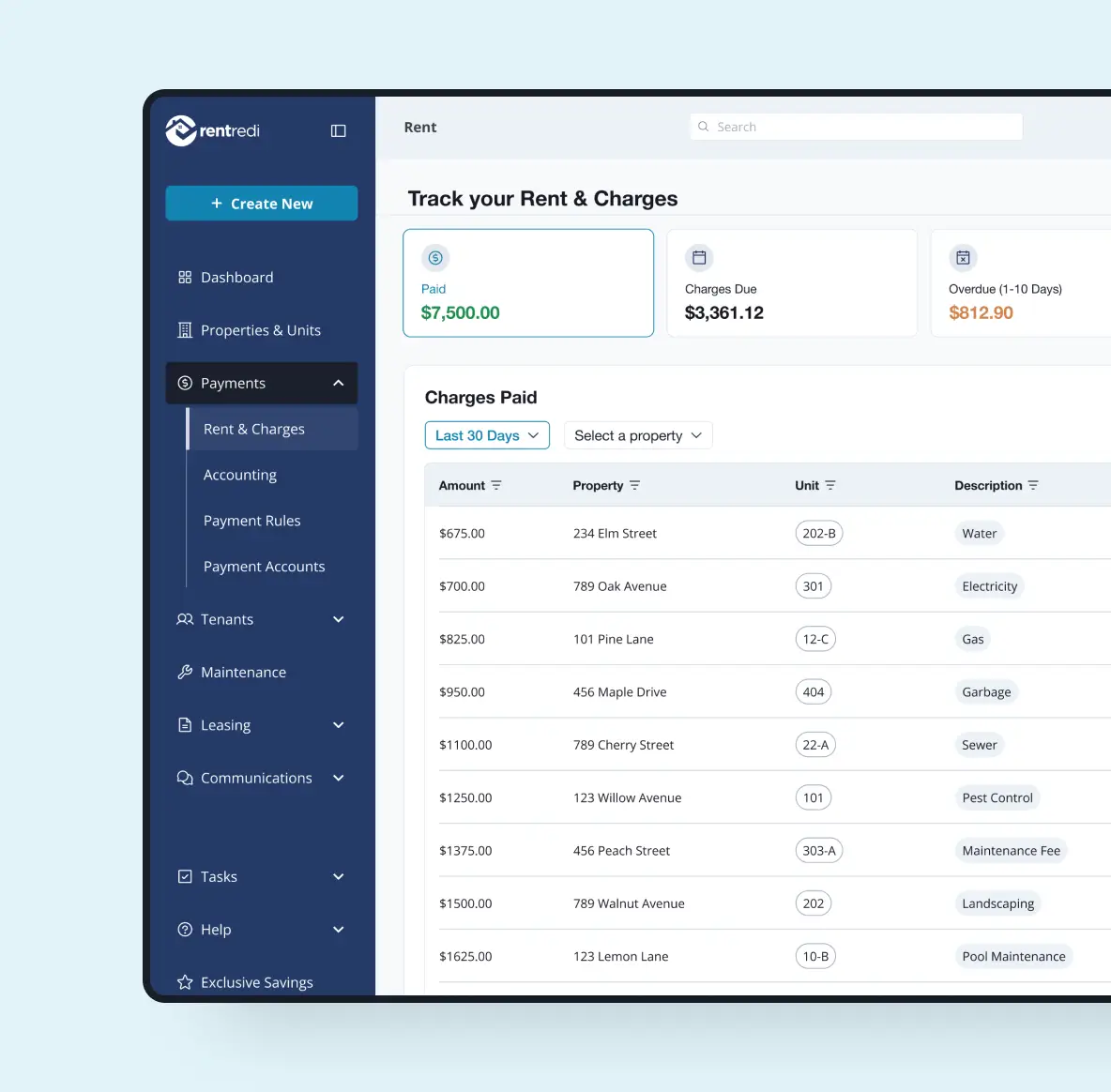
For landlords who want to encourage their tenants to pay their rent on time by constructing an easy yet firm late-fee policy, RentRedi’s dashboard allows you to set up automatic late fees so you can easily track which tenants are on time, late, and how much they owe.