RentRedi vs Zillow Rental Manager: A Side-By-Side Comparison

RentRedi vs Zillow Rental Manager: Which is a better property solution for your rental business? See a side-by-side comparison of features to evaluate the property management software for landlords!

13 min read

If you’re a self-managing landlord or looking to grow your real estate portfolio, you know firsthand the struggles that come with managing a rental property. Keeping track of tenants, leases, maintenance requests, and payments can be a full-time job.  So, when you’re evaluating property management software, it’s important to consider every facet of the landlord process to determine which one can provide you with a full-spectrum product to help you eliminate any pain points that come with managing properties. We’ve made it easier for you to quickly see how other services stack up against ours in our side-by-side comparison series with landlord services like Buildium, Yardi, and Cozy. And now, with Zillow Rental Manager. 

Ease of Use and User Experience

Understanding the ease of use and user experience is crucial for both landlords and tenants.

Intuitive Dashboard and Navigation

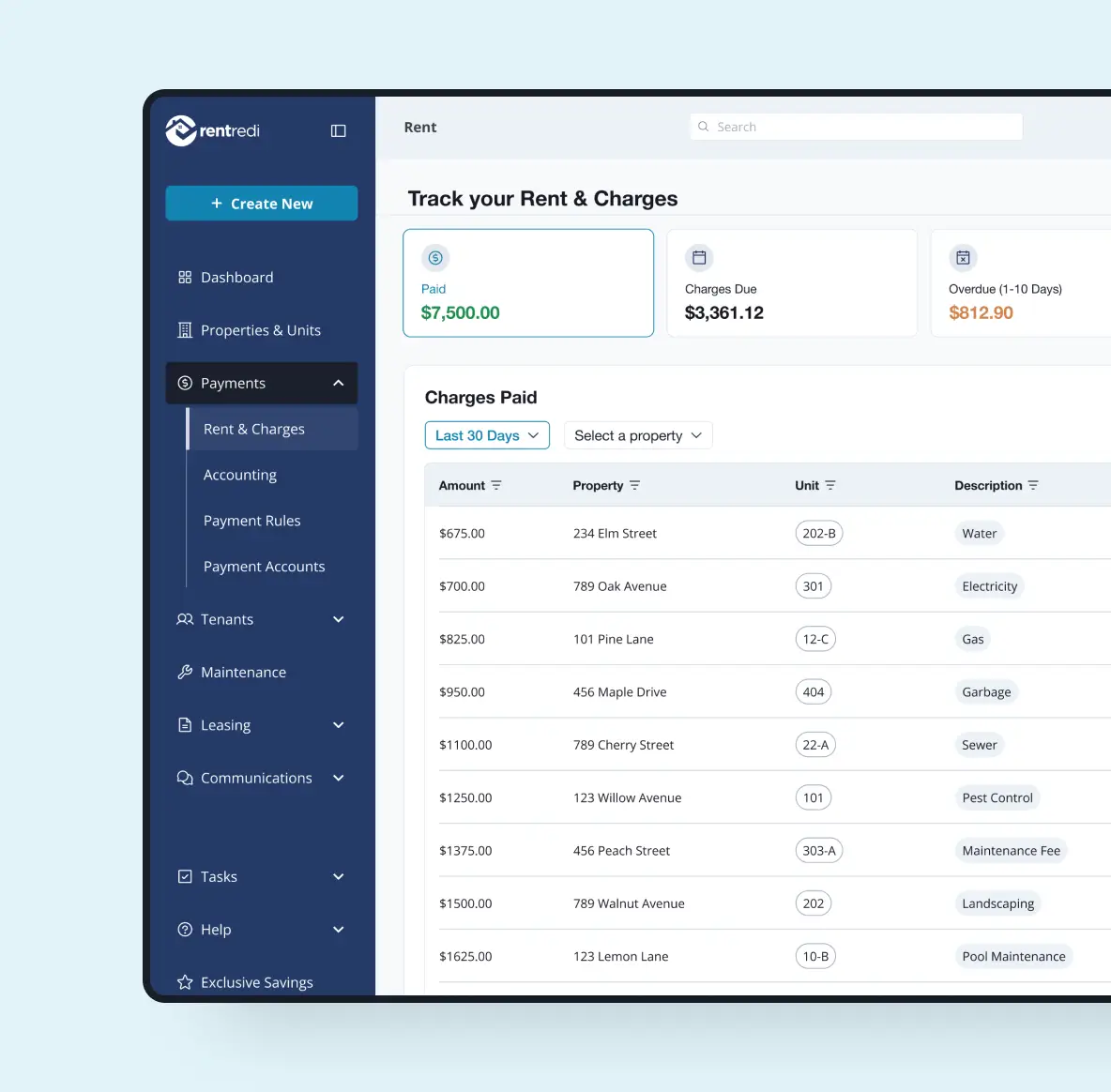
A well-designed dashboard is essential for landlords to manage properties efficiently. The best platforms offer a clean, organized interface where key functions are easily accessible. Intuitive navigation reduces the learning curve, allowing landlords to quickly locate tools and complete tasks without confusion. For tenants, a simple, clearly labeled portal ensures they can pay rent, submit requests, and access documents with minimal effort, enhancing satisfaction and reducing support inquiries.

Mobile Accessibility and App Experience

Mobile access is increasingly important as both landlords and tenants expect to manage their rental needs on the go. Platforms with dedicated mobile apps or fully responsive web portals allow users to complete essential actions anytime, anywhere. For landlords, this means staying on top of property management even when away from their desk. For tenants, a reliable mobile experience offers convenience, especially for those without regular computer access, and fosters timely communication and payments.

Streamlined Communication and Support

Effective communication tools and responsive customer support are vital for a positive user experience. Platforms that integrate messaging features, automated notifications, and clear status updates keep both landlords and tenants informed throughout the rental process. Access to live support further enhances usability, helping users resolve issues quickly. Comprehensive help centers and educational resources also contribute to a smoother experience, making it easier for users to make the most of the platform’s features. Rental management platforms can deliver a superior user experience for landlords and tenants alike. These elements not only streamline daily operations but also contribute to higher satisfaction and retention on both sides.

Target Users and Use Cases

It’s crucial to comprehend who each platform is designed for and the scenarios in which each excels. The following points break down the intended audiences for each platform, such as individual landlords, property managers, or enterprise users, and the scenarios in which each platform is most suitable:

  • Self-Managing Landlords: RentRedi is tailored for individual landlords and small-scale investors who manage their own properties and anticipate growth. Its unlimited properties and tenants feature, along with comprehensive management tools, make it ideal for those scaling from a single unit to a larger portfolio.
  • Landlords Seeking Mobile-First Solutions: Landlords who need to manage rentals on the go benefit from RentRedi’s robust mobile app. Its mobile-first approach supports tasks such as rent collection, maintenance tracking, and lease signing, making it well-suited for users who prioritize flexibility and accessibility.
  • Tenants Wanting Modern Digital Experiences: Both platforms cater to tech-savvy tenants who expect to pay rent, submit maintenance requests, and access documents online. RentRedi’s dedicated tenant app offers a seamless experience, while Zillow Rental Manager provides essential online payment and application features.
  • Landlords Requiring Full-Service Management: RentRedi’s all-in-one dashboard, maintenance management, and financial reporting cater to landlords who want to centralize every aspect of property management.
  • Landlords Prioritizing Affordability and Flexibility: Both platforms offer flexible pricing, but RentRedi’s flat-rate subscription with unlimited properties is attractive for cost-conscious landlords planning to expand.

RentRedi and Zillow Rental Manager serve overlapping but distinct audiences. Knowing your unique needs will help you choose the platform that best matches your rental business goals.

Tenant Screening Services

Tenant screening is one of the most critical steps in the rental process, directly impacting a landlord’s ability to select reliable tenants and safeguard their investment. Modern rental management platforms have transformed this process by integrating comprehensive screening tools that go far beyond traditional reference checks. These platforms enable landlords to access a suite of screening services, all from within a single dashboard.

One of the standout features of today’s tenant screening services is the automation and standardization of the evaluation process. Platforms such as RentRedi and Zillow Rental Manager allow landlords to initiate screening requests directly from a tenant’s application, streamlining workflows and reducing administrative burden. Reports are generated rapidly, giving landlords timely access to critical information. Most platforms rely on reputable credit bureaus such as TransUnion and Experian to provide detailed credit reports that include payment history, outstanding debts, and credit utilization. These insights help landlords assess whether an applicant is likely to pay rent on time and manage financial obligations responsibly.

Criminal background checks are another cornerstone of tenant screening. Rental management platforms typically conduct national and local searches, covering databases such as sex offender registries, most wanted lists, and federal watchlists. This level of scrutiny helps landlords identify potential red flags that could pose safety or legal risks to the property or other tenants. Eviction history checks further enhance risk assessment by revealing past instances where applicants may have failed to meet lease obligations. Some platforms, like RentRedi, extend their screening capabilities by offering bank-verified income verification through services such as Plaid. Unlike traditional document uploads, which can be susceptible to fraud, bank-verified checks provide a real-time, tamper-resistant snapshot of an applicant’s income and assets, making it significantly harder to misrepresent financial status.

In addition to the reports themselves, many rental management platforms offer built-in compliance tools to help landlords adhere to Fair Credit Reporting Act (FCRA) requirements. This includes automated adverse action notices, which are legally required when an application is denied based on screening results. Automating this process not only reduces legal risk but also ensures a consistent, professional experience for applicants.

Pricing Models and Costs

When choosing a rental management platform, it’s essential to consider the pricing structure and potential costs involved. Platforms like RentRedi typically operate on a flat-rate subscription model, offering full access to property management tools for a set monthly or annual fee. RentRedi has a “Grow” plan for $12 per month, covering unlimited properties and tenants. In contrast, Zillow Rental Manager offers free basic listings, with optional upgrades such as premium listing placement for a flat fee of $39.99 for 90 days. Additionally, both platforms pass through convenience fees to tenants, but the amounts and methods may vary. The pricing models and associated costs of using various rental management platforms help users understand potential expenses.

Selection Criteria and Recommendations

Evaluate your unique requirements to ensure you choose a solution that supports your goals and streamlines your workflow. Below are key factors to consider, along with recommendations to guide your decision-making:

  1. Integration with Existing Tools: Assess whether the platform can integrate seamlessly with accounting, communication, or listing tools you already use. Choosing a solution that supports integration minimizes manual work and helps maintain consistency across your property management operations.
  2. Scalability and Growth Potential: Consider whether the platform can accommodate your future needs as your rental portfolio grows. Opt for a platform that offers flexible plans, additional features, or the ability to manage more units without requiring a disruptive transition later on.
  3. Automation Capabilities: Automation can save significant time and reduce errors, especially if you manage multiple properties or have limited administrative support.
  4. Customer Support and Training Resources: Investigate the availability and quality of customer support, documentation, and training resources. A platform with responsive support and comprehensive learning materials can help you resolve issues quickly and maximize the platform’s value from day one.
  5. Data Security and Compliance: Prioritize platforms that demonstrate strong data protection measures and compliance with relevant regulations. Protecting sensitive tenant and financial information should be a top concern, so look for solutions with encryption, regular security updates, and transparent privacy policies.
  6. Customization and Flexibility: Determine if the platform allows you to tailor workflows, forms, and communications to your unique processes. Customizable solutions can better fit your management style and property types, ensuring a smoother experience for both landlords and tenants.

By carefully weighing these factors and aligning your choice with your specific needs, you can select a rental management platform that not only meets your current requirements but also supports your long-term success as a property owner or manager.

RentRedi vs Zillow Rental Manager Comparison

FeaturesRentRediZillow Rental ManagerWinner
Online and Mobile Rent PaymentsOnline and mobile app for tenants to make payments more convenient and accessible to tenants who don’t have computers or wifiOnline and mobile rent payments are availableTie
Convenience FeesFees are tenant-paid: ACH is only $1, 3.1% plus $0.30 for card paymentsTenants will pay a 2.95% fee when using a credit card and a $9.95 convenience fee for debit payments.RentRedi
Recurring Utility/Other PaymentsSchedule recurring payments or fees for anything—rent, water bills, parking, etc.Have to submit a one-time payment request that they send to tenants. You cannot make it recurring.RentRedi
Mobile Lease SigningTenants sign their lease directly from their RentRedi app—no computer or internet? No problem! The tenant is sent an email and has to open the link to sign their leaseTie
Document StorageUpload and store any documents (leases, insurance policies) within RentRedi so you can access them from anywhere. Plus, share them directly with tenants!Upload, edit, and sign your preferred lease agreement to Zillow Rental Manager.RentRedi
Custom ReportsCreate unlimited custom reports for rent, maintenance, properties, and more!Zillow Rental Manager does not have this feature.RentRedi
Calendar & Task ManagementManage your Google Calendar and organize & prioritize important tasks directly on your dashboardZillow Rental Manager does not have this feature.RentRedi
Vacancy ListingsPremium Listings with RentRedi mean you can feature your rental on Zillow, Trulia, Hotpads, and Realtor.com.
Connect your properties to millions of renters so you can fill vacancies faster, screen smarter, and grow your rental income with confidence.
There are free options to post listings and an option to upgrade to premium listings is a flat fee of $39.99 for 90 days.RentRedi for robustness, Zillow for advertising
Tenant PortalTenants have an easy-to-use app where they can pay rent or any utilities, complete the application & e-signing process, submit maintenance requests, and get renters insurance.
They can also set up recurring rent reminders and auto-payments.
Zillow Rental Manager supports online & mobile payments and applicant workflows, but tenant portal functionality is more limited compared with full PM platforms.RentRedi
Maintenance Management
24/7 Hands Off Emergency/Full Premium Maintenance
DIY maintenance or outsource repairs options to ensure your rental is properly maintained and to increase tenant satisfaction and retention. Zillow Rental Manager has limited maintenance features.RentRedi
Renter’s InsuranceYes, tenants can sign up right from RentRedi. Landlords can track and store policies right from their RentRedi account.Zillow Rental Manager does not have this feature.RentRedi
Applications & Tenant ScreeningYes, tenant-paidYes, tenant-paidTie
Proof of Income VerificationRentRedi gives you a fuller, more accurate picture of a tenant’s financial resources, verified with Plaid.Zillow Rental Manager allows uploads of documentation but doesn’t automatically verify bank account balances or income flows.RentRedi
Customer SupportUnlimited support, no additional cost. 
Live, human support team.
Chat, email, phone, available 7 days a week.
Help center, demo mode, onboarding videos, tenant support, 1-on-1 sessions, all included.
Ticket support only. RentRedi
ScalabilityRentRedi is designed with self-managing landlords and real estate investors in mind.
We offer unlimited properties and tenants with no minimums. You never pay more for staying small or growing your portfolio.
Zillow Rental Manager is limited in its property management capabilities and is not designed for larger portfolios or self-managing landlords who prefer free listings.RentRedi for scalability,Zillow Rental Manager for advertising rentals
PricingWith RentRedi, the annual plan is $12/mo for full property management software.
From your first listing to a signed lease, RentRedi makes the process transparent and straightforward.
There are free options to post listings and an option to upgrade to premium listings is a flat fee of $39.99 for 90 days.RentRedi

Both RentRedi and Zillow Rental Manager offer solid tools for landlords, especially those focused on listing visibility, applications, and basic rent collection. But as your portfolio grows, the day-to-day management of rentals often requires more than just the essentials. Landlords need a system that supports real-world operations. RentRedi brings these pieces together in one smart, simple dashboard. You can handle maintenance requests, streamline payments and leases, track expenses, and stay on top of property health. Tenants also get modern online and mobile apps that make paying rent and submitting maintenance requests effortless, helping keep your properties well cared for.

Frequently Asked Questions

Choosing the right rental management platform can be overwhelming given the variety of options available, each with its own set of features and workflows. The following FAQs address the general features and offerings of various rental management platforms, providing context for comparing different solutions.

What is a rental management platform?
A rental management platform is software designed to help landlords and property managers handle tasks such as rent collection, lease management, tenant screening, and maintenance tracking within a single, centralized system.

What are the most common features offered by rental management platforms?
Typical features include online rent collection, lease creation and signing, vacancy listings, tenant screening, maintenance request tracking, document storage, and financial reporting tools.

Do all platforms offer mobile access?
Most leading platforms provide mobile apps or mobile-responsive websites, allowing landlords and tenants to manage payments, maintenance, and communication from their smartphones or tablets.

Are maintenance requests managed within these platforms?
Yes, many platforms allow tenants to submit maintenance requests online, which landlords can track and assign to vendors, streamlining property upkeep and communication.

Can landlords manage multiple properties with these platforms?
Most platforms support multi-property management, enabling landlords to oversee several units or buildings within a single dashboard, often with no limit on the number of properties.

Is customer support typically included?
Customer support varies by platform, ranging from ticket-based systems to live chat, phone, and email support. Some platforms also offer onboarding assistance and educational resources.

Are there differences in pricing models?
Yes, pricing structures differ. Some platforms are free with optional paid features, while others require monthly or annual subscriptions. Fees may also apply for premium services or tenant screening.

Do platforms integrate with listing sites?
Many platforms syndicate rental listings to major sites like Zillow, Trulia, and Realtor.com, helping landlords efficiently reach a wider pool of prospective tenants.

How secure is the data on these platforms?
Reputable rental management platforms use encryption and comply with privacy regulations to protect sensitive landlord and tenant information.

What is tenant screening in rental management platforms?
Tenant screening is an integrated process where landlords use the platform to evaluate applicants’ backgrounds, including credit, criminal, and eviction history, before approving them as tenants.

How do platforms collect tenant screening information?
Applicants typically provide consent and personal details through an online application. The platform then pulls data from trusted sources like credit bureaus and background check providers to generate comprehensive reports.

What types of reports are included in tenant screening?
Most platforms offer credit reports, criminal background checks, and eviction history. Some also provide income verification, either through bank integration or document uploads, to assess financial reliability.

How quickly are tenant screening reports available?
Screening reports are usually generated within minutes to a few hours after the applicant submits their information, enabling landlords to make timely leasing decisions.

Do these services help landlords comply with legal requirements?
Yes, many platforms provide built-in tools to help landlords comply with Fair Credit Reporting Act (FCRA) requirements, including automated adverse action notices when an application is denied.

How does tenant screening reduce risk for landlords?
By providing detailed background information, tenant screening helps landlords identify potential red flags, such as prior evictions or poor credit, reducing the risk of missed rent payments or property issues.

Can landlords verify a tenant’s income through these platforms?
Some platforms offer bank-verified income checks or allow applicants to upload supporting documents, giving landlords a clearer picture of an applicant’s ability to pay rent.

Are tenant screening fees included in platform subscriptions?
Typically, tenant screening fees are paid by applicants as part of their application process, though the exact cost and payment structure may vary by platform.

Can multiple landlords access the same screening report?
Certain platforms allow applicants to share completed screening reports with multiple landlords, reducing duplicate fees and streamlining the application process.

Who is RentRedi designed for?
RentRedi is built for self-managing landlords and small-scale investors who want an all-in-one platform to manage unlimited properties, scale their portfolio, and streamline daily operations from a single dashboard.

Is RentRedi a good fit for property managers or larger portfolios?
Yes, RentRedi supports unlimited properties and tenants, making it suitable for landlords and property managers looking to grow their rental business without worrying about scaling limitations or increased costs.

Does Zillow Rental Manager work for enterprise or institutional users?
No, Zillow Rental Manager is not designed for enterprise or institutional property managers. It’s best for individual landlords or small-scale owners seeking basic management and listing tools.

Which platform is better for landlords needing mobile access?
RentRedi offers a robust mobile app for both landlords and tenants, supporting on-the-go management. Zillow Rental Manager provides online access but has more limited mobile functionality for landlords.

Can tenants benefit from either platform?
Yes, both platforms offer digital experiences for tenants. But RentRedi provides a dedicated tenant app for payments and maintenance.

Which platform is best for landlords focused on affordability?
RentRedi’s flat-rate subscription covers unlimited properties, offering predictable costs for landlords planning to expand.

Are either platforms suitable for property managers needing advanced features?
RentRedi offers comprehensive management tools, including maintenance tracking and financial reporting, making it suitable for property managers seeking more robust features. Zillow Rental Manager is more limited in this area.

Can either platform accommodate landlords managing just one property?
Yes, both RentRedi and Zillow Rental Manager are accessible and cost-effective for landlords with a single unit, offering essential tools to simplify property management. Don’t just take our word for it. Landlords consistently rate RentRedi highly for its usability and all-in-one features geared toward real, everyday rental management. If you’re looking for a tool that grows with you and helps you manage smarter, RentRedi is built for exactly that.