It’s important to know how to avoid rental scams because the real estate industry can be rife with fraud and con artists. Unfortunately, because many real estate listings are now online, both landlords and tenants are potential victims of fraud. With a little savvy and awareness as to what rental scams are, how to avoid them, and how to report them, you can reduce your chances of being scammed.
What are Rental Scams?
To avoid rental scams, it’s important to know what they are. As we outlined in our previous posts on property listing scams, real estate-related fraud can involve a variety of illegal activities. Two common rental scams are fake property listings and overpayments.
For example, scammers might post fake listings or steal real estate ads to solicit funds from unsuspecting tenants seeking their new home. Conversely, landlords might lose money to scammers who pose as tenants and overpay. (E.g., “I accidentally paid extra for the security deposit, can you send the money back?” when, in reality, the “tenant” never made a real payment in the first place.)
How to Avoid Rental Scams
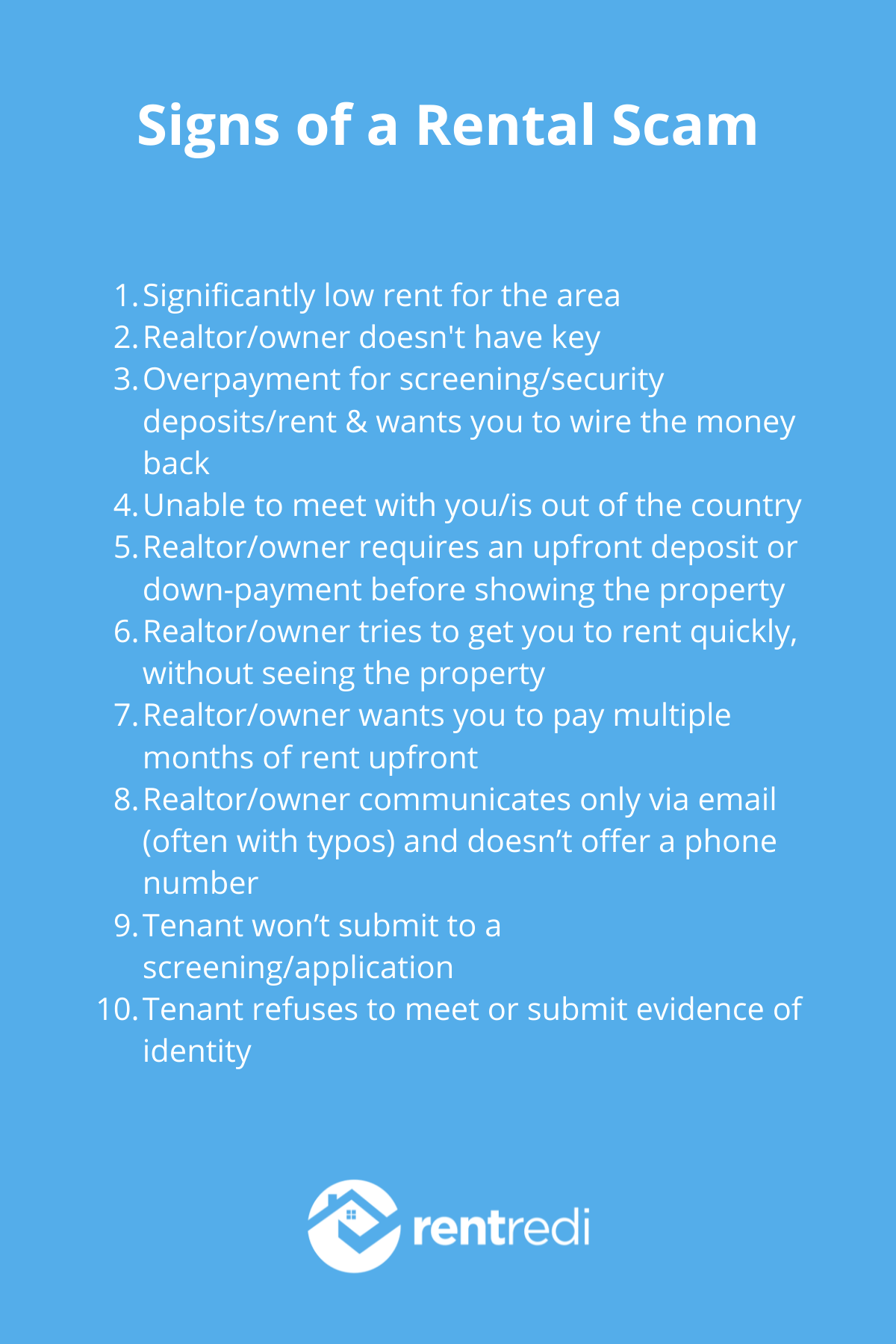
While there are a lot of steps you can take to avoid falling victim to a rental scam, below are 9 signs of a rental scam that you can be on the lookout for, whether you are a tenant or landlord.
- If a property’s rent seems too good to be true…it probably is.
- The realtor/owner isn’t able to let you into the rental with a key
- The tenant submits an overpayment for screening/security deposits/rent & wants you to wire the money back
- The realtor/owner is unable to meet with you/is out of the country
- The realtor/owner requires an upfront deposit or down payment before showing the property
- The realtor/owner tries to get you to rent quickly, without seeing the property
- The realtor/owner wants you to pay multiple months of rent up front
- The realtor/owner communicates only via email (often with typos) and doesn’t offer a phone number
- The tenant won’t submit to a screening/application
- The tenant refuses to meet or submit evidence of identity
Of course, there are many other ways to protect yourself against rental scams, but the above steps are a great way to start.
Best Practices for Verification
Verifying the legitimacy of a rental listing is one of the most important steps you can take to protect yourself from scams. By following a few proven strategies, you can significantly reduce your risk of falling victim to fraudulent listings and dishonest actors. Below are four essential practices that every renter should use before committing to any property.
- Meet the Landlord or Agent in Person: Always insist on meeting the landlord or property manager face-to-face before making any decisions or payments. An in-person meeting allows you to measure their professionalism, ask questions about the property, and assess whether they are legitimate. Scammers often avoid personal meetings or claim to be out of the country.
- Confirm Property Ownership Through Official Records: Before signing any lease or handing over money, verify that the person you are dealing with is the actual owner or authorized agent for the property. You can do this by checking public property records, often available through your local county assessor’s or recorder’s office. Cross-reference the landlord’s name and the property address to ensure everything matches. If anything seems inconsistent or the landlord is reluctant to provide ownership details, proceed with caution.
- Tour the Property in Person: Never agree to rent a property without seeing it for yourself. Arrange an in-person tour to inspect the unit, confirm its existence, and assess its condition. Scammers often avoid property tours or provide only photos and virtual walkthroughs. If you’re relocating from afar, try to have a trusted friend or local contact visit on your behalf. Viewing the property in person helps ensure that it’s legitimately available and matches the listing’s description.
- Speak with Current Tenants or Neighbors: If possible, try to speak directly with current tenants or neighbors about the property and the landlord. They can provide valuable insights into the listing’s legitimacy and the landlord’s or management company’s reputation. Ask about their experiences, how long they’ve lived there, and whether they encountered any issues during the rental process. Honest feedback from people who are already familiar with the property can help you make a more informed decision.
Taking these steps can greatly increase your confidence in a rental listing’s legitimacy. By being diligent and proactive, you’ll be better equipped to spot scams and secure a safe, genuine place to live.
Risks of Risky Payment Methods and Safer Alternatives When Renting
When navigating the rental market, the way you pay for deposits, rent, or application fees can play a critical role in protecting yourself from scams. There are risks associated with certain payment methods, such as cash or wire transfers, and safer alternatives are suggested. Certain payment methods are favored by scammers because they are difficult, if not impossible, to recover once sent. Understanding the risks associated with these methods and knowing which alternatives are safer can help you avoid becoming a victim of rental fraud.
One of the riskiest payment methods in rental transactions is cash. While it may seem convenient, paying in cash provides no paper trail, making it extremely challenging to prove a payment was made if a dispute arises. Scammers often insist on cash payments precisely because they are untraceable, allowing them to disappear with your money without a trace. Similarly, wire transfers, such as those sent via Western Union or MoneyGram, are another red flag. Once a wire transfer is completed, the funds are nearly impossible to recover, and scammers can collect the money anonymously from virtually anywhere in the world. These methods offer little to no recourse for victims, and legitimate landlords rarely, if ever, require payment this way.
Other high-risk payment methods include payments made via gift cards, cryptocurrencies like Bitcoin, or peer-to-peer payment apps sent to unverified recipients. Scammers prefer these channels because they are fast, irreversible, and difficult to trace. If a landlord or agent requests payment using any of these methods, it’s a strong indicator that something may be amiss.
To minimize risk, always opt for payment methods that offer traceability and some level of buyer protection. Certified checks, cashier’s checks, or personal checks made out to the verified property owner or management company provide a clear record of payment. These methods are easier for law enforcement to track should fraud occur, and they often require the recipient to have a legitimate bank account. Even better, many reputable landlords and property management firms now accept secure online payments through established rental portals that offer digital receipts and added security features. Enhance your coverage by referencing secure, reputable online rental payment with RentRedi as a safer alternative for tenants and landlords.
Before sending any money, confirm the legitimacy of the landlord or property manager and verify their identity and banking details through a secondary source. Never send payment before signing a written lease and inspecting the property in person. If you’re ever pressured to use a risky payment method or to pay before these steps are complete, walk away from the transaction.
Researching Market Rates and Listings to Avoid Rental Scams
One of the most effective ways to protect yourself from rental scams is to conduct thorough market research and compare rental rates before committing to any property. Scammers often prey on individuals unfamiliar with typical market rents, using artificially low rents to lure unsuspecting tenants. By understanding what constitutes a fair rental price in your desired area, you can more easily identify listings that seem suspicious or “too good to be true.” Browse reputable rental platforms and local real estate websites to get a sense of the average rent for similar properties in your preferred neighborhoods. Pay attention to the features, amenities, and location of each listing, and note any substantial price deviations. For example, if most two-bedroom apartments in your area are renting for $1,500 per month, but you find a listing for $900 with comparable amenities, this should raise a red flag and prompt further investigation.
Additionally, comparing multiple listings allows you to spot patterns and inconsistencies that may indicate fraudulent activity. Scammers often replicate legitimate listings, altering details such as contact information or pricing to trick prospective renters. By cross-referencing listings across platforms, you can identify duplicate or conflicting information that may indicate a scam.
Market research not only helps you avoid scams but also empowers you to negotiate confidently and make informed decisions. Knowing the going rates in your area helps you identify fair deals and avoid overpaying. It also reduces the likelihood of falling for high-pressure tactics from scammers who insist you act quickly to secure an “unbeatable” offer. Working with licensed real estate agents or established property management companies reduces the risk of scams. Take your time to assess the legitimacy of each listing and don’t be afraid to ask questions or request additional information. If a landlord is unwilling to provide details or pressures you to commit without proper verification, it’s best to walk away.
Frequently Asked Questions
Recognizing the warning signs of a rental scam can protect you from losing money or personal information. Below are answers to common questions about red flags to watch for when searching for a rental.
What does it mean if a rental deal seems too good to be true?
If the rent is far below market value or offers excessive amenities for the price, it’s likely a scam. Scammers use unrealistic deals to lure in unsuspecting renters.
Why are requests for cash payments a red flag?
Cash payments are untraceable, making it easy for scammers to disappear with your money. Legitimate landlords typically accept checks or secure electronic payments for transparency.
How do high-pressure tactics signal a scam?
Scammers often urge you to act quickly or claim there are many other applicants. Pressure to pay or sign immediately is a warning sign to slow down and verify the offer.
What if the landlord refuses to meet in person?
A refusal to meet face-to-face or provide a property tour is suspicious. Scammers often make excuses or claim to be out of town to avoid direct contact.
Why is a lack of proper paperwork concerning?
Legitimate rentals require a signed lease agreement with clear terms and contact details. If the landlord avoids paperwork or delays providing documents, it’s a significant red flag.
Should I be wary if the landlord only communicates by email?
Yes. If a landlord refuses phone calls or only uses email, especially with poor grammar or generic responses, it may indicate a scammer is behind the listing.
What if I’m asked for multiple months’ rent upfront?
Requests for several months’ rent or large deposits before seeing the property are suspicious. Scammers seek to collect as much money as possible before disappearing.
Is it normal to be denied a property tour?
No. Legitimate landlords will arrange for you to see the property in person or via live video. Denying this request is a common scam tactic.
How can I spot a fake listing?
Fake listings often use stolen photos, vague descriptions, or mismatched details. Cross-check the property on multiple platforms and use reverse image searches to confirm authenticity.
Why is it suspicious if the landlord doesn’t screen tenants?
Scammers rarely care about your background or references. If you aren’t asked to submit an application or undergo a screening, it’s a sign the offer may not be legitimate.
How to Report Rental Scams
When it comes to being scammed or conned, it is often not reported because victims feel at fault or embarrassed about having fallen for a scam. However, it’s important to report scammers to help prevent others from falling prey to them as well. If you are a landlord/tenant and think someone is running a rental scam, report it to your local police department, the listing site (e.g., if you saw a fake listing on Realtor.com, you can report it to Realtor.com), and to the FTC.