Quick Answer: The best way to increase tenant retention in 2026 is to focus on the overall tenant experience. Understand your tenants’ needs, offer practical amenities, communicate proactively, respond quickly to maintenance requests, build a sense of community, provide flexible lease options, reward long-term renters, and use technology to simplify property management. These strategies can reduce tenant turnover and encourage lease renewals, thus improving long-term profitability.
Tenant retention is the percentage of renters who renew their leases rather than moving out. It sounds simple. However, it’s one of the most important levers for a profitable rental business.
In a 2026 market shaped by remote work and new built-to-rent communities with renters who have more choices than ever, retention matters more than you might think. You control it far more than you control the broader economy.
Every time a tenant renews, you save on turnover and vacancy costs while keeping your income predictable. Retention is where the real profitability lives. Landlords who treat renewals as a goal build portfolios that stay resilient in any market.
Beyond the math, keeping great tenants builds stability and a sense of community. It also means less time chasing new leads and more time improving the homes you already manage. Keep reading to learn how to retain tenants this year—and beyond.
How To Retain Your Tenants in 2026
1. Understand tenant needs
Renter preferences keep shifting: Gen Z is renting in bigger numbers. Remote-capable professionals are mixing city convenience with suburban breathing room. And households are more diverse in size and structure than they were five years ago.
People want flexibility and convenience. Not to mention a home that fits real life. Understanding all these guides you in providing platinum-level tenant support.
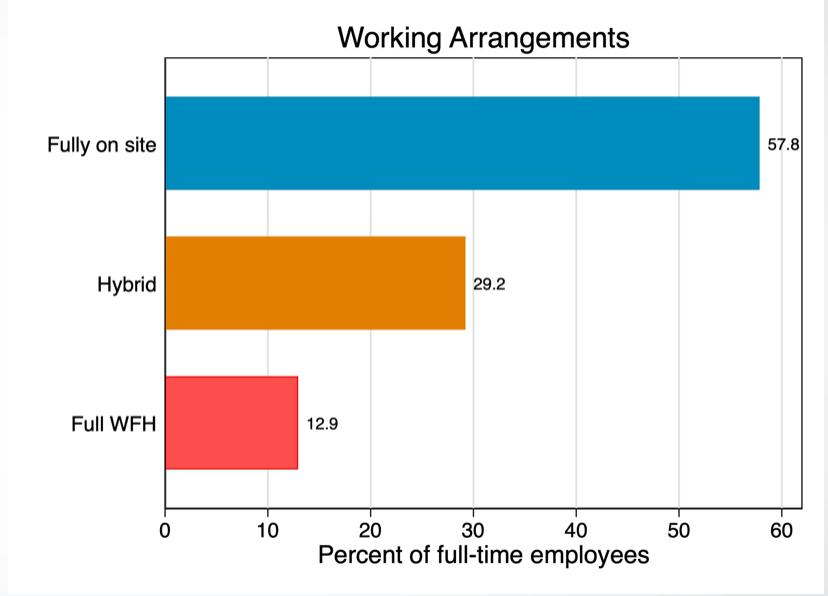
Remote and hybrid work are still changing how (and where) people live. Working from home (WFH) as a share of paid days remains well above pre-2020 levels. This drives demand for reliable internet and quiet spaces that can handle life plus work without friction.
WFH Research shows remote and hybrid work settled into a durable new normal rather than snapping back to 2019 patterns. With a significant share of workdays still done from home in 2025 (Take a glimpse of the images below):
Today’s tenants weigh flexibility, convenience, connectivity, and lifestyle fit as heavily as square footage. The landlords who thrive are the ones asking questions and acting on the answers. A simple digital survey after move-in can reveal exactly what keeps a renter loyal.
Make feedback routine:
- Send a short digital survey at move-in, 60 days before renewal, and after maintenance visits
- Ask one question at a time in-app
- Track trends over time
Industry surveys back up what renters think matters: speed, transparency, convenience.
2. Offer competitive services
Amenities in 2026 are less about flash and more about how people actually live day to day. Focus on smart homes, internet connectivity, work-friendly spaces, and stress-reducing basics. Ultimately, make your property fit your renters’ routines.
What’s consistently popular now:
- Reliable internet with clear speed tiers
- Quiet work areas or small co-working rooms
- Package lockers or secure delivery areas
- Pet-friendly policies and pet washing stations
- Good soundproofing and climate control
- EV charging spots where feasible
Gareth Edwards, General Manager at Fox Family Heating & Air Conditioning, stresses that comfort is one of the most overlooked amenities landlords can offer. From reliable heating and cooling to good indoor air quality, the basics often have a bigger impact on tenant satisfaction than flashy upgrades.
Edwards says, “Comfort isn’t something tenants notice when everything works. It’s something they remember when it doesn’t. Reliable heating and cooling, good ventilation, as well as responsive maintenance create a better living experience every day. Investing in those essentials builds trust and gives tenants one more reason to renew.”
You don’t have to build a luxury gym to be competitive. Partner locally for discounts at a neighborhood gym or café. Negotiate package rates for cleaning services. Or offer preferred pricing with a nearby storage facility.
3. Improve tenant communication
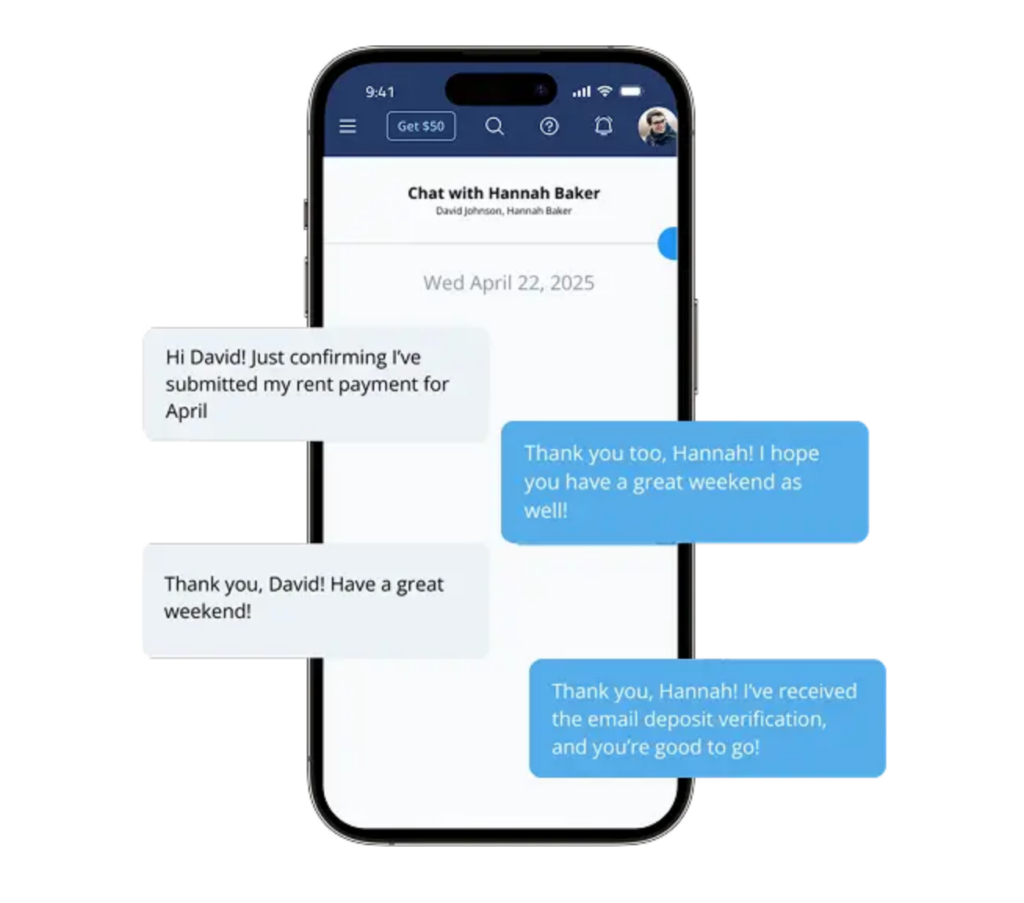
When tenants can reach you easily and get clear answers quickly, their stress drops and trust grows. The days of scattered emails and lost texts are gone. Centralize and automate tenant communication so questions don’t slip and everyone knows what’s happening next.
Start with these basics:
- Use one platform for messaging, rent collection, as well as maintenance and repairs
- Set response time targets and stick to them (reply to all messages within one business day)
- Send proactive updates on building issues and repair timelines, even if the update is “we’re still waiting on a part”
Tenants want to feel heard, and they want answers quickly. Platforms like RentRedi centralize messages, payments, and requests…all in one place, so nothing slips through the cracks. When communication is effortless, trust follows.
4. Maintain property standards
Nothing erodes goodwill faster than slow or confusing maintenance. Respectful fixes can turn a near-miss into a renewal. Many renter preference surveys put “responsive maintenance” near the top of renewal drivers, right alongside rent and location.
Responsive maintenance is one of the clearest signals of respect a landlord can send. A tenant remembers how fast you fixed the leak far longer than they remember the rent. Staying ahead with smart property maintenance keeps small problems from becoming expensive emergencies. Tracking every request digitally means nothing gets forgotten.
A proactive playbook:
- Seasonal checkups for HVAC, roofs, gutters, and smoke detectors
- A first-response target for emergencies (within hours) and non-emergencies (24–48 hours)
- Clear status updates through your maintenance portal
- After-hours instructions that are easy to find
If you’re still juggling emails and voicemails, look for a maintenance workflow that lets tenants submit requests with photos and time-stamps every step.
5. Create a sense of community
People don’t just rent a unit. They rent a place to belong. Community makes moving feel like a loss of more than four walls.
Ryan Beattie, Director of Business Development at UK SARMs, believes long-term relationships are built through consistent positive experiences rather than one-time gestures. He notes that whether you’re serving customers or tenants, people are more likely to stay when they feel valued and connected.
Beattie explains, “Loyalty grows when people feel like they’re more than just another transaction. Small yet consistent efforts to create a welcoming environment and encourage genuine connections can make a lasting impression. When people feel they belong, they’re far less likely to look elsewhere.”
You don’t need a giant budget:
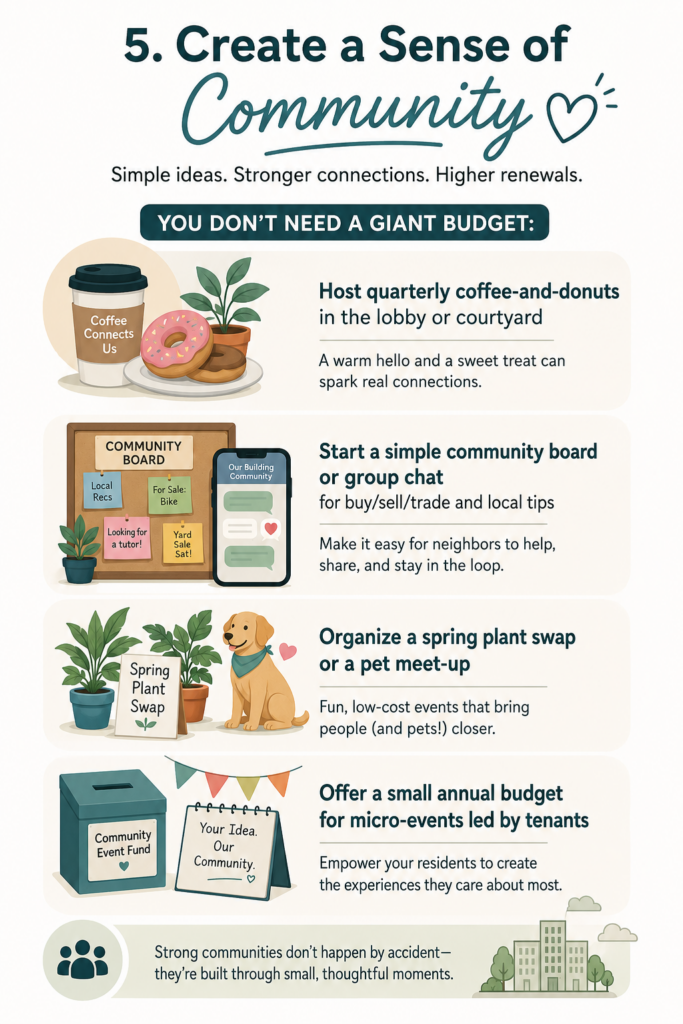
Image source: Generated via ChatGPT
- Host quarterly coffee-and-donuts in the lobby or courtyard
- Start a simple community board or group chat for buy/sell/trade and local tips
- Organize a spring plant swap or a pet meet-up
- Offer a small annual budget for micro-events led by tenants
6. Provide flexible leasing options
Life isn’t one-size-fits-all, and leases shouldn’t be either. Flexibility turns maybe-renewals into yeses by meeting tenants where they are. That could mean longer terms for rate stability. That could mean month-to-month bridges between job changes or early-termination paths with transparent fees.
Flexibility is a competitive advantage in a market shaped by uncertainty.
Rigid one-size-fits-all leases push good tenants away. Offering options like extended terms or tailored agreements shows you understand real life. Working thoughtfully within rent regulations while giving tenants choices is how you earn long-term commitment.
If you operate in a rent-controlled or rent-stabilized area, get very clear on what’s allowed and document your processes.
Research on rent regulations shows mixed outcomes depending on design. But either way, compliance and transparent communication are non-negotiable. Tenants appreciate clarity even when rules limit your options.
7. Incentivize long-term tenancy
Renewals aren’t automatic…even when tenants like you. Sometimes they need a nudge.
Incentives can be simple and affordable compared to the cost of turnover. This can easily reach a month or more of lost rent once you tally vacancy, maintenance, repairs, and marketing.
Ideas that work:
- Small upgrade credits at renewal (ceiling fan, new faucet, accent wall)
- A one-time rent credit for 12- or 24-month renewals
- Loyalty tiers that unlock perks at year 2, 3, and beyond
- Early-renewal bonuses if tenants commit 60–90 days before lease end
For example, a landlord might offer tenants who renew for another year a small appreciation package that includes not just a rent credit but a gift card to a local business or branded custom t-shirts for the household.
While the t-shirts aren’t the deciding factor on their own, thoughtful gestures paired with meaningful renewal incentives can strengthen tenant loyalty. They make residents feel genuinely valued.
8. Leverage technology for efficiency
Technology doesn’t replace relationships. It gives you the time and data to make them better. In 2026, many property ops are smoother thanks to automation, mobile-first tools, and analytics that spot issues before they become move-outs.
Consider:
- Automation for reminders, late-fee rules, and renewal notices
- AI-driven insights that flag renewal risks and maintenance trends
- A single app where tenants can pay, message, and submit requests
- Virtual tours and self-guided showings to fill vacancies faster
Automation and AI-driven insights are some of the tools reshaping the future of property management. Automation handles the repetitive work while AI analytics surface the patterns you would otherwise miss. From renewal risks to maintenance trends.
Pairing these tools with call tracking software can also help landlords monitor leasing inquiries, measure response times, and identify which marketing channels generate the most qualified tenant leads.
If your current stack feels like five different logins and a lot of spreadsheet wrangling, consider consolidating with a platform like RentRedi’s property management software that centralizes rent collection, maintenance, communication, and all other property management functions.
Final Words
Tenant retention in 2026 comes down to understanding what renters value. It’s about communicating clearly, fixing things fast, offering the right mix of amenities, and giving people reasons to put down roots.
Likewise, it entails using flexible leases to meet real-life needs and rewarding loyalty in practical ways. Lastly, it involves leaning on technology to make all of this easier.
The landlords who win won’t be the ones with the fanciest lobbies. They’ll be the ones who make tenants feel heard, respected, valued…and, yes, at home!
FAQs
1. What is tenant retention?
Tenant retention is the percentage of renters who renew their leases rather than moving out. A high retention rate helps landlords reduce vacancy costs. It helps lower turnover expenses and maintain more consistent rental income.
2. Why is tenant retention important for landlords?
Keeping good tenants is usually more cost-effective than finding new ones. Every lease renewal can save you money on advertising, cleaning, repairs, and lost rent, thus creating a more stable rental business.
3. What encourages tenants to renew their leases?
Tenants are more likely to renew when they feel valued and comfortable in their homes. Clear communication, responsive maintenance, practical amenities, flexible lease options, and a strong sense of community all contribute to higher renewal rates.
4. How can landlords reduce tenant turnover?
The best way to reduce tenant turnover is to focus on the overall tenant experience. Listen to tenant feedback, resolve maintenance issues quickly, communicate proactively, offer renewal incentives, and make your property a place where people want to stay.
5. What amenities do renters value most in 2026?
Many renters prioritize amenities that make everyday life easier. Think of reliable high-speed internet, work-friendly spaces, package lockers, pet-friendly features, good climate control, and EV charging where available.
6. Do renewal incentives really work?
Yes. Even modest incentives like rent credits and early-renewal bonuses can encourage tenants to renew. These incentives often cost far less than replacing a tenant after they move out.
7. How can technology improve tenant retention?
Technology makes it easier to manage the tenant experience. Property management software can automate reminders, streamline maintenance requests, simplify rent collection, and improve communication. Overall, this tool helps landlords respond faster and build stronger relationships with tenants.