Quick Answer:
Passive income starts with better rental systems, not more properties. Learning how to streamline costs while growing your portfolio is the ticket to financial freedom.
Passive income in real estate sounds dreamy: money coming in while you’re living your life. In practice, it means you’ve set up a repeatable way to earn rent without constant babysitting.
Here’s the catch: most landlords assume passive income comes from stacking more properties. More doors, more dollars. But without strong systems, every new lease and late payment multiplies your workload. Adding units without fixing your operations is like trying to fill a leaky bucket.
The right rental system cuts busywork. It shortens vacancies and keeps tenants happy. More of your rent makes it into your bank account, and you get your evenings back.
Keep reading to learn how rental property automation helps create passive income through smarter systems instead of more manual work.
The Traditional Approach vs the Modern Solution
Before we dive into the two approaches, it’s worth zooming out for a moment. Take a glimpse of the table below:
| Traditional Real Estate Investing | Systemized Landlord |
|---|---|
| Adds more properties to increase income | Uses rental property automation to increase efficiency and profitability |
| Manages rent, leases, and maintenance manually | Uses property management software to automate everyday tasks |
| Spends time chasing late rent payments | Collects rent online with reminders and Auto Pay |
| Handles maintenance through calls and texts | Receives and tracks maintenance requests in one platform |
| Stores leases and documents across multiple files | Keeps leases and documents organized digitally |
| Growth means more administrative work | Automation makes it easier to scale without adding as much manual work |
| Passive income depends on owning more properties | Passive real estate investing relies on efficient systems as much as portfolio growth |
The way landlords scale has shifted. What used to be about accumulating more properties is now increasingly about building smarter systems that can actually handle that growth. This sets the stage for a very different kind of strategy.
The traditional approach: more properties
For years, the path looked simple: scale up. Buy another duplex. Then a fourplex. Maybe a small multifamily. The math works on paper… until the phone calls start piling up across different roofs in different cities and time zones.
- Each new property brings new variables. Another set of leases to wrangle. Different city ordinances and inspection schedules. New vendors to vet. More bookkeeping. More chances for late rent and vacancies.
- The hidden cost is time. Even if you delegate well, scattered processes slow everything down. Tenant turnover alone can cost landlords $1,000–$5,000 when you factor in vacancy, marketing, cleaning, and repairs. Especially if upgrades are overdue.
- Evictions are even worse. TransUnion SmartMove estimates that an average eviction can cost several thousand dollars and drag on for weeks. What does it imply? Time and money most small landlords can’t afford to lose.
The modern solution: better rental systems
Today’s best landlords aren’t chasing more doors. They’re building better machines through rental property automation and property management software that reduce manual work and improve consistency.
Today’s best landlords aren’t chasing more doors. They’re building better machines. They rely on mobile-first tools that handle the boring but important stuff:
- Screening
- Leases
- Rent collection
- Maintenance
- Reporting
Technology has become the foundation of how rentals run, from single units to large portfolios. Modern property management software automates repetitive tasks, making it easier for landlords to generate passive income without spending hours on day-to-day administration.
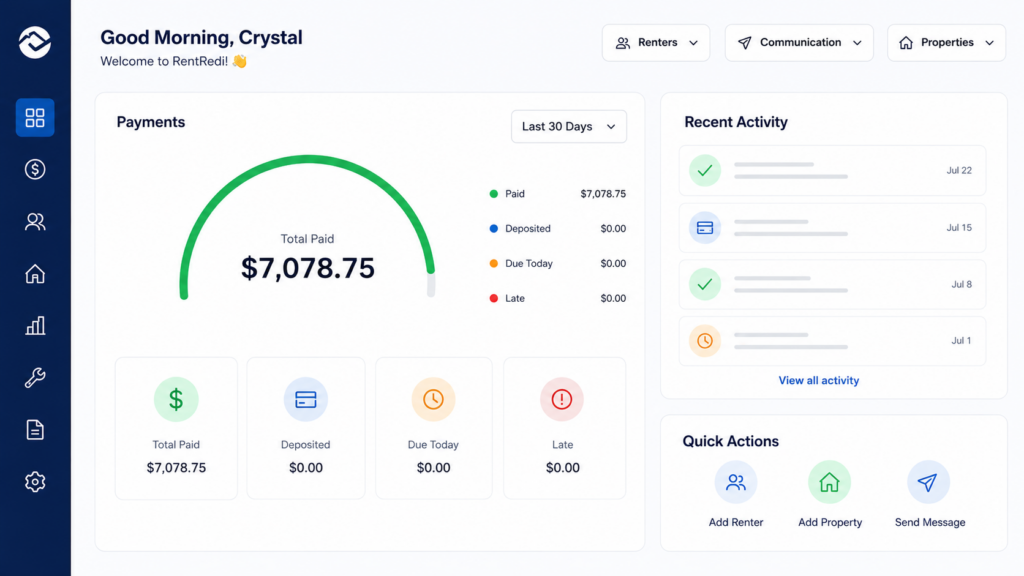
RentRedi is one of the platforms built for this shift. It brings the major components of rental operations into a single system. Think of tenant screening, lease management, online and mobile rent payments, maintenance tracking, and easy financial views. Skim the features overview:
Denys Hukov, Chief Growth Officer at Yalantis, sees technology as a way to help people do more with less effort. In his experience with digital transformation, the right systems can remove repetitive work and make day-to-day operations much easier.
Hukov explains, “That’s why rental technology is becoming so valuable. Rather than juggling paperwork, payments, as well as repair and maintenance tasks separately, landlords can now manage everything in one place through integrated platforms.”
He concludes, “Good technology should simplify work…not add to it. When routine processes are streamlined, people can focus less on tasks and more on decisions that drive growth.”
For landlords, that means less time on admin. And? More time improving tenant experience and growing their investments.
What Makes Rental Income Truly Passive?
One of the biggest misconceptions about passive real estate investing is that rental income requires little or no effort. In reality, rental properties still need oversight. The difference is that rental property automation can eliminate many of the repetitive tasks that consume a landlord’s time.
Here’s a quick breakdown:
| Can Be Automated | Still Requires Owner Input |
|---|---|
| Tenant screening | Setting investment goals |
| Online rent collection and Auto Pay | Buying or selling properties |
| Lease signing and document storage | Approving major repairs or renovations |
| Maintenance requests and vendor coordination | Reviewing financial performance |
| Payment reminders and notifications | Choosing vendors or property managers |
| Financial reporting and dashboards | Making long-term investment decisions |
Automation handles routine operations, while owners stay focused on strategic decisions. Instead of spending evenings chasing rent payments or organizing paperwork, landlords can dedicate more time to improving their portfolio and growing long-term wealth.
That’s why passive income isn’t about removing yourself completely from the process. It’s about using property management software to reduce manual work so your rental business runs more efficiently with less day-to-day involvement.
To make that possible, your rental system should include several core automation features that streamline everyday operations.
What Are the Key Features of Rental Property Automation Software?
Great rental systems share the same backbone. Whether you manage two units or two hundred, these features matter most:
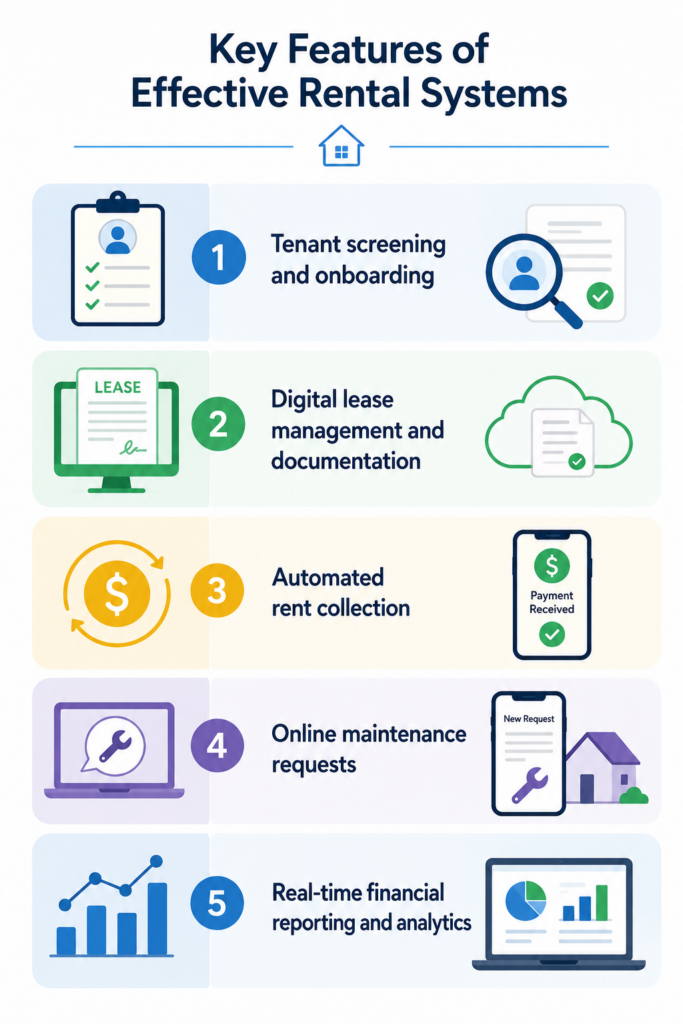
Image source: Generated by the author via ChatGPT
- Tenant screening and onboarding: Fast screening helps you choose reliable tenants and avoid high-risk situations that lead to turnover or eviction. RentRedi also reports that screened tenants pay rent on time 90% of the time, highlighting how better screening contributes to more predictable cash flow. A smooth onboarding process (application, approval, deposit, move-in checklist, etc.) reduces early friction.
- Digital lease management and documentation: E-signatures and organized storage mean no lost clauses. No expired addendums. And no last-minute scrambles. Clean paperwork saves you time and protects your margins.
- Online rent collection: Online and mobile payments with reminders and autopay reduce late fees and awkward texts. For example, RentRedi reports that tenants enrolled in Auto Pay achieve a 99% on-time payment rate, showing how automation can significantly improve payment consistency. The Federal Reserve has also tracked broad growth in digital payments use across the U.S. over the past decade.
- Digital maintenance requests: Tenants submit issues with photos or video. And you can triage quickly. Clear routing reduces back-and-forth. And documented histories help you spot patterns before they get expensive.
- Real-time financial reporting and analytics: Centralized dashboards that surface income, expenses, arrears, and vacancies help you make better calls faster. It’s hard to improve what you can’t measure.
- User-friendly for everyone: If tenants find it easy, they actually use it. If you or your team find it easy, you’ll stick to it. RentRedi’s property management software offers tenants 24/7 live chat support, phone and email support, and Spanish support as well.
The benefits of implementing better rental systems
When these pieces click into place, the effects are significant.
You save hours every week. Less chasing, less copy-paste, fewer fires. That saved time converts directly into less stress or more growth. Automation also improves payment reliability. For example, RentRedi reports that tenants using Auto Pay maintain a 99% on-time payment rate, reducing the need for manual reminders and follow-ups.
Nick LeRoy, Owner of PPCJobs.com, sees this in practice, too. In his work hiring and placing PPC professionals, he often sees how companies that use streamlined systems move faster and waste less time on coordination and manual work.
LeRoy shares, “Tenant retention is where the real money is made in rentals. Every turnover costs thousands in lost rent and prep work. Modern rental systems create happier tenants who pay on time and stay longer. When tenants can easily pay rent online and get maintenance issues resolved quickly, they become your best asset for passive income.”
Your operations also scale more easily. When you automate rental management, repetitive administrative tasks become standardized, allowing you to expand your portfolio without proportionally increasing your workload.
Rental Property Automation Statistics
The shift toward rental property automation isn’t just a trend. It’s backed by industry data and real-world performance metrics. Here are a few numbers that highlight the impact of modern property management software:
| Statistics | What It Means for Landlords |
|---|---|
| 99% of tenants using RentRedi Auto Pay pay rent on time. | Automated payments reduce late rent and minimize manual follow-ups. |
| 90% of RentRedi-screened tenants pay rent on time. | Better tenant screening supports more consistent cash flow. |
| 93% of RentRedi Credit Boost users maintain on-time payments. | Incentive-based features encourage reliable payment habits. |
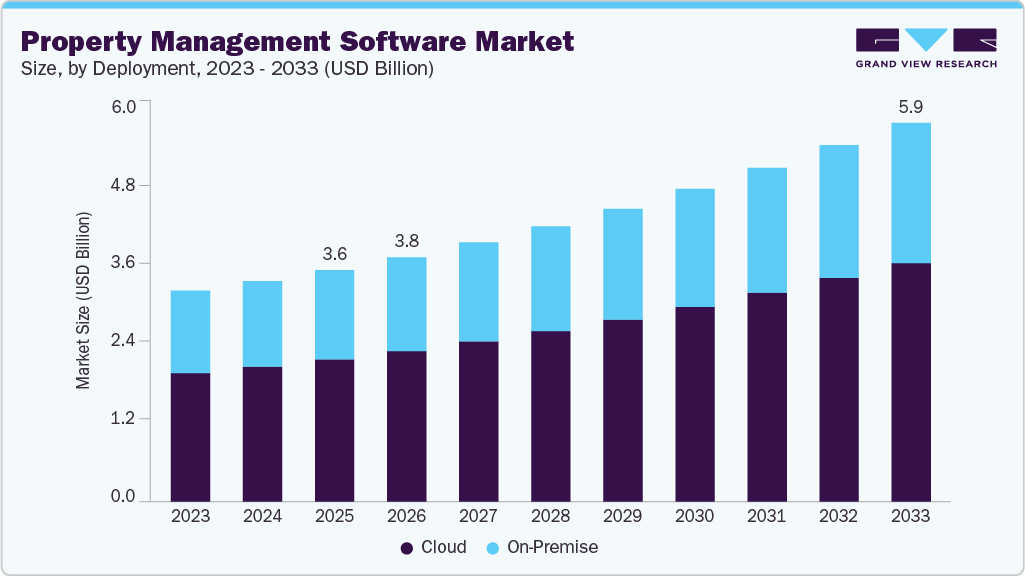
| The global property management software market is projected to grow from $3.61 billion in 2025 to $5.89 billion by 2033 (6.4% CAGR). | More landlords are adopting technology to streamline operations and support long-term growth. |
| Digital payments continue to grow across the U.S. | Online rent collection is becoming the standard rather than the exception. |
Omer Reiner, Founder of Texas Home Buyers, believes that successful rental investing is about getting the most value from the properties you already own. In his experience, efficient systems often have a bigger impact than simply expanding a portfolio.
Reiner says, “Buying more properties isn’t always the fastest way to grow rental income. Strong systems make a big difference. When rent collection, tenant management, and everyday tasks run more smoothly, landlords spend less time solving problems and more time growing their investments.”
Taken together, these statistics show that rental property automation does more than save time. It helps improve payment reliability, streamline daily operations, and create a stronger foundation for long-term passive rental income.
How To Automate Rental Management for More Passive Income
If you’re ready to trade chaos for consistency, a phased approach works best. Here’s how to transition from multiple properties to better systems for your rental business:
- Map your current process. From listing to lease signing to move-out. Write down how you do each step today. Where do delays or errors happen?
- Pick your biggest pain points. Late rent? Slow maintenance? Lease chaos? Fix the top two bottlenecks first.
- Choose a reliable property management software platform. One that fits your rental portfolio. Look for automation features that cover your biggest needs from the start while leaving room to grow.
- Standardize your templates. Think of application, screening criteria, lease, and notice forms. Remember: consistency saves time and reduces risk.
- Onboard tenants and vendors. Train them on online payments, maintenance requests, repair tickets, and new communication norms. Be clear and patient the first month. Most people adapt quickly when it’s easier than the old way.
- Measure and tweak. Track on-time payments, response times, vacancy days, and more. Adjust automations and workflows based on what the numbers tell you.
- Expand the playbook. Continue to do so once rent and maintenance run smoothly. Add rental reporting, task delegation, tenant requests, and team permissions. Keep what works. Cut what doesn’t.
Vladyslav Sokol, CEO of Academy Smart, recommends investing in modern technology. In his work building software systems, he’s seen how automation helps businesses grow without expanding their operations team at the same pace.
As far as rental business is concerned, Sokol notes, “Before adding another property to your portfolio, ask yourself if you’re maximizing the income from what you already own. The right management system can increase your profit margins by 20–30% through reduced vacancies, faster rent collection, and even lower operational costs. That’s often more valuable than buying another property.”
That said, one of the most effective ways to automate rental management is by investing in an advanced property management software platform.
In fact, its worldwide market is projected to grow from $3.61 billion in 2025 to $5.89 billion by 2033. Expanding at a compound annual growth rate (CAGR) of 6.4%.
Building Sustainable Passive Income
Stacking doors can grow your top line. However, systems grow your bottom line and free up your time. When you use rental property automation to streamline screening, leases, payments, maintenance, and reporting, you spend less energy on each unit and capture more of the income you’re already earning.
Doubling your net without doubling your portfolio isn’t just possible. It’s practical when your systems do the work. The landlords who lean into this now will be the ones ready for whatever the market throws at us next.
Curious what a streamlined setup could look like for your rentals? Explore how RentRedi brings screening, leases, payments, maintenance, and reporting into one place.
You can talk through your specific portfolio or see a walkthrough by reaching out to the team. For more tips on modernizing your operations, check out the practical guides and stories on the RentRedi blog.
Frequently Asked Questions (FAQs)
1. Do I need multiple properties to earn passive income in real estate?
No. Passive income depends more on how well your systems run than how many properties you own. A single well-managed unit can be more profitable than several poorly managed ones.
2. What is a rental system in simple terms?
It’s the tools and processes you use to manage your rentals, such as screening tenants, collecting rent, handling maintenance, and tracking finances. Good systems keep everything organized in one place and reduce manual work.
3. Are rental management platforms really worth it?
Yes. Especially if you want to save time and reduce stress. They help automate routine tasks and improve tenant experience. They make it easier to scale without adding extra workload.
4. How do landlords automate rent collection?
Landlords can automate rent collection by using property management software that supports online payments, Auto Pay, payment reminders, and digital receipts. Automation reduces manual follow-ups, encourages on-time payments, and gives both landlords and tenants a more convenient payment experience.
5. What is the best way to create passive income from rental properties?
The best approach combines smart property investments with efficient operations. Instead of relying solely on acquiring more units, many successful landlords use rental property automation to streamline tenant screening, rent collection, lease management, maintenance requests, and financial reporting. This reduces administrative work while improving long-term profitability.
6. Can one rental property generate passive income?
Yes. A single rental property can generate passive income if it’s managed efficiently. While you’ll still make important decisions as the owner, automating routine tasks through property management software can significantly reduce the time spent on day-to-day management.
7. What tasks should landlords automate first?
Most landlords benefit from automating high-frequency administrative tasks first, including:
- Tenant screening
- Rent collection
- Lease signing and document storage
- Maintenance requests
- Payment reminders
- Financial reporting
These are repetitive processes that often consume the most time and are easiest to streamline.
8. How much time can rental automation save?
The amount of time varies depending on the size of your portfolio and your current processes. By automating repetitive tasks like rent collection, maintenance tracking, and document management, landlords can spend less time on administration and more time focusing on tenant relationships, portfolio growth, and investment decisions.
9. What should I look for in property management software?
Look for a platform that combines essential features in one place, including tenant screening, digital lease management, online rent collection, maintenance tracking, financial reporting, and a user-friendly mobile app. Choosing software that can grow with your portfolio helps reduce the need to switch systems later.
10. Is rental property automation only useful for large portfolios?
No. Rental property automation benefits landlords with portfolios of all sizes. Even owners with one or two rental units can save time, improve organization, reduce late payments, and create a better experience for tenants by automating routine tasks.