Your rent payment app knows a lot about you and your tenants. It’s a concentrated target of sensitive financial data, and the platforms collecting it are increasingly in the crosshairs of cybercriminals who know exactly what it’s worth. This post breaks down what the security jargon on your rent payment app actually means, how to evaluate whether a platform is protecting your financial data, and what concrete steps to take. Both to prevent a breach and to respond if one happens.
What “Bank-Level Encryption” Actually Means for Your Rent Payments
When a rent payment app advertises “bank-level encryption,” it’s referring to a specific technical standard: AES-256 encryption. AES stands for Advanced Encryption Standard, and the “256” refers to the length of the encryption key: 256 bits, which translates to 2^256 possible key combinations. To put that in perspective, even the fastest supercomputers on the planet would need more time than the age of the universe to crack AES-256 through brute force. But encryption operates in two distinct states that matter for your rent payments:
- Encryption at rest protects data while it’s stored on a server. When your tenant’s bank account number is stored in a platform’s database, AES-256 encryption scrambles it so it’s unreadable without the correct decryption key. If a hacker gains access to the server, they find gibberish instead of account numbers.
- Encryption in transit protects data as it moves between your tenant’s device and the platform’s servers. This is handled by the TLS (Transport Layer Security) protocol, which creates an encrypted tunnel for information to travel through. When your tenant submits a rent payment from their phone, TLS ensures that anyone intercepting the data mid-transmission sees only meaningless noise.
Encryption at rest and encryption in transit are both necessary, but neither is sufficient on its own. A platform that encrypts data in transit but stores it unencrypted on its servers still has a critical vulnerability. When you’re evaluating a rent payment app, you need both. If the platform can’t give you a clear answer about how data is protected in both states, that’s a red flag.
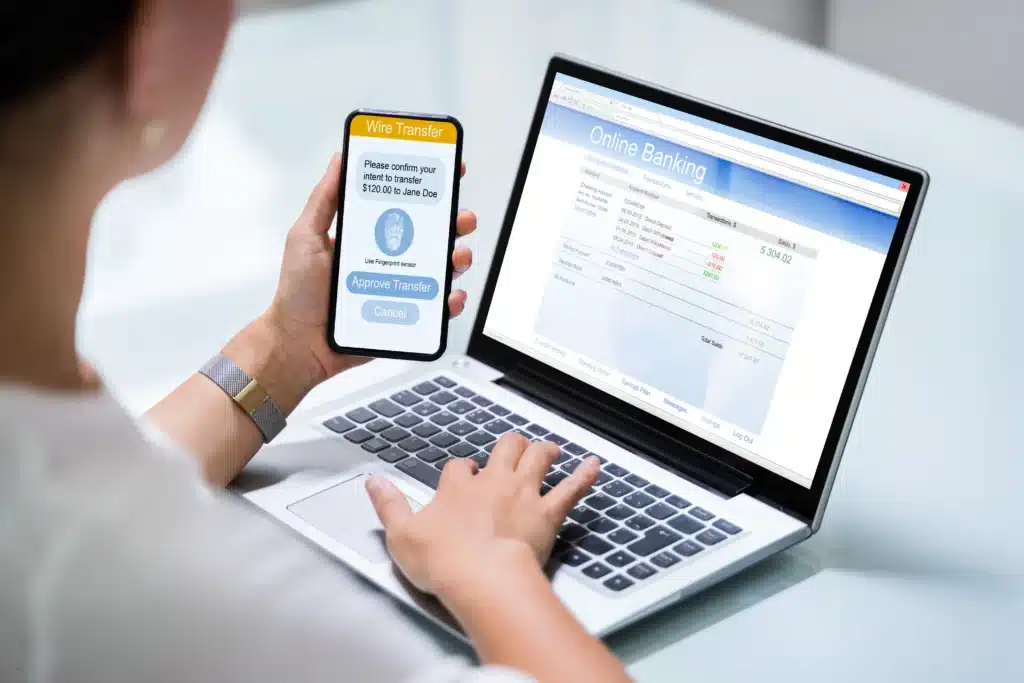
Encryption protects data from being read if it’s intercepted or stolen. But it doesn’t prevent unauthorized access in the first place. The Figure Technology breach in early 2026 illustrates this perfectly. The ShinyHunters extortion group obtained 2.5 GB of data, including names, phone numbers, addresses, and dates of birth, from the fintech lending platform. The breach occurred because an employee was tricked by a social engineering attack, granting hackers legitimate access to the system.
SOC 2 Compliance: What It Proves (and What It Doesn’t)
Type 1 vs. Type 2: The Distinction That Matters
There are two types of SOC 2 reports, and the difference is significant. A SOC 2 Type 1 report evaluates whether appropriate security controls are in place at a single point in time. Think of it as a snapshot. A SOC 2 Type 2 report evaluates whether those controls actually operated effectively over a period of time, typically three to twelve months.
The distinction matters because having controls in place on the day of the audit doesn’t guarantee they’re consistently enforced. A Type 2 report provides much stronger assurance. When you see “SOC 2 compliant” on a rent payment app’s website, it’s worth asking which type. If a platform only holds a Type 1 certification, it may be early in its security maturity journey — not disqualifying, but worth noting.
PCI DSS: The Payment-Specific Standard Landlords Should Verify
While SOC 2 covers general security practices, PCI DSS (Payment Card Industry Data Security Standard) is specifically designed to protect payment card data. Any business that stores, processes, or transmits cardholder data is required to comply.
PCI DSS compliance involves 12 core requirements spanning everything from firewall configuration and data encryption to access control, network monitoring, and security policy documentation. For landlords, the practical implication is straightforward. If your rent payment platform processes credit or debit card transactions, it should be PCI DSS-compliant. Non-compliance can result in higher transaction fees, loss of card processing privileges, and increased legal exposure if tenant payment data is compromised.
Most modern rent payment platforms, including RentRedi, handle PCI compliance by partnering with established, PCI-certified payment processors like Stripe rather than processing card data directly on their own servers. This approach, called tokenization, means your tenant’s actual card number never touches the rent payment app’s infrastructure. Instead, the payment processor replaces the card number with a randomized token that’s useless to hackers if intercepted.
This architecture significantly reduces risk. But it also means that the security chain extends beyond the app itself. When evaluating a platform, ask who processes their payments. A platform that uses a reputable, PCI-certified processor like Stripe or Plaid is offloading the most sensitive part of the transaction to infrastructure that undergoes continuous security auditing.
How To Evaluate a Rent Payment App’s Security Posture
Look Beyond the Marketing Page
Look for a dedicated security or trust page that provides specific, verifiable details. Credible platforms will publish information about their encryption standards (specifying AES-256 and TLS version), their SOC 2 certification type and date, their PCI compliance status, and their data retention and deletion policies.

Ask These Five Questions
When vetting a rent payment app, these questions will tell you more than any marketing copy:
- What encryption do you use at rest and in transit? You want to hear AES-256 for data at rest and TLS 1.2 or 1.3 for data in transit.
- Do you hold a SOC 2 Type 1 or Type 2 certification, and when was it last renewed? Type 2 is the stronger standard, and the certification should be current within the past 12 months.
- Who processes your payments, and are they PCI DSS compliant? A reputable third-party processor like Stripe is a strong indicator.
- What is your data retention policy? How long does the platform store tenant banking details, and what happens to that data when a tenant moves out or an account is closed?
- What is your breach notification policy? How quickly will the platform notify you if your data is compromised? Regulations vary by state, but many require notification within 30 to 72 hours.
Evaluate Multi-Factor Authentication Options
Multi-factor authentication (MFA) is one of the most effective security measures available, yet adoption across financial services sits at only about 60%. For landlords managing rent payments, MFA adds a critical layer of protection. Even if someone obtains your login credentials, they can’t access your account without the second verification factor, typically a code sent to your phone or generated by an authenticator app.
The Threat Landscape Landlords Face in 2026
The FBI’s 2024 Internet Crime Report recorded 21,442 complaints of business email compromise (BEC) scams, with adjusted losses exceeding $2.7 billion. Real estate transactions are a primary target. Between 2020 and 2022, victim reports of BEC scams with a real estate nexus increased 27%, and victim losses surged 72%.
The typical BEC attack against a landlord works like this: a scammer impersonates a tenant, property manager, or payment platform via email, requesting a change to payment instructions or banking information. The landlord, believing the request is legitimate, updates the payment routing, and the next rent payment goes directly to the scammer’s account. Average losses per incident range from $150,000 to $200,000. This threat exploits human trust, not technical vulnerabilities. Never change payment details based solely on an email request. Always verify changes through a trusted communication channel, such as a phone call to a number you already have on file.
What To Do If Your Rent Payment Platform Is Breached
Immediate Actions (First 24-48 Hours)
- Secure your accounts. Change your password on the affected platform immediately, and change it on any other service where you used the same password. Enable MFA if you haven’t already.
- Notify your financial institutions. Contact your bank and any financial institution linked to the compromised platform. Alert them to the breach so they can monitor for unauthorized transactions. Ask about placing fraud alerts on your accounts.
- Document everything. Screenshot any breach notification you receive from the platform. Record the date you learned of the breach, what data was potentially exposed, and every action you take in response. This documentation may be critical for insurance claims, legal proceedings, or regulatory reporting.
Within the First Week
- Place a fraud alert or credit freeze. A fraud alert, placed through any of the three major credit bureaus (Equifax, Experian, or TransUnion), adds an extra verification step for anyone attempting to open credit in your name. A credit freeze is more restrictive. It blocks access to your credit report entirely, making it significantly harder for identity thieves to open new accounts using your information.
- Monitor your credit reports. All three bureaus now offer free weekly credit reports. Review them carefully for any accounts or inquiries you don’t recognize.
- Review the platform’s breach response. Evaluate how the platform handled the breach. Did they notify you promptly? Did they explain what data was exposed? Are they offering credit monitoring or identity theft protection services? The quality of a platform’s breach response tells you a lot about whether you should continue using their service.
Notify Your Tenants
If your tenants’ data may have been exposed through the platform, you have both an ethical and potentially legal obligation to inform them. Depending on your state’s data breach notification laws, you may be required to provide written notice within a specific timeframe. The National Conference of State Legislatures maintains a current list of state-by-state notification requirements. Even beyond legal requirements, proactive communication builds trust. Let your tenants know what happened and what steps they should take to protect themselves.
Building a Security-First Approach to Rent Collection
Use a Dedicated Rent Payment Platform
Peer-to-peer payment apps like Venmo or Zelle aren’t designed for business transactions and may not offer the same protections as dedicated rent payment platforms. A purpose-built platform like RentRedi provides structured payment tracking, tenant screening, encrypted document storage, and compliance infrastructure that general-purpose payment apps simply don’t.
Implement Strong Password Hygiene and MFA Everywhere
Use a unique, complex password for every platform that touches your rental business. A password manager makes this practical rather than painful. As mentioned, enable MFA on every account that offers it.
Minimize the Data You Store
Every piece of tenant financial data you retain can be compromised. Establish a data retention policy: keep records only as long as legally required or operationally necessary, and securely delete them afterward. If your rent payment app stores tenant banking details indefinitely, ask whether you can request the deletion of data for former tenants.
Maintain a Written Incident Response Plan
Don’t wait for a breach to figure out how you’ll respond. Document your response plan in advance: who you’ll contact, in what order, and what steps you’ll take in the first 24 hours, the first week, and the first month. Having this plan ready means you’ll act quickly and methodically if the worst happens, rather than scrambling in crisis mode.
The threat landscape evolves constantly. Subscribe to breach-notification services, follow cybersecurity news sources, and pay attention to communications from your rent payment platform regarding security updates. The landlords who get caught off guard are usually the ones who treated security as a set-it-and-forget-it decision rather than an ongoing practice. Protecting your financial data as a landlord is about knowing how to verify the claims behind them and building habits that reduce your exposure even when technology fails. The platforms that earn your trust are the ones that make their security practices transparent and verifiable. The landlords who stay safest are the ones who hold them to that standard.
Sources:
- Fintech Breach Statistics 2025: Rising Costs, Crypto Losses & Vendor Risks
- Reported U.S. Data Breaches Hit Record High in 2025 — Barracuda Networks
- Fintech Lending Giant Figure Confirms Data Breach — TechCrunch
- SecurityScorecard Report Links 41.8% of Breaches to Third-Party Vendors
- How AES Encryption Secures Financial Data — Phoenix Strategy Group
- How Safe is Bank-Level Encryption? — Alarm New England
- SOC 2 Compliance Requirements — Onspring
- How SOC 2 Compliance Boosts Trust in U.S. FinTech — Ampcus Cyber
- PCI Security Standards Council
- FBI: Cybercrime Losses Hit $16.6 Billion in 2024 — ALTA
- FBI Internet Crime Complaint Center: Business Email Compromise
- Wire Fraud Statistics — CertifID
- Multi-Factor Authentication Statistics — Market.us
- Data Breach Response: A Guide for Business — Federal Trade Commission
- Cybersecurity Checklist: Best Practices for Real Estate Professionals — NAR
- 7 Cybersecurity Tips for Landlords — Millers Mutual Insurance