How Digital Rent Collection Improves Cash Flow Stability for Independent Landlords

Digital rent collection helps landlords stabilize cash flow with faster payments Autopay and real-time tracking for more predictable rental income

11 min read

TL;DR/Quick Answer: How does digital rent collection improve cash flow stability for landlords?

Digital rent collection improves cash flow stability by making rent payments faster and easier to track. Features, such as Autopay and automated reminders, help reduce late or missed payments while giving landlords real-time visibility into incoming funds. As a result, landlords spend less time chasing rent and gain more predictable revenue.

Independent landlords rely on consistent rental income to cover mortgages, maintenance, insurance, and unexpected repairs. Yet cash flow can become unpredictable when rent arrives late or gets lost in the mail. 

That’s why more landlords are turning to digital rent collection. They do so not simply for convenience, but for the greater payment predictability and cash flow stability it can provide.

Federal Reserve research shows a long-term shift away from paper-based payments as consumers and businesses increasingly adopt electronic alternatives such as ACH transfers and online bill pay systems.

Image source

But the big question is simple: how does digital rent collection improve cash flow stability for landlords?

By encouraging on-time payments and providing real-time visibility into incoming rent, digital collection systems help create more consistent monthly revenue. That predictability makes it easier for landlords to budget for expenses, and operate with confidence.

As an independent landlord, keep reading to learn how digital rent collection can improve the stability of your cash flow.

What’s the Difference between Traditional and Digital Rent Collection?

To begin, see the difference between traditional and digital rent collection in the table below:

Key AspectsTraditional Rent CollectionDigital Rent Collection
Payment methodChecks, cash, often physical drop-offsOnline payments via app (ACH, card)
SpeedSlow due to mail and manual processingFast…with near-instant electronic transfers
ConvenienceRequires reminders and manual handlingTenants pay anytime; autopay available
Record-keepingManual spreadsheets and trackingAutomated records and reports
SecurityRisk of lost checks  and fraudSafer electronic payments with less paper exposure

Let’s expound on each of them in the following section.

What’s the traditional rent collection process?

For years, collecting rent meant waiting on checks and updating spreadsheets after long days. It also meant trips to the bank and text reminders. Even occasional doorstep conversations you didn’t plan on having. 

The problems? Checks got lost in the mail. Cash needed receipts and secure storage. And those “I’ll drop it off tomorrow” promises? They piled up.

Traditional methods also have real security gaps. Paper checks expose bank account information. And mail theft has surged. 

Federal authorities issued an alert on a nationwide increase in mail-theft-related check fraud. Driven in part by “check washing” schemes that alter payee names and amounts.

Image source

Beyond the security concerns, these disruptions create uncertainty around when rent will actually arrive. 

For independent landlords who depend on rental income to cover recurring expenses, even a few delayed payments can make monthly cash flow harder to predict.

What are digital rent collection platforms?

Digital rent collection platforms are designed to make rental income more predictable. By reducing payment friction and automating recurring transactions, they help landlords receive rent more consistently and gain better visibility into expected cash flow.

How does it work? 

Tenants pay via an app or online portal, and funds are electronically deposited into your bank account. As far as automated rent collection, you can set up ACH transfers (often the most cost-effective) and accept debit or credit (when needed). Many tools also include late-fee automation and notifications when rent hits your account.

According to Nacha, ACH payments continue to grow steadily, driven by the shift toward direct deposit, automated bill pay, and recurring electronic transfers. ACH volume has reached tens of billions of transactions annually, reflecting widespread adoption of automated payment systems.

Image source

What does that look like day to day? 

For tenants, they log in and pay on their phones. They even opt into Autopay. As a landlord, you see who’s paid at a glance and export reports for your accountant. You stop wondering if a check is stuck somewhere in the postal system.

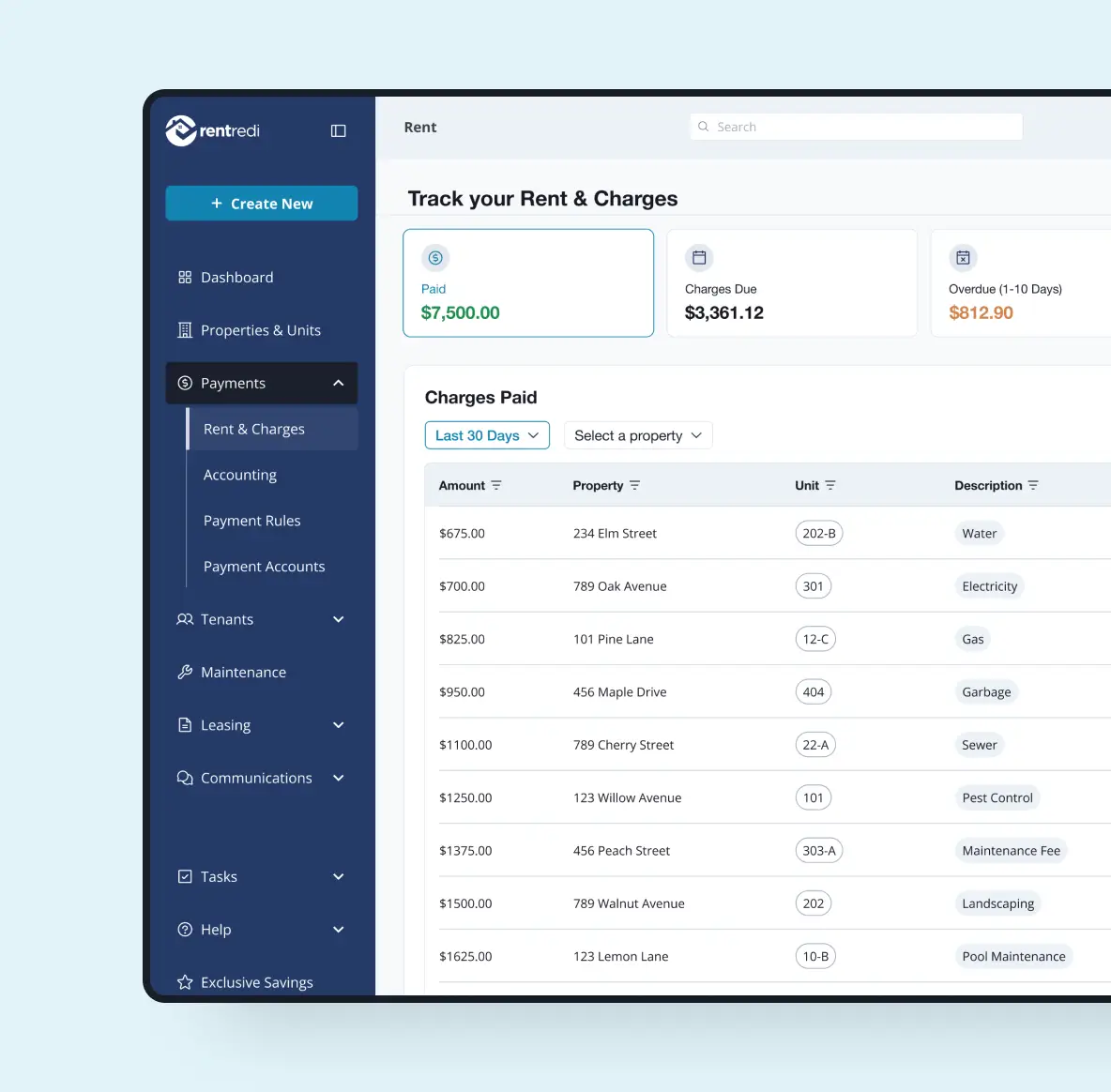
Let’s take RentRedi, for instance, best suited for independent landlords and property managers (see above). 

From rent collections to actual accounting, it enables you to record, process, track, and report payments. On the flip side, tenants can make their rent payments online through their mobile app. Quickly and easily!

How Digital Rent Collection Improves Cash Flow Stability

Digital rent collection strengthens cash flow stability through faster deposits, fewer late payments, better budgeting, and improved financial planning. 

  • Faster deposits: Faster electronic transfers reduce the waiting time between tenant payment and fund availability. This gives landlords quicker access to rental income and reduces cash flow gaps.
  • Fewer late payments: These help smooth monthly income. Features like Autopay and automated reminders encourage on-time payments, minimizing delays that can disrupt predictable cash flow and create unnecessary financial uncertainty.
  • Better budgeting: With more consistent income timing, landlords can budget more accurately for mortgages, repairs, and reserves.  
  • Long-term financial planning: Clearer income patterns make it easier to forecast expenses and manage risk. Not to mention plan future property investments.

What Are The Benefits and Challenges of Digital Rent Collection?

Potential benefits for independent landlords

For independent landlords, the main benefit of digital rent collection isn’t efficiency. It’s a more stable cash flow. When rent is paid on time and tracked in real time, income becomes more predictable month to month. That predictability supports better budgeting for repairs, mortgages, reserves, and future investments.

  • Improved cash flow stability: Autopay and scheduled reminders help move more payments into the “on-time” category, reducing revenue fluctuations from month to month. For independent landlords, that consistency can make it easier to budget for repairs, reserve funds, mortgage payments, and future investments.
  • Streamlined financial tracking: Consistent cash flow isn’t just about collecting rent on time. It’s also about understanding where your money stands at any given moment. Digital rent-collection platforms provide real-time payment records and reporting, helping landlords monitor income patterns and plan more accurately.
  • Better security: Paper checks and cash transactions actually pose greater security risks than encrypted digital payments. A reputable digital platform uses bank-level encryption and maintains an audit trail to protect both landlords and tenants. Fewer payment disruptions also contribute to steadier cash flow by reducing the risk of lost checks or fraudulent transactions.
  • Higher tenant satisfaction: In a world where more people expect digital options for everyday bills, rent should follow suit. Consumer research shows tenants value digital tools across the rental experience. When they have convenient payment options, they’re generally more likely to pay on time. That reliability can translate into fewer collection issues and more consistent rental income.

If you want one more reason to trust the trend, consider the payment rails behind the scenes. The backbone of many rent transfers, ACH has seen strong growth as consumers automate more bills, reflecting a steady move away from paper checks. The numbers don’t lie:

Image source

Possible challenges and considerations

While digital rent collection can improve income predictability, landlords should still evaluate the costs and implementation requirements that affect overall returns. The goal isn’t simply to digitize rent collection. It’s to create a more reliable payment process that strengthens long-term cash flow.

  • Platform fees and setup are the two concerns we hear most about. Fees vary. ACH is typically low-cost, while credit card acceptance can be higher but offers flexibility. Compare those costs to the hidden expenses of manual collection. Getting started usually takes one afternoon of setup: add your bank account, invite tenants, set policies for Autopay and late fees. The payoff shows up quickly when your next cycle runs smoothly.
  • Privacy and security deserve careful attention. Rent payment app security is a top priority. Look for platforms with strong encryption and multi-factor authentication. Make sure they have clear compliance practices (SOC 2 for data security; PCI DSS for card handling). Share a brief privacy note with tenants to explain how their information is handled. Keep money and data safe without bogging down the process.

That’s why Jeffrey Zhou, CEO and Founder of Fig Loans, recommends investing in digital rent collection. He sees it as a practical step toward improving payment reliability while reducing operational risk for independent landlords.

Zhou says, “Digital rent collection is no longer just a convenience feature. It’s a financial stability tool for landlords. When payments are automated and transparent, you reduce uncertainty on both sides of the transaction. Over time, that predictability becomes just as valuable as the rent itself.”

As landlords increasingly face tighter margins and higher expectations for reliability, adopting digital systems like this becomes less of an option and more of a long-term operational advantage.

How To Choose the Right Digital Rent Collection Platform

The right platform should do more than process payments. It should help create consistent rental income by making it easier for tenants to pay on time and easier for landlords to track incoming revenue. When you compare platforms, focus on:

  • Core features: ACH, debit/credit options, Autopay, late-fee automation, instant receipts, partial payments (if you allow them), exportable ledgers
  • Tenant experience: Mobile app that works well, simple signup, clear reminders, and multiple ways to pay
  • Owner tools: Payment tracking, unit-level reporting, maintenance requests, screening, and messaging
  • Cost: Transparent pricing for ACH vs. cards, whether fees are paid by you or the tenant
  • Support and reliability: Responsive help, uptime track record, security certifications

The easiest way to collect rent digitally

RentRedi is built for independent landlords; supports ACH, card payments, Autopay, maintenance, screening, and mobile-first workflows (see mobile app used by tenants below)

To make the switch smooth:

  • Give tenants a clear start date.
  • RentRedi can explain the benefits of Autopay and credit reporting.
  • Tenants can pay via ACH, card, or cash at +90K Chime locations.
  • If you currently accept checks, set a sunset date and stick to it.
  • A small incentive, like waiving a nominal convenience fee for the first month, can nudge adoption without cutting into margins.

What Are the Common Mistakes Landlords Make with Digital Rent Collection?

Even with digital rent collection in place, cash flow stability can still be undermined by its implementation. 

To get the full benefit of more predictable and consistent rental income, landlords should avoid a few common pitfalls:

  • Delaying adoption: Waiting too long to switch keeps landlords dependent on slower, less reliable payment methods, which prolongs inconsistent cash flow month to month.
  • Allowing multiple systems indefinitely: Continuing to accept checks, cash, and digital payments at the same time creates fragmented tracking and makes it harder to maintain clear, predictable income records.
  • Not encouraging Autopay: Without default or strong promotion of Autopay, rent payments remain dependent on tenant action each month, increasing the risk of delays and reducing income consistency.

Faster payment rails and real-time transfers

The rails are evolving fast. 

Instant payment networks like the RTP Network and the Federal Reserve’s FedNow Service promise faster fund availability and fewer weekend delays. This could further tighten cash flow for landlords over time. 

Open banking connections will continue to reduce failed payments by verifying accounts in seconds. And smarter authorization flows will catch typos before they become returns.

For landlords, faster settlement times mean fewer gaps between rent being paid and funds becoming available. This further improves cash flow predictability.

AI-powered rent insights and risk detection

Artificial intelligence (AI) is also creeping into the workflow in useful ways. Expect proactive insights like:

  • Predicting which payments may fail based on history
  • Highlighting unusual deposit gaps
  • Suggesting friendly nudges before rent is due
  • Even predictive pricing apart from rent collections

Ultimately, earlier warnings about potential payment issues could help landlords take action before a missed payment disrupts monthly cash flow.

Blockchain-based rent records and transparency

Looking further out, blockchain-based records could create tamper-evident rent ledgers. Though mainstream adoption will likely follow improvements in user experience and regulatory clarity rather than lead them.

Take it from Ryan Walton, Program Ambassador of The Anonymous Project. He observes and predicts the future of digital payment collection. Particularly how emerging technologies will shape transparency and trust in financial systems for property owners.

Walton explains, “We’re moving toward a world where rent payments are not just digital…but increasingly intelligent and verifiable in real time. The next evolution isn’t just faster payments. It’s smarter systems that reduce friction before it even happens. Landlords who adapt early will benefit from more stable and predictable cash flow cycles.”

Greater transparency and verification may eventually reduce disputes that delay payments and create uncertainty around rental income. More speed, fewer surprises, clearer records. These are exactly what independent landlords need.

Final Words

At its core, digital rent collection is about creating more predictable cash flow. When rent arrives consistently and landlords have real-time visibility into incoming payments, it’s easier to budget, plan maintenance, build reserves, and grow a rental business with confidence.

The technology itself isn’t the biggest benefit. The real advantage is the stability that comes from fewer payment delays and less uncertainty. Most importantly, it results in more consistent rental income month after month.

If you’ve been thinking about making the move, this is a good time. Start small. Pick a platform that fits. And set clear expectations with tenants. The stability you gain will show up in your calendar and, yes, your cash flow!

Curious how it could look for your properties? Try a hands-on walkthrough and see how  RentRedi handles payments, all tracking in one place. Sign up to get started today!

Frequently Asked Questions (FAQs)

1. What is digital rent collection?

It’s a system in which tenants pay rent online via an app or portal. Rather than using cash or checks.

2. How does digital rent collection improve cash flow?

It speeds up payments. It also reduces late or missed rent payments. Lastly, it gives landlords real-time visibility of incoming funds.

3. What are the main benefits for landlords?

It improves payment reliability, reduces manual tracking, strengthens security, and makes rent management easier overall.

4. What are the challenges of setting up digital rent collection?

Common challenges include platform fees and tenant adoption during the switch. Even choosing a secure system that meets compliance and privacy standards can be challenging.

5. How do I get started with digital rent collection?

To get started, choose a platform. Connect your bank account, then invite tenants. Finally, set up payment rules, such as Autopay and due dates.

6. Can digital rent collection reduce late rent payments?

Yes. Features like Autopay and scheduled billing significantly reduce missed or late payments by removing manual steps and improving payment consistency.

7. How fast are digital rent payments processed?

ACH transfers typically take 1–3 business days. Meanwhile, some platforms offer faster or same-day processing depending on the service and banking setup.

8. Do tenants need special accounts to pay rent online?

No. Most platforms allow tenants to pay using standard bank accounts, debit cards, or credit cards through a mobile app or web portal.

9. What are the biggest risks of switching to digital rent collection?

Common risks include platform fees and tenant onboarding challenges. Even failing to fully transition away from manual payment methods. These can reduce cash flow predictability.

10. How do landlords get started with digital rent collection?

Landlords typically choose a platform, connect their bank account, set up properties and units, and invite tenants to start paying online with options like Autopay and scheduled rent reminders, which RentRedi offers as part of their platform.